
题目列表(包括答案和解析)
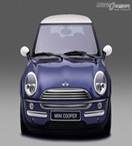
In Britain you’re allowed to drive a car when you’re seventeen. You have to get a special two-year driving license before you can start. When you’re learning, someone with a full license always has to be in the car with you because you aren’t allowed to drive the car on the road alone. You don’t have to go to a driving school --- a friend can teach you. The person with you isn’t allowed to take money for the lesson unless he’s got a teacher’s license.
Before you’re allowed to have a full license, you have to take a driving test. You can take a test in your own car, but it has to be fit for the road. In the test you have to drive round for about half an hour and then answer a few questions. If you don’t pass the test, you’re allowed to take it again a few weeks later if you want to. In 1970 a woman passed her fortieth test after 212 driving lessons! When you’ve passed your test, you don’t have to take it again, and you’re allowed to go on driving as long as you like. Britain’s oldest driver was a man who drove in 1974 at the age of 100.
Before 1904 everyone was allowed to drive, even children. Then from 1904 car drivers had to have a license. But they didn’t have to take a test until 1935. On the early days of car driving, before 1878, cars weren’t allowed to go faster than four miles an hour, and someone had to lead the car with a red flag.
【小题1】A person can’t take money for driving lessons unless he __________.
| A.has learnt to drive in a driving school |
| B.has a full driving license |
| C.has a full license and a teacher’s license |
| D.is given a special two-year driving license |
| A.mustn’t drive his car, even though the car is fit for the road |
| B.is usually asked to drive on roads for some time |
| C.has to be examined only in car driving skills |
| D.must drive around for more than an hour |
| A.a few years later |
| B.right after the first test |
| C.a few weeks later |
| D.never |
| A.There is no limit (限制)to the age of an old man who drives a car. |
| B.One can take a driving test again and again until he passes it. |
| C.There was a speed limit to cars before 1878. |
| D.A car driver didn’t have to get a limit license until 1935. |
| A.Driving Licenses in Britain |
| B.Tests for Britain People |
| C.Driving Cars |
| D.Young Men’s Driving Licenses |
Choose the words or expressions and complete the passage
Exam time is the most stressful (最有压力的) period of the year. You've worked all the term on your classes and now it's the time to prove what you have learned. With so much at stake, it is easy to get stressed about your exams. However, with the right amount or hard work and focus you can pass your tests 1!
When I was in school, I used to get very stressed over my examinations. So did my friends. Some people stopped eating and others ate too much! Some 2 and others burned themselves out! The most important thing to remember when studying is not to panic! Take the middle path---stay calm, eat healthy food and get your rest. Stressing out and _3___yourself too hard is just as dangerous as not studying enough. A tired, overworked brain is just as useless as a stupid, empty one!
So, what do you do? Set aside a time each day for study and a time For __4 . You may have less time to relax than usual, but you still need to let your brain rest for a few moments. Get plenty of sleep. If you are_ 5 , information will not stick in your memory. Finally, eat healthy food that fuels your body and mind.
It does no good to look at your exams like the rest of your life 6 them. Instead, just view them as another obstacle (障碍物) you will overcome. You have overcome all kinds of obstacles in your life so far. With the right amount of work and focus, you will pass your examinations with flying colors! High school is right around the corner.
|
1. |
|
|
2. |
|
|
3. |
|
|
4. |
|
|
5. |
|
|
6. |
|
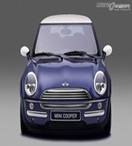
In Britain you’re allowed to drive a car when you’re seventeen. You have to get a special two-year driving license before you can start. When you’re learning, someone with a full license always has to be in the car with you because you aren’t allowed to drive the car on the road alone. You don’t have to go to a driving school --- a friend can teach you. The person with you isn’t allowed to take money for the lesson unless he’s got a teacher’s license.
Before you’re allowed to have a full license, you have to take a driving test. You can take a test in your own car, but it has to be fit for the road. In the test you have to drive round for about half an hour and then answer a few questions. If you don’t pass the test, you’re allowed to take it again a few weeks later if you want to. In 1970 a woman passed her fortieth test after 212 driving lessons! When you’ve passed your test, you don’t have to take it again, and you’re allowed to go on driving as long as you like. Britain’s oldest driver was a man who drove in 1974 at the age of 100.
Before 1904 everyone was allowed to drive, even children. Then from 1904 car drivers had to have a license. But they didn’t have to take a test until 1935. On the early days of car driving, before 1878, cars weren’t allowed to go faster than four miles an hour, and someone had to lead the car with a red flag.
1.A person can’t take money for driving lessons unless he __________.
A. has learnt to drive in a driving school
B. has a full driving license
C. has a full license and a teacher’s license
D. is given a special two-year driving license
2.In the driving test, one _______________________.
A. mustn’t drive his car, even though the car is fit for the road
B. is usually asked to drive on roads for some time
C. has to be examined only in car driving skills
D. must drive around for more than an hour
3.When can I take the driving test again if I don’t pass it?
A. a few years later
B. right after the first test
C. a few weeks later
D. never
4.Which of the following is NOT true?
A. There is no limit (限制)to the age of an old man who drives a car.
B. One can take a driving test again and again until he passes it.
C. There was a speed limit to cars before 1878.
D. A car driver didn’t have to get a limit license until 1935.
5.The best title for the passage is _____________.
A. Driving Licenses in Britain
B. Tests for Britain People
C. Driving Cars
D. Young Men’s Driving Licenses
--Listen! Kate is playing the piano in the next room.
--It _______________be Kate. She has gone to Hangzhou to visit the Cross-sea Bridge.
A. needn't B. mustn't C. can't D. shalln't
湖北省互联网违法和不良信息举报平台 | 网上有害信息举报专区 | 电信诈骗举报专区 | 涉历史虚无主义有害信息举报专区 | 涉企侵权举报专区
违法和不良信息举报电话:027-86699610 举报邮箱:58377363@163.com