
题目列表(包括答案和解析)
|
broadcast1/'brɔ:dkɑ:st||ˈbrɔdˌkæst/n[C] a programme on the radio or on television: a radio news broadcast | live broadcast ( = a programme that you see or hear at the same time as the events are happening) broadcast2 v past tense and past participle, broadcast 1 [ I,T] to send out radio or television programmes: The interview was broadcast live across Europe. 2 [T] to tell something to a lot of people: There was no need to broadcast the fact that he lost his job. broadcaster /ˈbrɔːdkɑːstə || ˈbrɔːdkæstər/ n [C] |
curious/ ˈkjʊəriəs || 'kjur-/ adj 1 wanting to know about something: When I mentioned her name everyone was curious. | [ +about] I’m incurious about this book she's supposed to be writing. |curious to see/hear/know etc: Mandy was curious to hear what Peter had to say himself.—opposite INCURIOUS 2 strange or unusual: a curious noise coming from the cellar | curious that It's very curious that she left without saying goodbye. curl1 /kɜ:l|| kɚrl/ n 1[C] a small mass of hair |
|
flask / flɑ:sk || flæsk/n [C] I BrE a special type of bottle that you use to keep liquids either hot or cold, for example when travelling 2 a flat bottle usually used to carry alcohol 3 a glass bottle with a narrow top, used in a LABORATORY flat1/ flæt / adj flatter, flattest 1▶ SURFACE◀ smooth and level, without raised or hollow areas, and not sloping or curving: a flat-bottomed boat |a perfectly flat sandy beach | flat as a |
pollute / pə'lu:t/ v [T] 1 to make air, water, soil etc dangerously dirty and not suitable for people to use: beaches polluted by raw sewage | industrial emissions that pollute the air 2 pollute sb’s mind to give someone immoral thoughts and spoil their character: fears that Lawrence's novels would pollute young minds--polluted adj: polluted rivers--polluter n [C] pollution / pəˈlu:ʃn /n [U] 1 the process of making |
1.The pronunciation of the word "broadcast" is ____ or/ˈbrɔdˌkæst /.
A. /'brɔ:dkɑ:st/ B. /'brəud'sɑ:st/ C. /bræd'kɔst/ D. /'bru:dkɑ:st/
2.The word"____ "can be used as an adjective (形容词).
A. pollute B. pollution C. curious D. curiously
3.Which of the following is a flask?

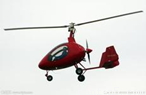

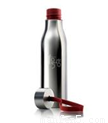
A. B. C. D.
4. The word "pollute" means "______".
A. to tell something to a lot of people B. wanting to know about something
C. a programme on the radio or on TV D. to make air. water, soil, etc dirty
5.These texts are probably from ______.
A. a magazine B. a dictionary
C. a newspaper D. an advertisement
broadcast1/'brɔ:dkɑ:st||ˈbrɔdˌkæst/n[C] a programme on the radio or on television: a radio news broadcast | live broadcast ( = a programme that you see or hear at the same time as the events are happening)
broadcast2 v past tense and past participle, broadcast 1 [ I,T] to send out radio or television programmes: The interview was broadcast live across Europe. 2 [T] to tell something to a lot of people: There was no need to broadcast the fact that he lost his job.
broadcaster /ˈbrɔːdkɑːstə || ˈbrɔːdkæstər/ n [C]
curious/ ˈkjʊəriəs || 'kjur-/ adj 1 wanting to know about something: When I mentioned her name everyone was curious. | [ +about] I’m incurious about this book she's supposed to be writing. |curious to see/hear/know etc: Mandy was curious to hear what Peter had to say himself.—opposite INCURIOUS 2 strange or unusual: a curious noise coming from the cellar | curious that It's very curious that she left without saying goodbye.
curl1 /kɜ:l|| kɚrl/ n 1[C] a small mass of hair
flask / flɑ:sk || flæsk/n [C] I BrE a special type of bottle that you use to keep liquids either hot or cold, for example when travelling 2 a flat bottle usually used to carry alcohol 3 a glass bottle with a narrow top, used in a LABORATORY
flat1/ flæt / adj flatter, flattest
1▶ SURFACE◀ smooth and level, without raised or hollow areas, and not sloping or curving: a flat-bottomed boat |a perfectly flat sandy beach | flat as a
pollute / pə'lu:t/ v [T] 1 to make air, water, soil etc dangerously dirty and not suitable for people to use: beaches polluted by raw sewage | industrial emissions that pollute the air 2 pollute sb’s mind to give someone immoral thoughts and spoil their character: fears that Lawrence's novels would pollute young minds--polluted adj: polluted rivers--polluter n [C]
pollution / pəˈlu:ʃn /n [U] 1 the process of making
86. The pronunciation of the word "broadcast" is ____ or/ˈbrɔdˌkæst /.
A. /'brɔ:dkɑ:st/ B. /'brəud'sɑ:st/ C. /bræd'kɔst/ D. /'bru:dkɑ:st/
87. The word"____ "can be used as an adjective (形容词).
A. pollute B. pollution C . curious D. curiously
88. Which of the following is a flask?


A. B. C. D.
89. The word "pollute" means "______".
A. to tell something to a lot of people B. wanting to know about something
C. a programme on the radio or on TV D. to make air. water, soil, etc dirty
90. These texts are probably from ______.
A. a magazine B. a dictionary
C. a newspaper D. an advertisement
For as long as I can remember, Grandma’s plentiful tomato garden has been a sign of summer’s end. Each September, just as the decreased heat of the sun suggests cooler days, Grandma requests (ask for something) my help in her tomato garden. I’m sure that she cannot pick tomatoes without my youthful eyes and quick mind. She says we need to examine each tomato and agree on its readiness for picking. While Grandma’s request for my help in the tomato garden is always the same, her desire for my help seems to increase each year.
Grandma has eyes for finding even the tomatoes hidden by undergrowth and other tomatoes. I, however, just turn circles looking for the ones I think Grandma will like. I spot what looks like a ripe(成熟的)tomato, head in its direction, and then get sidetracked by another that appears to be equally ripe. I usually end up watching Grandma and trying to stay out of her way, which seems the only way my eyes and mind are useful.
There we are, lost in the tomato vines(藤). Grandma’s eyes are always knowing, and they are no different in the vegetable garden. From afar she spots (notice) what looks like a ripe tomato. As she walks toward the garden, she evaluates the tomato for a second time, but from a different angle. I already know it will end up in the basket with the pile of others Grandma has carefully chosen. However, Grandma acts as if she needs a final look to be sure. She calls me to her side, kneels beside the vine while enjoying the warmth of the fading sunlight on her face, and grasps the tomato in her hand. She turns each round, red ball toward the sunlight before disconnecting it from the vine with a half-hearted smile.
She then looks at me. I nod my head and smile. Grandma assumes I smile in agreement with her tomato selection. I know I smile, instead, at her.
【小题1】Why does Grandma ask the author to go to the tomato garden with her?
| A.He can help pick more tomatoes. |
| B.He can learn the hardship of labor. |
| C.She enjoys staying with him while working. |
| D.She tries to share tomato harvest with him. |
| A.isn’t good at picking tomatoes |
| B.doesn’t like to stay with Grandma |
| C.thinks his eyes and mind are useful |
| D.is trying to be out of Grandma’s sight |
| A.Gardening—good for my Grandma. |
| B.Growing Grandma. |
| C.Gardening—good for my growth. |
| D.Picking tomatoes. |
When this story happened, they were working around a very large house. Their job was to do the cleaning. It was not a difficult job, but sometimes it was a little dangerous, because they had to walk below where workmen were working. Often these workmen dropped something from the top of the house many meters high to the ground.
One morning Joe was working near the house with a cigarette behind one of his ears. Suddenly somebody on the top shouted, "Look out!" But Joe did not "look out". He looked up. And as he did so, a long knife missed Joe's head, but it cut off one of his ears. At once he put his hand to one side of his head and cried out, "I've lost an ear. Help! Help!"
Jeff ran up to help his friend. "Look for my ear," Joe told him. "It must be on the ground somewhere." Jeff looked everywhere for the missing ear. At last he found an ear on the ground. He picked it up and carried it to Joe. "Here you are," he said, "I've found it." Joe looked at it. "No, that's not my ear." he said, "Mine had a cigarette behind it."
1.What were Joe and Jeff?
A. Soldiers. B. Drivers. C. Farmers. D. Cleaners.
2.How did Joe lose his ear?
A. He cut it off by himself. B. Jeff cut it off with a knife.
C. A falling knife cut it off. D. A cigarette burned it up.
3. From the passage, we know Joe was not _______.
A. strong B. kind C. foolish D. clever
4.Which is the most possible title for this passage?
A. A Lost Ear B. A Busy Cleaner
C. A Falling Knife D. A forgetful Man
We______ to see the movie Life of Pi as soon as school is over.
| A.go | B.went | C.will go | D.was going |
湖北省互联网违法和不良信息举报平台 | 网上有害信息举报专区 | 电信诈骗举报专区 | 涉历史虚无主义有害信息举报专区 | 涉企侵权举报专区
违法和不良信息举报电话:027-86699610 举报邮箱:58377363@163.com