
题目列表(包括答案和解析)
听力测试(25分)
一、情景反应
根据你所听到的句子,从A、B、C三个选项中选出最恰当的答语.听完每个句子后你有4秒钟时间作答和阅读下一小题.每个句子读两遍.(共5小题,计5分)
1.
A.I like it.
B.I'm fine.
C.It's cold.
2.
A.Red.
B.Size M.
C.It's too big.
3.
A.Yes, I prefer soccer.
B.No, I don't.
C.I prefer soccer.
4.
A.Sorry, I won't.
B.Ill do it right away.
C.Please do.
5.
A.Yes, I know.
B.Thank you.
C.That's OK.
第一节:听5段小对话,每段对话后有一个小题,从A、B、C三个选项中选出最佳答语.听完每段对话后,你有5秒钟时间作答和阅读下一小题.每段对话 读两遍.(共5小题,计5分)
6.What would the woman like to drink?
A.Tea.
B.Coffee.
C.Water.
7.What time will the two speakers meet?
A.10∶30.
B.10∶00.
C.9∶30.
8.Where does the dialog probably happen?
A.In the library.
B.In the shop.
C.In the restaurant.
9.How much will the man pay for the two pens?
A.Twenty yuan.
B.Fifteen yuan.
C.Thirty-five yuan.
10.Why does the woman buy a new bike?
A.The old one is broken.
B.She doesn't like the old one.
C.The old one is lost.
第二节:听两段长对话,每段对话后分别有几个小题,从a、b、c三个选项中选出最佳答语.每段对话读两遍.(共5小题,计7.5分)
听第11段材料,回答第11至12小题.听之前你有5秒钟时间阅读相关小题,听完后你有5 秒钟时间作答.
11.What does Mr.White do?
A.A teacher.
B.A doctor.
C.A student.
12.What's wrong with Michael?
A.He is late for school.
B.He has a toothache.
C.He has a cold.
听第12段材料,回答第13至15小题.听之前你有5秒钟时间阅读相关小题,听完后你有5 秒钟时间作答.
13.What is Kangkang going to do this Saturday evening?
A.See a film.
B.Go to a concert.
C.Do sports.
14.Where will the concert be held?
A.In the gym.
B.At the theater.
C.At the Music Hall.
15.Is Jane going to the concert?
A.Yes, she is.
B.No, she isn't.
C.No problem.
听短文,根据短文内容,从A、B、C三个选项中选出所给问题的最佳答案.听短文前你有15秒钟时间阅读相关小题,听完后你有10秒钟时间作答.短文读两遍.(共5小题,计7.5分)
16.Where is the parking lot?
A.In front of the hotel.
B.Across from the hotel.
C.Behind the hotel.
17.How will the tourists go there?
A.By train.
B.By bike.
C.By bus.
18.What need the tourists show when they have lunch?
A.A blue card.
B.A blue ticket.
C.A blue key.
19.What season is it now?
A.Summer.
B.Winter.
C.Spring.
20.Which of the following is right?
A.The tourists will visit Mount Huang.
B.The tourists will have breakfast at eight.
C.The tourists will get on the bus at the parking lot.
听力技能(三个部分,共20小题,计20分)
第一节 根据所听内容,选择相应的图画。听每段材料前,你将有时间阅读各个小题,每小题5秒钟;听完后,各小题将给出5秒钟的作答时间。(5分)
1.
A.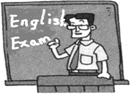
B.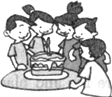
C.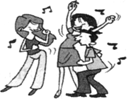
2.
A.
B.
C.
3.
A.
B.
C.
4.
A.
B.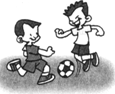
C.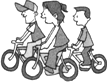
5.
A.
B.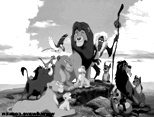
C.
第二节:听对话,然后选择正确答案。听每段对话前,你将有时间阅读各个小题,每小题5秒钟;听完后,各小题将给出5秒钟的作答时间。(12分)
听下面五段对话,根据每段对话回答所提的问题。
6.When will Mr.White come back?
A.About four.
B.Quite soon.
C.Right now.
7.Where are the two speakers?
A.At a cinema.
B.At a bus stop.
C.At a restaurant.
8.How will the man go to the post office?
A.By bus.
B.By taxi.
C.On foot.
9.Why was Jim late this morning?
A.His bike was broken.
B.The traffic was very busy.
C.He got up late this morning.
10.How does the woman feel?
A.Surprised.
B.Happy.
C.Angry.
听下面的对话,回答第11-12小题。
11.What’s wrong with the young man?
A.He has a cold.
B.He has a fever.
C.He has a headache.
12.When did the young man get ill?
A.Two days ago.
B.Three days ago.
C.Four days ago.
听下面的对话,回答第13-14小题。
13.Which festival does Tony want to know?
A.Spring Festival.
B.Mid-Autumn Festival.
C.Dragon Boat Festival.
14.What does Tony think of the festival?
A.Exciting.
B.Interesting.
C.Boring.
听下面的对话,回答15-17小题。
15.Why didn’t Wu Dong go to school that day?
A.Because he hit his arm.
B.Because he hurt his back.
C.Because his leg was hurt.
16.Where is Wu Dong now?
A.In the school.
B.At home.
C.In hospital.
17.What are they going to do after school?
A.Play basketball.
B.Go to see Wu Dong.
C.Go to the cinema.
第三节:听下面一段材料,将第18至第20小题的信息补充完整,每小题不超过三个单词。听材料前,你将有时间阅读各个小题,每小题5秒钟,听完后,各小题将给出15秒钟的作答时间。(3分)

Ⅰ.听力情景反应:根据听到的内容选择正确答案。
1.
[ ]
A.Not at all. B.Certainly. C.You're welcome.
2.
[ ]
A.He's writing. B.He's doing OK. C.He's a teacher.
3.
[ ]
A.Last week. B.Yesterday evening. C.Sometimes.
4.
[ ]
A.Spring. B.Summer. C.Autumn.
5.
[ ]
A.Yes, I do.
B.Yes, I like summer.
C.No, I like spring better than summer.
Ⅱ.听力对话理解:根据听到的对话内容回答问题。
6.Where does this conversation probably take place?
[ ]
A.On the street.
B.At a department store.
C.In a college.
7.Where is John probably now?
[ ]
A.In the classroom.
B.At the hairdresser's.
C.In his bedroom.
8.What is Henry going to do?
[ ]
A.Visit Betty.
B.Ask Betty to come.
C.Ring up Betty.
9.What's the man's problem?
[ ]
A.He can't do anything.
B.He isn't good at tidying the room.
C.He can't do everything with hands.
10.What does the woman want the man to do?
[ ]
A.Turn on the TV.
B.Turn off the TV.
C.Make the volume of the TV low.
Ⅲ.听力篇章理解:根据听到的长对话或短文回答问题。
听第11段材料,回答11~13小题。
11.Who is ill in hospital?
[ ]
A.Jim's aunt.
B.Ann's aunt.
C.Ann's uncle.
12.What does Jim decide to do at last?
[ ]
A.Tell Ann the way.
B.Ask a policeman.
C.Go together with Ann.
13.How will they go to the hospital?
[ ]
A.By bus. B.On foot. C.By bike.
听第12段材料,回答14~16小题。
14.What was the man's excuse for having been late this time?
[ ]
A.His clock was broken.
B.He forgot to set alarm clock(闹钟).
C.His alarm clock did not work.
15.What had they planned to do that night?
[ ]
A.Go to the cinema.
B.Go to the park.
C.Go to the theatre.
16.What can we see from the dialogue?
[ ]
A.The man is honest.
B.The man is impolite.
C.The man is dishonest.
听第13段材料,回答17~20小题。
17.What are the people all over the world doing?
[ ]
A.They are building their cities.
B.They are busy working.
C.They are moving into new cities.
D.They are busy traveling.
18.How about today's cities?
[ ]
A.They are very beautiful.
B.They're very modern.
C.They are very dangerous.
D.They're very crowded.
19.Where are many of these new cities being built?
[ ]
A.They are being built in America.
B.They are being built in China.
C.They are being built in England.
D.They are being built all over the world.
20.Who have tried to make their new cities nice places to live in?
[ ]
A.The Americans.
B.The English.
C.The Chinese.
D.People all over the world.
湖北省互联网违法和不良信息举报平台 | 网上有害信息举报专区 | 电信诈骗举报专区 | 涉历史虚无主义有害信息举报专区 | 涉企侵权举报专区
违法和不良信息举报电话:027-86699610 举报邮箱:58377363@163.com