
题目列表(包括答案和解析)

Have you heard of Chen Binqiang in Zhejiang Province? Over the past six years, he has taken care of his mother who got Alzheimer’s disease.
Chen’s mother, 64-year-old Chen Yueguang, has been ill since 2007. The illness became very serious quickly and she has lost the ability to speak and can not look after herself. None of Chen’s other family members, however, could take care of their sick mother. Chen’s father died in a traffic accident when he was eight, his two sisters married far away and his wife has a 92-year-old grandmother to look after.
Chen taught Chinese in Central School of Lengshui town, which is about 30 kilometers away from his home in Pan’an. So he spent five days at school and only went home on weekends. When he said he would take his mother to work, even his wife was doubtful and worried. She really doesn’t think it is a good idea for him to take care of his mother in school. She worries what if he lost his job because of this.
But Chen has made the decision. Soon he was putting a safety hat onto his mother’s head and helping her sit on his electric bike’s back seat. He thinks that his mother used to take him around and now he should take her.
These days, things got a little easier for him. With the help of Pan’an government, Chen got a new job in Pan’an Middle School in October 2012. The new school is only five minutes’ ride from his home, which means he can take care of his mother more conveniently.
Chen feels happiest when his mother is looking at him. She must have forgotten who he is, and she even can’t call his name. But she surely knows that Chen is kind to her. He feels that is enough.
On February 19th, 2013, Chen got the prize for Touching China, held by China Central Television to honor those whose performances have moved the people.
【小题1】 What does Chen Binqiang do? He is ___________,
| A.a farmer | B.a driver | C.a postman | D.a teacher |
| A.疑惑 | B.明白 | C.预料 | D.支持 |
| A.In his car. | B.In a taxi. |
| C.By electric bike. | D.On foot. |
| A.people will live a very hard life if our parents become seriously ill |
| B.it should be allowed to take care of our mothers at work places |
| C.a man who shows loving care for his mother and his great spirit |
| D.Touching China honors people whose performances move us |
When I was a child I never said, "When I grow up, I want to be a CEO," but here I am. When I look back on my career, I realize the road to becoming a CEO isn't a straight, clear path. In fact, no two paths are the same. But whether you want to be a boss one day or not, there's a lot to learn from how leaders rise to the top of successful companies.
As this series of stories shows, the paths to becoming a CEO may be different, but the people in that position(位置) share the qualities of commitment(义务), work ethic(道德) and a strong desire for building something new. And every CEO take risks along the way—putting your life savings on the line to start a software company or leaving a big business to be one of the first employees at a startup.
I grew up in Minnesota, and learned how to be an entrepreneur(企业家)from my father, who has run a small business for almost 30 years. I went to Georgetown University and tried a lot of business activities in college with success. And I always had a dream job pattern(模式): to walk to work, work for myself and build something for consumers(顾客).
I'm only 29, so it's been a quick ride to CEO. Out of college, I worked for AOL as a product manager, then moved to Revolution Health and ran the consumer product team. In mid-2007 I left Revolution Health and started LivingSocial with several other workmates, where I became a CEO.
Career advice: Don't figure out where you want to work, or even what industry you'd like to work at. Figure out what makes you do so. What gives you a really big rush? Answer why you like things, not what you like doing. . . and then apply it to your work life. Also, just because you're graduating, don't stop learning. Read more books than you did in college. If you do, and they're not, you're really well-positioned to succeed in whatever you do.
1.What can we know from the first paragraph?
A.The writer hasn't achieved his childhood ambition.
B.The writer thinks there is some easy way to become a CEO.
C.The writer had an ambition of becoming a CEO in his childhood.
D.The writer believes success stories of CEOs can be beneficial(有益的) to everybody.
2.According to the writer, successful CEOs should _____.
A.try not to take risks B.stay in the same business
C.have a strong sense of creativity D.save every possible penny
3.What can we know about the writer from the passage?
A.He started LivingSocial when he was still a student of Georgetown University.
B.He used to run the consumer product team for AOL.
C.His business activities at college ended up in more failure than success.
D.His father had far-reaching influence on him.
4.What does the underlined phrase “figure out” mean? ______.
A.断定 B.弄清 C.理解 D.领会
5.Which of the following proverbs may the writer agree with according to the last paragraph?
A.Well begun is half done.
B.Everything comes to him who waits.
C.Time and tide wait for no man.
D.One is never too old to learn.
When I was a child I never said, "When I grow up, I want to be a CEO," but here I am. When I look back on my career, I realize the road to becoming a CEO isn't a straight, clear path. In fact, no two paths are the same. But whether you want to be a boss one day or not, there's a lot to learn from how leaders rise to the top of successful companies.
As this series of stories shows, the paths to becoming a CEO may be different, but the people in that position(位置) share the qualities of commitment(义务), work ethic(道德) and a strong desire for building something new. And every CEO take risks along the way—putting your life savings on the line to start a software company or leaving a big business to be one of the first employees at a startup.
I grew up in Minnesota, and learned how to be an entrepreneur(企业家)from my father, who has run a small business for almost 30 years. I went to Georgetown University and tried a lot of business activities in college with success. And I always had a dream job pattern(模式): to walk to work, work for myself and build something for consumers(顾客).
I'm only 29, so it's been a quick ride to CEO. Out of college, I worked for AOL as a product manager, then moved to Revolution Health and ran the consumer product team. In mid-2007 I left Revolution Health and started LivingSocial with several other workmates, where I became a CEO.
Career advice: Don't figure out where you want to work, or even what industry you'd like to work at. Figure out what makes you do so. What gives you a really big rush? Answer why you like things, not what you like doing. . . and then apply it to your work life. Also, just because you're graduating, don't stop learning. Read more books than you did in college. If you do, and they're not, you're really well-positioned to succeed in whatever you do.
【小题1】What can we know from the first paragraph?
| A.The writer hasn't achieved his childhood ambition. |
| B.The writer thinks there is some easy way to become a CEO. |
| C.The writer had an ambition of becoming a CEO in his childhood. |
| D.The writer believes success stories of CEOs can be beneficial(有益的) to everybody. |
| A.try not to take risks | B.stay in the same business |
| C.have a strong sense of creativity | D.save every possible penny |
| A.He started LivingSocial when he was still a student of Georgetown University. |
| B.He used to run the consumer product team for AOL. |
| C.His business activities at college ended up in more failure than success. |
| D.His father had far-reaching influence on him. |
| A.断定 | B.弄清 | C.理解 | D.领会 |
| A.Well begun is half done. |
| B.Everything comes to him who waits. |
| C.Time and tide wait for no man. |
| D.One is never too old to learn. |
A city in South Korea has added a new attraction to its cultural landscape(景观)—the world’s first “Toilet Theme Park”. The Restroom Cultural Park in the city of Suwon is proving a huge hit with locals and tourists alike.
The park was built to memorize the former city mayor
Sim Jae-duck, known as “Mr. Toilet”. He believed the toilet is a very important
 place
and full of culture. Visitors to the park can enjoy its toilet- bowl- shaped
exhibition hall as well as lots of bronze statues(铜像) in all kinds of toilet positions. They can even sit
on Mr. Kim’s original toilet, which includes a full-length glass door that
mists(蒙上薄雾) up when it is being used.
place
and full of culture. Visitors to the park can enjoy its toilet- bowl- shaped
exhibition hall as well as lots of bronze statues(铜像) in all kinds of toilet positions. They can even sit
on Mr. Kim’s original toilet, which includes a full-length glass door that
mists(蒙上薄雾) up when it is being used.
Suwon has become well known because of the promotion(宣传) of toilet culture. The city attracts toilet- related artwork from around the world to its galleries. It famously hosts the Golden Poop Art Festival- a celebration of one of the calls of nature. The city also lists lots of its own public toilets as tourist attractions on its website. Sim Jae-duck’s toilet-shaped house, now a museum, should be the must-see for enthusiasts. It’s said that Mr. Sim was born in the loo of his mother’s house, so he loved toilets very much. He said in 2007, “The toilet can save humankind from diseases and is a place for introspection(反省). The toilet is also a central living place that has culture.”
1. What’s the theme park’s name?
A. Restroom Park B. Toilet World
C. The Restroom Cultural Park D. The Park of World Toilets.
2. What was the nickname(绰号) of Sim Jae-duck?
A. Captain Lavatory B. Mr. Toilet C. Bathroom Bill D. Number Two
3. What happens to Sim Jae-duck’s toilet when someone uses it?
A. The toilet slowly moves around.
B. “The Toilet Song ” starts playing.
C. The water comes out.
D. Its glass door fogs up.
4. Where do reports say Sim Jae-duck was born?
A. In a toilet- shaped bed. B. In the WC of his mother’s house.
C. In a public toilet in Suwon. D. In a hospital toilet.
5. The underlined word “enthusiasts” means ______ in Chinese in the passage.
A. 思想者 B. 智障者 C. 残疾人 D. 爱好者
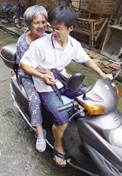
Have you heard of Chen Binqiang in Zhejiang Province? Over the past six years, he has taken care of his mother who got Alzheimer’s disease.
Chen’s mother, 64-year-old Chen Yueguang, has been ill since 2007. The illness became very serious quickly and she has lost the ability to speak and can not look after herself. None of Chen’s other family members, however, could take care of their sick mother. Chen’s father died in a traffic accident when he was eight, his two sisters married far away and his wife has a 92-year-old grandmother to look after.
Chen taught Chinese in Central School of Lengshui town, which is about 30 kilometers away from his home in Pan’an. So he spent five days at school and only went home on weekends. When he said he would take his mother to work, even his wife was doubtful and worried. She really doesn’t think it is a good idea for him to take care of his mother in school. She worries what if he lost his job because of this.
But Chen has made the decision. Soon he was putting a safety hat onto his mother’s head and helping her sit on his electric bike’s back seat. He thinks that his mother used to take him around and now he should take her.
These days, things got a little easier for him. With the help of Pan’an government, Chen got a new job in Pan’an Middle School in October 2012. The new school is only five minutes’ ride from his home, which means he can take care of his mother more conveniently.
Chen feels happiest when his mother is looking at him. She must have forgotten who he is, and she even can’t call his name. But she surely knows that Chen is kind to her. He feels that is enough.
On February 19th, 2013, Chen got the prize for Touching China, held by China Central Television to honor those whose performances have moved the people.
1. What does Chen Binqiang do? He is ___________,
A.a farmer B.a driver C.a postman D.a teacher
2.The word “doubtful” in Paragraph 3 means ________.
A.疑惑 B.明白 C.预料 D.支持
3. How did Chen take her mother to his school?
A.In his car. B.In a taxi.
C.By electric bike. D.On foot.
4. The passage mainly tells us _______.
A.people will live a very hard life if our parents become seriously ill
B.it should be allowed to take care of our mothers at work places
C.a man who shows loving care for his mother and his great spirit
D.Touching China honors people whose performances move us
湖北省互联网违法和不良信息举报平台 | 网上有害信息举报专区 | 电信诈骗举报专区 | 涉历史虚无主义有害信息举报专区 | 涉企侵权举报专区
违法和不良信息举报电话:027-86699610 举报邮箱:58377363@163.com