
题目列表(包括答案和解析)
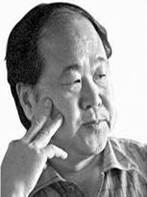
Mo was born into a farming family in a village in Shandong province .He grew up listening to folk stories about gods, spirits foxes .Those stories later became the inspiration (灵感)for Mo’s writing.
Mo left school at the age of 12 and started to work in the fields . Although he was tired after his daily hard work ,Mo was always hungry for books .However, there were very few in the village .He read his older brothers’ textbooks and even dictionaries .He helped others with farm work in exchange for books . “When I finished reading all the books around ,I thought I was the most knowledge man in the world ,”he told Xinhua.
After Mo left his hometown and joined the army in 1976,he began to read widely ,including works by Lu Xun and many other famous writers .He studied from these writers but did not copy them .Instead ,he developed his own style .As the first Chinese citizen(公民)to win a Nobel Prize in literature, Mo told a group of reporters in his hometown shortly after he won the award . “I grew up in an environment filled with folk culture .It enters my novels whenever I pick up a pen This has affected ,even decided my style.”
1.When did Mo Yan leave school and start to work in the fields ?
A.at the age of 12. B.at the age of 11.
C.at the age of 13 D.at the age of 15
2.Mo Yan is from_____
A.Shanxi B.Jiangsu C.Shandong D.Guangdong
3.Mo Yan developed his own style_______
A.while listening to folk stories about gods ,spirits and foxes
B.during his dairy hard work in the fields.
C.when he won the Nobel Prize in literature.
D.after he studied from many famous writers.
4.Which of the following is wrong __________?
A.Mo Yan left school when he was very young.
B.Mo Yan was the most knowledgeable man in the world.
C.Mo Yan read many books when he was very young.
D.Mo Yan is the first Chinese citizen to win a Nobel Prize in literature.
5.What can we learn from Mo Yan’s success(成功)?
A.Rome was not built in a day. B.Easier said than done.
C.Well begun , half done . D.The older, the wiser.
It is common to believe that learning just takes place in school, but much of human learning happens outside the classroom, even from birth and people continue to learn throughout their lives.
Even before they enter school, young children learn to walk, to talk, and to use their hands to use toys, food, and other objects. They use all of their senses to learn about the sights, sounds, tastes, and smells in their environments. They learn how to communicate with their parents, grandparents, siblings, friends, and other people important to their world. When they enter school, children learn subjects like reading, writing, and maths. They also continue to learn a lot outside the classroom. They learn which behaviors are likely to be rewarded and which are likely to be punished. They learn social skills for communicating with other children. After they finish school, people must learn to deal with many changes that affect their lives, such as getting married, raising children, and finding and keeping a job.
Because learning continues throughout our lives and affects almost everything we do, the study of learning is important in many different fields. Teachers need to understand the best ways to educate children. Scientists, social workers and other human service workers need to understand how certain experiences change people’s behaviors.
Learning is closely related (相关的) to memory, which is the storage of information in the brain (大脑). Scientists who study memory are interested in how the brain stores knowledge, where this storage takes place, and how the brain later offers knowledge when we need it. However, scientists who study learning are more interested in behavior and how behavior changes as a result of a person’s experiences. ?
【小题 1 】The underlined word “siblings” in Paragraph 2 probably means _________.
A. teachers B. classmates C. doctors D. brothers or sisters
【小题 2】 When do children begin to know to behave well according to the passage?
A. After they go into society. B. Before they enter school.
C. When they are at school. D. Before they are born.
【小题 3 】Which of the following is WRONG according to the passage?
A. As a matter of fact, learning begins at a person’s birth and last the whole life.
B. Teachers need to understand the best ways to educate their students.
C. People need to understand how certain experiences change their behaviors.
D. Social workers need to study how experiences affect people’s thoughts.
I watched as my little brother was caught in the act. He was sitting in the corner of the living room, a _____in one hand and my father’s hymnbook(赞美诗集)in the other.
As my father walked into the room, my brother cowered slightly(轻微地畏缩). He sensed that he had done something _____. Form a distance I could see that he had _____my father’s new hymnal and scribbled(乱涂)in it. Now looking at my father fearfully, we _____ waited for his punishment.
My father _____his book, looked at it, and then sat down without saying a word.He was a clergyman(神职人员) and for him, books were knowledge. And yet he _____ his children. What he did next was unbelievable. Instead of punishing my brother, he sat down, _____ the pen from my brother’s hand, and then wrote in the book himself, alongside the scribbles John had made:
“John’s work, 1959, _____ 2.” How many times have I looked into your beautiful face and into your warm eyes looking up at me and _____God for the one who has now scribbled in my new hymnal. You have made the book sacred(神圣的), as have your brother and sister.
“Wow,” I thought. “This is punishment?”
The years and the books came and went. Our family
_____ what all families go through and perhaps a little bit more. But we _____
knew our parents loved  us
and that one of the proofs(证明)of their love was the
hymnal by the piano.
us
and that one of the proofs(证明)of their love was the
hymnal by the piano.
Dad taught us about_____really matters in life: people, not objects; tolerance(宽容), not judgment; love, not anger. Now I, too, am a father. But unlike my father, I do not wait for daughters _____ to take books from my bookshelf and scribble in them. From time to time I take one down, and give it to one of my _____to scribble in. and as I look at their artwork, I think about my father and the_____he taught me.
1.A、book B、pen C、knife D、toy
2.A、wrong B、special C、dangerous D、different
3.A、dropped B、read C、borrowed D、opened
4.A、all B、both C、either D、each
5.A、picked up B、put up C、made up D、wrapped up
6.A、hated B、needed C、loved D、disliked
7.A、moved B、took C、brought D、borrowed
8.A、old B、birthday C、aged D、named
9.A、thanked B、asked C、respected D、pleased
10.A、spent B、experienced C、supported D、afforded
11.A、ever B、sometimes C、never D、always
12.A、what B、why C、which D、who
13.A、quickly B、secretly C、carefully D、suddenly
14.A、children B、sisters C、brothers D、parents
15.A、skills B、rules C、lessons D、subjects
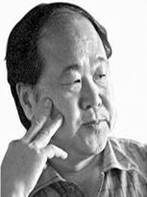
Mo was born into a farming family in a village in Shandong province .He grew up listening to folk stories about gods, spirits foxes .Those stories later became the inspiration (灵感)for Mo’s writing.
Mo left school at the age of 12 and started to work in the fields . Although he was tired after his daily hard work ,Mo was always hungry for books .However, there were very few in the village .He read his older brothers’ textbooks and even dictionaries .He helped others with farm work in exchange for books . “When I finished reading all the books around ,I thought I was the most knowledge man in the world ,”he told Xinhua.
After Mo left his hometown and joined the army in 1976,he began to read widely ,including works by Lu Xun and many other famous writers .He studied from these writers but did not copy them .Instead ,he developed his own style .As the first Chinese citizen(公民)to win a Nobel Prize in literature, Mo told a group of reporters in his hometown shortly after he won the award . “I grew up in an environment filled with folk culture .It enters my novels whenever I pick up a pen This has affected ,even decided my style.”
【小题1】When did Mo Yan leave school and start to work in the fields ?
| A.at the age of 12. | B.at the age of 11. |
| C.at the age of 13 | D.at the age of 15 |
| A.Shanxi | B.Jiangsu | C.Shandong | D.Guangdong |
| A.while listening to folk stories about gods ,spirits and foxes |
| B.during his dairy hard work in the fields. |
| C.when he won the Nobel Prize in literature. |
| D.after he studied from many famous writers. |
| A.Mo Yan left school when he was very young. |
| B.Mo Yan was the most knowledgeable man in the world. |
| C.Mo Yan read many books when he was very young. |
| D.Mo Yan is the first Chinese citizen to win a Nobel Prize in literature. |
| A.Rome was not built in a day. | B.Easier said than done. |
| C.Well begun , half done . | D.The older, the wiser. |
It is common to believe that learning just takes place in school, but much of human learning happens outside the classroom, even from birth and people continue to learn throughout their lives.
Even before they enter school, young children learn to walk, to talk, and to use their hands to use toys, food, and other objects. They use all of their senses to learn about the sights, sounds, tastes, and smells in their environments. They learn how to communicate with their parents, grandparents, siblings, friends, and other people important to their world. When they enter school, children learn subjects like reading, writing, and maths. They also continue to learn a lot outside the classroom. They learn which behaviors are likely to be rewarded and which are likely to be punished. They learn social skills for communicating with other children. After they finish school, people must learn to deal with many changes that affect their lives, such as getting married, raising children, and finding and keeping a job.
Because learning continues throughout our lives and influences almost everything we do, the study of learning is important in many different fields. Teachers need to understand the best ways to educate children. Scientists, social workers and other human service workers need to understand how certain experiences change people’s behaviors.
Learning is closely related (相关的) to memory, which is the storage(储存) of information in the brain (大脑). Scientists who study memory are interested in how the brain stores knowledge, where this storage takes place, and how the brain later offers knowledge when we need it. However, scientists who study learning are more interested in behavior and how behavior changes as a result of a person’s experiences. ?
【小题1】The underlined word “siblings” in Paragraph 2 probably means _________.
| A.teachers | B.classmates | C.doctors | D.brothers or sisters |
| A.After they go into society. | B.Before they enter school. |
| C.When they are at school. | D.Before they are born. |
| A.As a matter of fact, learning begins at a person’s birth and last the whole life. |
| B.Teachers need to understand the best ways to educate their students. |
| C.People need to understand how certain experiences change their behaviors. |
| D.Social workers need to study how experiences affect people’s thoughts. |
湖北省互联网违法和不良信息举报平台 | 网上有害信息举报专区 | 电信诈骗举报专区 | 涉历史虚无主义有害信息举报专区 | 涉企侵权举报专区
违法和不良信息举报电话:027-86699610 举报邮箱:58377363@163.com