
题目列表(包括答案和解析)
阅读短文,根据意思,判断所给句子的正误。正确的写T,错误的写F。
“How are you?” is a nice question. It’s a friendly way that people in the U.S.A greet(问候) each other. But “How are you?” is also a very unusual(不寻常的) question. It’s a question that often doesn’t need an answer. The person who asks“ How are you?” hopes to hear the answer “Fine”, even if the person’s friend isn’t fine. The reason is that “How are you?” isn’t really a question and “Fine” isn’t really an answer. They are simply (只)other ways of saying “Hello” or “Hi”.
Sometimes, people also don’t say exactly(确切) what they mean. For example, when someone asks “Do you agree?”, the other person might think, “No, I disagree. I think you’re wrong...”But it isn’t very polite to disagree so strongly(强烈地), so the other person might say “I’m not sure.” It’s a nicer way to say that you don’t agree with someone.
People also don’t say exactly what they are thinking when they finish talking with other people.For example, many talks on the phone finish when one person say “I’ve to go now.” Often, the person who wants to hang up(挂)says: “Someone’s at the door.” “Something is burning (烧)on the stove(炉).” The excuses(借口) might be real(真的), or not. Perhaps the person who wants to hang up simply doesn’t want to talk any more, but it isn’t polite to say that. The excuse is more polite, and it doesn’t hurt (伤)the other person.
Whether they are greeting each other, talking about an idea, of finishing a talk, people don’t say exactly that they are thinking. It’s an important way that people try to be nice to each other, and it’s part of the game of language.
1.“How are you?” is another way of saying "Hello." or" Hi."
2.It is polite to say" No. I disagree. I think you are wrong, "if you don’t agree with others.
3.When someone says "I have to go now "On the phone,it means he wants to go on talking.
4."Someone is at the door." may be an excuse for finishing a talk.
5.Sometimes people don't say exactly what they are thinking about just because they try to be nice to each other.
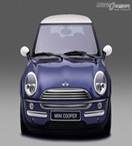
In Britain you’re allowed to drive a car when you’re seventeen. You have to get a special two-year driving license before you can start. When you’re learning, someone with a full license always has to be in the car with you because you aren’t allowed to drive the car on the road alone. You don’t have to go to a driving school --- a friend can teach you. The person with you isn’t allowed to take money for the lesson unless he’s got a teacher’s license.
Before you’re allowed to have a full license, you have to take a driving test. You can take a test in your own car, but it has to be fit for the road. In the test you have to drive round for about half an hour and then answer a few questions. If you don’t pass the test, you’re allowed to take it again a few weeks later if you want to. In 1970 a woman passed her fortieth test after 212 driving lessons! When you’ve passed your test, you don’t have to take it again, and you’re allowed to go on driving as long as you like. Britain’s oldest driver was a man who drove in 1974 at the age of 100.
Before 1904 everyone was allowed to drive, even children. Then from 1904 car drivers had to have a license. But they didn’t have to take a test until 1935. On the early days of car driving, before 1878, cars weren’t allowed to go faster than four miles an hour, and someone had to lead the car with a red flag.
【小题1】A person can’t take money for driving lessons unless he __________.
| A.has learnt to drive in a driving school |
| B.has a full driving license |
| C.has a full license and a teacher’s license |
| D.is given a special two-year driving license |
| A.mustn’t drive his car, even though the car is fit for the road |
| B.is usually asked to drive on roads for some time |
| C.has to be examined only in car driving skills |
| D.must drive around for more than an hour |
| A.a few years later |
| B.right after the first test |
| C.a few weeks later |
| D.never |
| A.There is no limit (限制)to the age of an old man who drives a car. |
| B.One can take a driving test again and again until he passes it. |
| C.There was a speed limit to cars before 1878. |
| D.A car driver didn’t have to get a limit license until 1935. |
| A.Driving Licenses in Britain |
| B.Tests for Britain People |
| C.Driving Cars |
| D.Young Men’s Driving Licenses |
Americans with small families own a small car or a large one. If both parents are working, they usually have two cars. When the family is large, one of the cars is sold and they will buy a van(住房汽车)
A small car can hold four persons and a large car can hold six persons but it is very crowded. A van hold seven persons easily, so a family three children could ask their grandparents to go on a holiday travel They could all travel together.
Mr. Hagen and his wife had a third child last year. This made them sell a second car and buy a van. Their children sixth and seventh seat are used to put other things, for a family of five must carry many suitcases(衣箱)when they travel. When they arrive at their grandparents’ home , the suitcases are brought into the two seats can then carry the grandparents.
Americans call vans motor homes. A motor home is always used for holidays. When a family are traveling to the mountains or to the seaside, they can live in their motor home for a few days or to the seaside, they can live in their motor home for a few days or weeks. All the members of a big family can enjoy a happier life when they are traveling together. That is why motor homes have become very popular. In America there are many parks for motor homes.
1. From the passage, a van is also called ____________.
|
A.a motor car |
B.a motor home |
C.a motorbike |
D.a big truck |
2.Before Mr. Hagen and his wife bought a van, they__________.
|
A.sold their old house |
B.moved to their grandparents’ house
|
C.built a new place for a van |
D.sold their second car |
3.A motor home is usually owned by a family with__________.
|
A.a baby |
B.much money |
C.more than two children |
D.interest in vans |
4.Americans usually use motor homer____________.
|
A.to travel with all the family members of holiday |
|
|
|
B.to do some shopping with all the family members
|
C.to visit their grandparents at weekends
|
D.to drive their children to school every day |
5.Motor homes have become popular because___________.
|
A.they can take people to another city when people are free
|
B.they can let families have a happier life when they go out for their holidays
|
C.some people think motor homes are cheap
|
D.big families can put more things in motor homes |
阅读短文,根据意思,判断所给句子的正误。正确的写T,错误的写F。
“How are you?” is a nice question. It’s a friendly way that people in the U.S.A greet(问候) each other. But “How are you?” is also a very unusual(不寻常的) question. It’s a question that often doesn’t need an answer. The person who asks“ How are you?” hopes to hear the answer “Fine”, even if the person’s friend isn’t fine. The reason is that “How are you?” isn’t really a question and “Fine” isn’t really an answer. They are simply (只)other ways of saying “Hello” or “Hi”.
Sometimes, people also don’t say exactly(确切) what they mean. For example, when someone asks “Do you agree?”, the other person might think, “No, I disagree. I think you’re wrong...”But it isn’t very polite to disagree so strongly(强烈地), so the other person might say “I’m not sure.” It’s a nicer way to say that you don’t agree with someone.
People also don’t say exactly what they are thinking when they finish talking with other people.For example, many talks on the phone finish when one person say “I’ve to go now.” Often, the person who wants to hang up(挂)says: “Someone’s at the door.” “Something is burning (烧)on the stove(炉).” The excuses(借口) might be real(真的), or not. Perhaps the person who wants to hang up simply doesn’t want to talk any more, but it isn’t polite to say that. The excuse is more polite, and it doesn’t hurt (伤)the other person.
Whether they are greeting each other, talking about an idea, of finishing a talk, people don’t say exactly that they are thinking. It’s an important way that people try to be nice to each other, and it’s part of the game of language.
【小题1】“How are you?” is another way of saying "Hello." or" Hi."
【小题2】It is polite to say" No. I disagree. I think you are wrong, "if you don’t agree with others.
【小题3】When someone says "I have to go now "On the phone,it means he wants to go on talking.
【小题4】"Someone is at the door." may be an excuse for finishing a talk.
【小题5】Sometimes people don't say exactly what they are thinking about just because they try to be nice to each other.

In Britain you’re allowed to drive a car when you’re
seventeen. You have to get a special two-year driving license before you can
start. When you’re learning, someone with a full license always has to be in
the car with you because you aren’t all owed
to drive the car on the road alone. You don’t have to go to a driving school
--- a friend can teach you. The person with you isn’t allowed to take money for
the lesson unless he’s got a teacher’s license.
owed
to drive the car on the road alone. You don’t have to go to a driving school
--- a friend can teach you. The person with you isn’t allowed to take money for
the lesson unless he’s got a teacher’s license.
Before you’re allowed to have a full license, you have
to take a driving test. You can take a test in your own car, but it has to be
fit for the road. In the test you have to drive round for about half an hour
and then answer a few questions. If you don’t pass the test, you’re allowed to
take it again a few weeks later if you want to. In 1970 a woman passed her
fortieth test after 212 driving lessons! When you’ve passed your test, you
don’t have to take it again, and
you’re allowed to go on driving as long as you like. Britain’s oldest driver
was a man who drove in 1974 at the age of 100.
Before 1904 everyone was allowed to drive, even children. Then from 1904 car drivers had to have a license. But they didn’t have to take a test until 1935. On the early days of car driving, before 1878, cars weren’t allowed to go faster than four miles an hour, and someone had to lead the car with a red flag.
1. A person can’t take money for driving lessons unless he __________.
A. has learnt to drive in a driving school
B. has a full driving license
C. has a full license and a teacher’s license
D. is given a special two-year driving license
2.In the driving test, one _______________________.
A. mustn’t drive his car, even though the car is fit for the road
B. is usually asked to drive on roads for some time
C. has to be examined(考查) only in car driving skills
D. must drive around for more than an hour
3.When can I take the driving test again if I don’t pass it?
A. a few years later B. right after the first test
C. a few weeks later D. never
4.Which of the following is NOT true?
A. There is no limit (限制)to the age of an old man who drives a car.
B. One can take a driving test again and again until he passes it.
C. There was a speed limit to cars before 1878.
D. A car driver didn’t have to get a limit license until 1935.
5.The best title for the passage is  _____________.
A. Driving Licenses in Britain B. Tests for Britain People
C. Driving Cars D. Young Men’s Driving Licenses
湖北省互联网违法和不良信息举报平台 | 网上有害信息举报专区 | 电信诈骗举报专区 | 涉历史虚无主义有害信息举报专区 | 涉企侵权举报专区
违法和不良信息举报电话:027-86699610 举报邮箱:58377363@163.com