
题目列表(包括答案和解析)
Ask someone what they have done to help the environment recently and they will almost mention recycling, which is the process (过程) of treating used things, such as paper or steel so that they can be used again. Recycling in the home is very important of course. However, being forced to recycle often means we already have more things than we need. We are now dealing with the results of that over-consumption in the possible greenest way, but it would be far better if we did not bring so many things home in the first place.
Here is an example. In the UK, the total of packaging increased by 12% between 1999 and 2005. It now makes up a third of a household’s waste. In many supermarkets, foods are packaged twice with plastic and cardboard.
Too much packaging causes serious environmental problems. The UK is running out of different kinds of ways for dealing with this unnecessary waste. If such packaging is burnt, it gives off greenhouse gases which go on to cause the greenhouse effect (效果). Recycling helps, but the process itself uses energy. The best way of avoiding this problem is to stop producing such unnecessary things in the first place. Food waste is another serious problem, too. Too many supermarkets encourage customers (消费者) to buy more than they need. They seldom encourage customers to reuse their plastic bags, for example. However, a few of them are coming round to the idea that this cannot continue.
But this is not just about supermarkets. It is about all of us. We have learned to connect packaging with quality (质量). We have learned to think that something unpackaged is of poor quality. Is it true for all the products? In fact, more and more companies realized the importance of protecting the environment. They try to package what really should be packaged, including products in good quality.
As more of us recycle, we are beginning to realize how many unnecessary things are being collected. We need to face the waste of our daily life. Although many people have taken action to recycle, we have a high mountain to climb.
【小题1】What does the underlined word “over-consumption” mean?
| A.Making the environment green. |
| B.Recycling as much as possible. |
| C.Making more products than necessary. |
| D.Having more things than being needed. |
| A.To show the facts of over-used packaging. |
| B.To talk about the possible greenest ways. |
| C.To teach people how to do recycling at home. |
| D.To express worries about environmental problems. |
| A.Unpackaged products are of bad quality. |
| B.Other products are better packaged than food. |
| C.We can’t always connect quality with packaging. |
| D.Supermarkets should care more about packaging. |
| A.Supermarkets should recycle first. |
| B.Packaging causes serious problems. |
| C.Needless things are mostly recycled. |
| D.Recycling should be done in the first place. |
Ask someone what they have done to help the environment recently and they will almost mention recycling, which is the process (过程) of treating used things, such as paper or steel so that they can be used again. Recycling in the home is very important of course. However, being forced to recycle often means we already have more things than we need. We are now dealing with the results of that over-consumption in the possible greenest way, but it would be far better if we did not bring so many things home in the first place.
Here is an example. In the UK, the total of packaging increased by 12% between 1999 and 2005. It now makes up a third of a household’s waste. In many supermarkets, foods are packaged twice with plastic and cardboard.
Too much packaging causes serious environmental problems. The UK is running out of different kinds of ways for dealing with this unnecessary waste. If such packaging is burnt, it gives off greenhouse gases which go on to cause the greenhouse effect (效果). Recycling helps, but the process itself uses energy. The best way of avoiding this problem is to stop producing such unnecessary things in the first place. Food waste is another serious problem, too. Too many supermarkets encourage customers (消费者) to buy more than they need. They seldom encourage customers to reuse their plastic bags, for example. However, a few of them are coming round to the idea that this cannot continue.
But this is not just about supermarkets. It is about all of us. We have learned to connect packaging with quality (质量). We have learned to think that something unpackaged is of poor quality. Is it true for all the products? In fact, more and more companies realized the importance of protecting the environment. They try to package what really should be packaged, including products in good quality.
As more of us recycle, we are beginning to realize how many unnecessary things are being collected. We need to face the waste of our daily life. Although many people have taken action to recycle, we have a high mountain to climb.
1.What does the underlined word “over-consumption” mean?
|
A.Making the environment green. |
|
B.Recycling as much as possible. |
|
C.Making more products than necessary. |
|
D.Having more things than being needed. |
2.What is the main purpose of the second paragraph?
|
A.To show the facts of over-used packaging. |
|
B.To talk about the possible greenest ways. |
|
C.To teach people how to do recycling at home. |
|
D.To express worries about environmental problems. |
3.What can be inferred from the fourth paragraph?
|
A.Unpackaged products are of bad quality. |
|
B.Other products are better packaged than food. |
|
C.We can’t always connect quality with packaging. |
|
D.Supermarkets should care more about packaging. |
4.What does the passage mainly talk about?
|
A.Supermarkets should recycle first. |
|
B.Packaging causes serious problems. |
|
C.Needless things are mostly recycled. |
|
D.Recycling should be done in the first place. |
The people in China don't call themselves “Chinese”. You will never hear them call their own country “China”. The Chinese word for their country means “Central Country.” Of course, they want to be called “people of the Central Country.”
These facts come from the book called China by Daniel Chu. What else does the book talk about? The index (索引) in the back pages of the book will tell you. A part of the book's index is shown below.
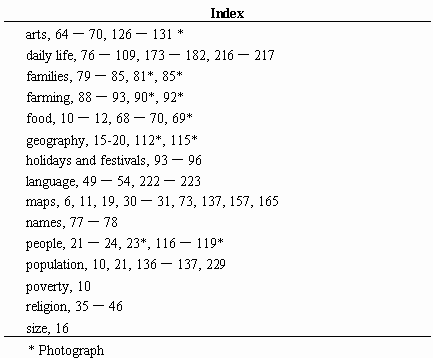
Use the index from the book China to answer these questions.
1.Which of these pages might describe the daily life of the “people of the Central Country”?
[ ]
2.If you want to know how big the “Central Country” is, on what page will you start to read?
[ ]
3.Which of these words give the pages that will have facts about the Chinese New Year?
[ ]
4.Which pages have photographs or pictures of farms?
[ ]
5.The words in the index are in the order of the alphabet. Therefore, families comes before farming and right after ________ .
[ ]
You might have noticed that the cost of food has gone up.In fact the price of wheat and rice has nearly doubled in the past few years.It’s thought that right now,850 million people—that’s more than 10 times the population of the UK—are short of food because it’s too expensive or there’s not enough of it.
The price of basic food such as wheat and corn has stayed the same for quite a long time,about 30 years.But as the world’s population is getting bigger,there’s more pressure to feed more people,plus there’s less land and water to go round.
Another reason is climate(气候)change.Droughts and floods make it hard to grow crops like rice and grain.The price of oil has gone up and that makes it more expensive for farmers to run their tractors and to transport the food they make.And lots of fields are being used to grow crops to make other things that can’t be eaten—which is bad news for hungry people.
The main losers are poor people who live in cities in poor countries,who are facing higher prices for food.Some people are doing well out of the food crisis(危机) though.Farmers in rich countries like the US,Canada and Australia are getting record prices for their harvests.
World leaders are meeting in the Italian capital Rome to talk about the problem of rising food prices.Some countries are helping out with the cost of foods and international aid agencies have called for more money for food production in poor countries.
1.The price of food goes up because all of the following EXCEPT _____.
A.there are more and more people in the world.
B.American farmers are getting richer and richer.
C.many farm lands are used to make other things rather than food.
D.climate change makes it harder to grow food.
2.Who lose the most because of the food crisis?
A.Farmers in rich countries.
B.Farmers in developed countries.
C.Poor people in cities in poor countries.
D.Poor people in cities in developed countries.
3.What does the food crisis mean to farmers in Canada?
A.They can get a lot of money from the government.
B.They have to save a lot of money.
C.They can make more money from the high price.
D.They are losing a lot of money.
4.What is the best title for this passage?
A.Why is the Price of Food Going Up?
B.How Many People are Short of Food?
C.What Can We Learn from the Food Crisis?
D.Who Can Benefit(受益) from the Food Crisis?
湖北省互联网违法和不良信息举报平台 | 网上有害信息举报专区 | 电信诈骗举报专区 | 涉历史虚无主义有害信息举报专区 | 涉企侵权举报专区
违法和不良信息举报电话:027-86699610 举报邮箱:58377363@163.com