
题目列表(包括答案和解析)
One day I happened to meet an Englishman in the street and soon we began to talk. As I was talking about how I was studying English, the foreigner seemed to be very surprised, gently shaking his head and saying “You don’t say!” I was puzzled, and I thought , “Perhaps this is not a right thing to talk about.” So I said to him, “Well, shall we talk about the Great Wall? Have you ever been there?”
“Certainly! Everyone back home will laugh at me if I leave here without seeing it. The Great Wall is wonderful!” “Yes, it is one of the wonders in the world. And people of many countries have come to visit it.” As I went on telling him more about it, he stopped me again, “You don’t say!”
I couldn’t help asking, “Why do you ask me not to talk about it? ”
“Well, I didn’t ask you to do so,” he answered, greatly surprised.
“Did you say ‘You don’t say!’?” I asked again.
Hearing this, the foreigner laughed loudly. He began to explain, “‘You don’t say!’ means ‘Really’. Perhaps you know little about English idioms(惯用语).”
Wow! How foolish I was! Since then I have been careful with English idioms.
1.The writer was puzzled because .
A. the foreigner has some difficulty in understanding him.
B. the writer himself didn’t understand the meaning of “You don’t say!”
C. the foreigner was not polite.
D. the writer was very clever
2.What made the foreigner laugh?
A. The English idioms B. The writer’s talking about the Great Wall
C. The writer’s explanation D. The writer’s question
3.The story probably happened in .
A. China B. America C. England D. Canada
4.The writer was puzzled in the passage.
A. once B. twice C. three times D. four times
5.The English idiom “You don’t say!” means “ ”
A. Thank you B.OK C. Really D. Sorry
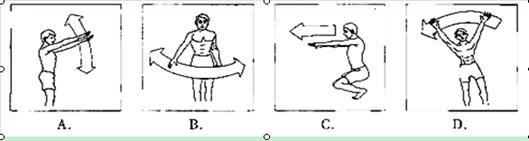
| A.Swinging your arm from side to side means "yes". |
| B.If the ground is dark, light smoke can't be seen. |
| C.If you need some medicine, make a symbol "II". |
| D.The pilots make replies with a blue light at night. |
| A.The explanation of building signals on an island. |
| B.The importance of making signals on an island. |
| C.Ways of sending out signals on a lonely island. |
| D.Ways of receiving signals from a lonely island |
| A.the foreigner has some difficulty in understanding him. |
| B.the writer himself didn’t understand the meaning of “You don’t say!” |
| C.the foreigner was not polite. |
| D.the writer was very clever |
| A.The English idioms | B.The writer’s talking about the Great Wall |
| C.The writer’s explanation | D.The writer’s question |
| A.China | B.America | C.England | D.Canada |
| A.once | B.twice | C.three times | D.four times |
| A.Thank you | B.OK | C.Really | D. Sorry |
Dear Sir,
I am writing to you about my stay at your hotel.
My wife and I 1 on Saturday, 15th, May and stayed 2 a week. Though we were treated __3 and found the service(服务) excellent, we 4 there are one or two matters we 5 bring your attention.
First, we had hoped for a nice 6 from our busy work lives, and your ad 7 "Comfortable and quiet". We want to have a chance to enjoy ourselves. However, we were 8 to find that repairs are sometimes needed, but is it 9 necessary to start early in the morning?
Second, we had hoped to 10 in your "wonderful pool". To our disappointment (失望), we found that it was 11 for the whole time of our stay.
I 12 you do not mind me writing to you 13 these things, but I would be happy 14__ you could give me some explanation(解释). As I 15__ at the start, it is a pity, and your service is so well in other fields.
I hope to hear from you.
Mr. Hector Bradley
1. A.left B.arrived C.went D.returned
2. A.for B.in C.during D.since
3. A.bad B.badly C.good D.well
4. A.learn B.hear C.think D.need
5. A.should B.can C.may D.will
6. A.stop B.holiday C.break D.sleep
7. A.told B.imagined C.refused D.said
8. A.surprised B.happy C.glad D.sad
9. A.true B.such C.too D.really
10. A.drop B.swim C.live D.drink
11. A.open B.closed C.clean D.gone
12. A.ask B.want C.need D.hope
13. A.with B.on C.about D.at
14. A.while B.if C.as D.before
15. A.told B.put C.said D.noticed
Perhaps the only test score that I remember is the 55 when I was in high school.
The test was the final for a course. I remember waiting anxiously as my teacher Mr. Right passed out our papers one by one. It was a rather difficult test. I heard my classmates groaning, and I could tel by the groans that the scores weren’t looking good.
Mr. Right put my paper on my desk. There in big red numbers, circled to draw attention, was my score, 55!
I lowered my head, and covered the score up quickly. A 55 is not something that you wanted your classmates to see.“The scores were not very good, none of you passed,”Mr. Right said. “The highest score in the class was a 55.”
A 55. That’s me!
Suddenly my sad look didn’t look so bad. I had the highest score. I felt a lot better.
I walked home alone that day with the low but high score. My father knew that I had a big test that day and asked me as soon as I got home, “How did you do in your test?”“I made a 55,”I said.
A frown(皱眉)now stood on my father’s face. I knew I had to explain immediately. “But Dad, I had the highest score in the calss,”I proudly stated. I thought that explanation would make a difference.“You failed!”my father replied.“But it’s the highest!” I insisted.“I don’t care what scores others had, but you failed. What matters is what you do!”my father firmly said.
For years, my father was always that way. It didn’t matter what others did, it only mattered what I did and that I did it excelently.
We often don’t understand the wisdom(智慧)of good parents until we ourselves stand in the parents’shoes. My father’s words have carried me throughout l ife.
ife.
【小题1】 The word groaning is the closest in meaning to _____.
| A.singing | B.laughing | C.complaining | D.quarreling |
| A.lowered my head | B.covered my score up |
| C.walked home alone | D.explained immediately |
| A.I did a bad job in the test |
| B.I gave a good excuse |
| C.I became the worst student |
| D.I stood in his shoes |
| A.the father was strict with his child. |
| B.the writer was always poor in tests. |
| C.Mr. Right was worried about the writer |
| D.the writer was always happy with his scores |
| A.The Final Test | B.That’s Me! |
| C.My strict Teacher | D.Scores, Important? |
湖北省互联网违法和不良信息举报平台 | 网上有害信息举报专区 | 电信诈骗举报专区 | 涉历史虚无主义有害信息举报专区 | 涉企侵权举报专区
违法和不良信息举报电话:027-86699610 举报邮箱:58377363@163.com