
题目列表(包括答案和解析)
Task-based activities.
Ask each other questions like “What time do you get up?” “What time do you have breakfast on weekdays/at the weekend?”…. And then, write the answers down on your exercise book.
Task-based activities.
1.你了解你的父母吗?完成下面表格(可以根据实际补充表格或者自制表格),并和同谈论你父母的爱好。
A:What's your mother's favorite color?
B:Her favorite color is red.

2.自己把本班课程表设计成英文版。
| Task-based Reading. | ||||||||||||||||||||||
| Louis Braille was born in Coupvray, France. He was a very small child. Unluckily, at the age of four, he became blind by accident. Louis began attending school in his town when he was seven years old. Three years later, Louis and his father traveled to Paris. There, he went to a school for blind children. One day a French soldier, Charles Barbier, visited the school. Barbier invented a system of night-reading. This system used small dots for the letters. Soldiers used this system in time of war. Barbier thought this system could help the blind to read. Soon Braille discovered that there were some shortcoming (缺点) in Barbier's system, but it gave Louis a brilliant idea. He improved Barbier's system. By the age of fifteen, his new system was completed! Now he wanted blind schools to try his system. Luck went against him again. The school refused to use his system. Louis died in 1852 in Paris at the age of forty-three. Two years after he died, the blind schools began to use his system. Today we call this system Braille in honour of Louis Braille. His system is used for all languages, and for maths, science, writing, music, and computers for the blind. | ||||||||||||||||||||||
|
Every place offers the possible dangers for getting hurt, even staying at work. We may face dangers like walking into desks or chairs, receiving unexpected cuts from a paper knife and so on. Industrial jobs have similar and more dangers like getting body parts hurt by machines or falling from a height.
No one wants to get hurt. Some accidents are avoidable(可避免的). Most accidents happen because of common things seen every day—an open desk drawer, a chair pulled out too far, water on the floor and so on. We slowly get used to these things we see every day and never think about what they could possibly become in the future.
Think about the following to prevent dangers to yourself and others:
1. If there is something you see and know may become a danger for yourself or others, do something about it. Close a desk drawer, clean up or put a sign over the water, turn off the power before leaving, and so on.
2. Get extra persons’ help and support on a task that is too hard for a single person.
3. Study the situation and think what could possibly happen and change if necessary. Do it before something happens and you won’t have to say some day, “ I should have… How sorry I feel…”
To use an old phrase “ Safety is everyone’s duty.” Looking down on it could lead to being hurt. Keep the rule in mind every day “ Everyone wants to go home in the same condition they came to work in –or better.”
Title:__ 1.____ at Work
|
___2.___ dangers |
There are some dangers like tripping, unexpected __3.___ by a paper knife. |
|
_____4.____ |
1. Most accidents are __5.____ by the common things seen every day. 2. Get used to ____6.____we can see every day and never think about the dangers. |
|
Safety rules
|
1. Turn off the power before you ____7.__. 2. Get extra persons’ help and support if the task is too difficult for you to finish on your ___8.____. 3. Make some ____9.___ based on the situation. |
|
Warning |
Safety on the job is ___10.__duty. |
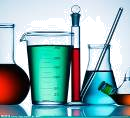
Scientists study the world and learn about things using a process called the scientific method(方法). By asking important questions and 16 the answers, it is possible to make amazing discoveries! Sometimes a scientist is 17 to answer his own questions, but if he has taken good notes another scientist may come along later who is able to use new knowledge to answer it.
When you use the scientific method to 18 an experiment, you start by making observations(观察) about something that 19 you. Based on your observations, you make a hypothesis. This is using 20 you know to make a smart guess about what you think could happen. Then you are ready to begin your experiment. All 21 your experiment you take down notes, which are 22 experiment date(资料). You are constantly making observations during this time. You may make discoveries that cause you to improve your experiment as you go. 23 , you conclude your experiment and begin to look over your notes to decide what it all means. Based on what you have learned, you make a final statement about 24 your hypothesis was correct or not. You have to have reasons and evidence to support what you are saying.
Using the scientific method can be difficult, but rewarding. Because all the steps are organized in a process, the 25 are more valid(可信的). When you provide observations as evidence to support what you are saying, your ideas are more likely to be accepted.
| 【小题1】 |
|
| 【小题2】 |
|
| 【小题3】 |
|
| 【小题4】 |
|
| 【小题5】 |
|
| 【小题6】 |
|
| 【小题7】 |
|
| 【小题8】 |
|
| 【小题9】 |
|
| 【小题10】 |
|
湖北省互联网违法和不良信息举报平台 | 网上有害信息举报专区 | 电信诈骗举报专区 | 涉历史虚无主义有害信息举报专区 | 涉企侵权举报专区
违法和不良信息举报电话:027-86699610 举报邮箱:58377363@163.com