
题目列表(包括答案和解析)
| |||||||||||||||||||||||||||||||||||||||||||||||||||||||||||||||||||||||||
| 阅读理解. |
| Everyone talks about the weather, but no one does anything about it. It is true. People usually begin their talks with "Isn't it a nice day?" "Do you think it will rain?" "What a fine day!" Many people think they can tell what the weather is going to be like. But they hardly agree with (同意) each other. One man says, "Do you see how cloudy it is in the east? It's going to rain tomorrow." Another man will say, "No, its going to be fine tomorrow." People often look for the weather they want. When a farmer needs water, he looks for something to tell him it's going to rain. He won't believe (相信) anything else. When friends have a journey, they are sure th e weather is going to clear up very quickly. Almost (几乎) everything listens to what the weatherman says, but it doesn't always tell us what we want, and sometimes he makes a mistake. Still he probably comes closer to being correct than anyone else. |
| 1. "No one anything about the weather" means ______. |
| A. No one can make the weather B. No one can change (改变) the weather C. No one can talk about the weather D. Everyone likes the weather |
| 2. ______ is a common (普通的) way to start a talk. |
| A. Talking about the weather B. Keeping silent (沉默) C. Asking each other's name D. Talking about yourself |
| 3. Many people hope the weather will be ______. |
| A. fine B. rainy C. snowy D. like what they like to be |
| 4. The weatherman probably is a man who ______. |
| A. reports the weather B. can see the weather C. can change the weather D. likes the weather very much |
| 5. "The weatherman" ______ makes a mistake. |
| A. often B. never C. sometimes D. always |
An old farmer lived with his little grandson. Every day the farmer got up early to read books.
One day the grandson asked, “Grandpa! I want to read books just like you, but I don’t understand them. What are the advantages of reading?” The grandfather said, “Take this litter basket to the river and bring me back a basket of water.” the boy did, but all the water leaked out(漏出)before he got back to the house. The grandfather laughed and said, “ You’ll have to walk faster next time.”
This time the boy ran faster, but again the basket was empty before he returned home. The boy said, “ See, Grandpa, it’s useless(无用的)!”
“You think it is useless?” the old man said. “ Look at the basket.”
The boy looked at the basket and for the first time he found that the basket was different. It was cleaner, inside and out.
“That’s what happens when you read books. You might not understand or remember everything, but when you read them, you will be changed, inside and out.”
1.Who did the old farmer live with?
____________________________________________________________________
2.What did the old farmer do every morning?
____________________________________________________________________
3.Did the grandson know the advantages of reading at first?
___________________________________________________________________
4.What did the grandfather ask his grandson to do?
____________________________________________________________________
5.How was the basket after the grandson took water with it?
______________________________________________________________________
1
A farmer was selling(卖) his little dogs. Just then, a __1_ happened to pass by.
“I want to __2__ one of your dogs, sir.”
“Well,” said the farmer, “these dogs come from fine parents and cost a lot of __3_.”
The boy drop (低下) his head for a __4____. Then he reached deep into his pocket and took out some change. “I’ve got thirty-nine cents. Is that __5__ to take a look? ”
“__6__,”said the farmer. And with that he let out a whistle(口哨),“Here, Dolly!”
Dolly ran out of the doghouse followed by four little dogs. The boy’s eyes danced with _7_.
As the dogs made their ___8__ to the farmer, the little boy saw something else moving inside the __9__.Slowly another little dog __10__; this one much smaller. It was doing its best to look out
“I ___11_that one,” the little boy said.
The farmer said, “Son, don’t want that dog. He will __12__ be able to run and play with you like the other dogs would.”
The boy rolled up(卷起) one leg of his trousers and showed a steel(钢) __13__.Looking back up at the farmer, he said,“You see, sir ,I don’t __14__ too well myself ,and he will need someone to __15____”
1.A. boy B. dog C. farmer D. son
2.A .sell B. see C. buy D. feed
3. A. time B. money C. work D. study
4.A. moment B. day C. minutes D. week
5. A. enough B. easy C. necessary D. simple
6. A. No B. Sure C. Sorry D. Thanks
7. A. happy B. sad C. joy D. music
8. A. way B. road C. route D. street
9. A. farm B. advertisement C. grass D. doghouse
10. A. died B. shouted C. appeared D. watched
11. A. like B. hate C. know D. want
12.A. sometimes B. always C. often D. never
13. A. hand B. back C. arm D. leg
14.A. speak B. sing C. walk D. swim
15. A. ask B. understand C. think D. succeed
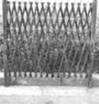
Farmer John and Farmer Bob were neighbours. For more than 30 years, they had been getting along very well.
Then their good relationship broke. It began with a small thing, then bitter words, and then weeks of silence. One morning Farmer John woke up to find a stream between the two farms. “It must be Bob,” John thought.
Then one day there was a knock on John’s door. He opened it to find a carpenter(木匠) standing at the doorway.
“I’m looking for a few days’ work,” the carpenter said.
“I do have a job for you,” John said. “Look across the stream at that farm. That’s my neighbour Bob. He dug a stream between the two farms. I want you to build a fence—an 8-foot fence. I don’t want to see his place or his face any more. I don’t have such a neighbour!”The carpenter said, “I think I know what to do, sir, and I’ll be able to do a job that pleases you.” Farmer John helped the carpenter get the materials ready and then he was off for the day. About sunset when the farmer returned, the carpenter had just finished his job. The farmer’s eyes opened wide. There was no fence there at all!
It was a bridge! And the neighbour, Bob, was coming across, with his hand outstretched(伸出). “Hi, John! You’re quite a fellow to build this bridge!”
Then they met in the middle, taking each other’s hands. “I’m terribly sorry for what I have said and done. We should be good to each other.” said Farmer Bob. Then they turned to see the carpenter, who was ready to go. “No, wait! Stay a few days. I have a lot of other jobs for you,” said Farmer John. “I’d love to stay,” the carpenter said, “but I have more bridges to build.”
1.What does the sentence “You’re quite a fellow to build this bridge!” mean?
A. John was great to build this bridge.
B. John was not good at building bridges.
C. John was foolish to build such a bridge.
D. John should build the bridge earlier.
2.What do you think of the carpenter?
A. Shy. B. Wise. C. Proud. D. Careless.
3.What is the best title for the passage?
A. What a Big Fence! B. A Strong Bridge.
C. Three Kind Men D. A Fence or a Bridge ?
湖北省互联网违法和不良信息举报平台 | 网上有害信息举报专区 | 电信诈骗举报专区 | 涉历史虚无主义有害信息举报专区 | 涉企侵权举报专区
违法和不良信息举报电话:027-86699610 举报邮箱:58377363@163.com