
题目列表(包括答案和解析)
As a music teacher for twenty-seven years I have always known that music touches the soul. It can break through all kinds of barriers to reach students in a very special way. It can be the means for each child to find their light.
A few years ago I was blessed with the opportunity to teach pre-school students one afternoon a week. One of my most memorable students was Vanessa. She was five years old, had difficulty walking and could not speak. We mostly sat on the floor for our music lessons and Vanessa liked to sit on my lap. One of her favorite songs was John the Rabbit. It was a call and response song where I sang the call and the students clapped two times while singing the repeating phrase “Oh yes!” Vanessa liked to put her hands together with mine and clap with me. We performed that song during every class Vanessa and I clapped together. She never said or sang a word.
One day late in the school year when the song was finished Vanessa turned around, looked at me in the eye, clapped her tiny hands two times and said the words “Oh yes!” I opened my mouth and could not speak. Through music we had made a connection.
Several years later I came across Vanessa on the street in town. I stopped my car and waved to say hello. She waved back with a big smile on her face and then clapped her hands two times mimicking the song we had performed in our music class. This precious little girl through her connection with music left an impression on me that will last forever.
Every child has the ability to learn and grow. It is up to us educators to discover the way to reach each and every one of our students. We all must find each child’s light.
1.The author thinks music__________.
A.can make children calm down B.can connect heart to heart
C.is difficult for pre-school students D.is a good means to find a job
2.According to the second paragraph Vanessa_________.
A.got used to singing songs B.was too shy to speak
C.was the youngest in the class D.enjoyed the author’s class
3.When Vanessa spoke the words “Oh yes!” the author felt________.
A.surprised B.happy C.frightened D.satisfied
4.What can we infer from the last two paragraphs?
A.The author has been in touch with Vanessa for several years.
B.Vanessa became as healthy as other children.
C.The song made a deep impression on Vanessa.
D.Being a good educator became Vanessa’s dream.
假如你是林平,你的笔友Sally正在美国的一所学校学习汉语,她给你发了一个电子邮件。请根据其内容,给予回复。邮件的开头及结尾均已给出(不计入总词数)。
要求:1. 词数80左右。
2. 条理清楚,语意连贯,句式规范。
参考词汇: listening ability(能力), spoken Chinese, radio, TV programs, video tapes
From: Sally
To: Lin Ping
Subject: Asking for help
Dear Lin Ping,
How are you getting on? Thanks for telling me something about your school life. I’m glad you’re doing well in your English study.
As you know, I began to learn Chinese 2 years ago. Now let me tell you something about my Chinese study. Though I can read and write a little Chinese, I’m still weak in listening and my spoken Chinese isn’t improving. I find it hard to talk with the people around in Chinese. Could you give me some advice? How I wish I could talk to you in Chinese one day!
Hope to hear from you soon.
Yours,
Sally
From: Lin Ping
To: Sally
Subject: Re: Asking for help
Dear Sally,
Glad to hear from you. You say you have some problems in learning Chinese. Don’t worry. __________________________________________________________
_______________________________________________________________________________
_______________________________________________________________________________
_______________________________________________________________________________
_______________________________________________________________________________
_______________________________________________________________________________
I hope you will make great progress in your Chinese study. Good luck!
Yours,
Lin Ping
“I’m really thankful to our government, for it provides us with such a good training program. The training greatly helps us live well. I will certainly study hard and learn the skills. Then I can 41] my family difficulties and do good to other people.” a learner on the job training program said, feeling 42:
The learner’s grandfather is nearly 80 years old, and his mother is 43] in bed. So his father, who is a father, is the main 44] of the family. The family is poor. The learner graduated from high school and did not 45] the college entrance exam. The job training program helps him learn the skills that he’ll 46] in the workplace.
The story reminds me of another 47: It goes like this: Once upon a time, there was a man who liked fishing very much, and was 48] to catch lots of fish every day. The man was a kind-hearted person, so he always 49] his fish with his neighbors who did not know how to fish. One day, he thought that it would be 50] if he taught them how to fish. So he 51] his neighbors tighter and showed how to fish. Everybody was very happy that they could 52] the fish they themselves caught.
At present, there are still a lot of poor people throughout the world. But it’s not good if we give only 53] to them. 54], we should give them a chance to learn new skills. Therefore, a technical training is very important to people in need, and they will learn the ability to 55] money. People can learn a lot of useful things in the training program and what learn can help them on the way to find jobs.
41:A. solve B. change C. study D. find
42:A. surprised B. excited C. relaxed D. interested
43:A. ill B. excited C. silent D. dangerous
44:A. problem B. example C. relatives D. support
45:A. pass B. copy C. know D. mind
46:A. repeat B. forget C. need D. test
47:A. story B. learner C. family D. program
48:A. afraid B. lucky C. sorry D. able
49:A. shared B. cooked C. exchanged D. weighed
50:A. easy B. great C. useless D. crazy
51:A. drove B. stopped C. called D. searched
52:A. feed B. save C. touch D.eat
53:A. time B. fish C. food D. clothing
54:A. Next B. Instead C. Luckily D. Especially
55:A. pay B. give C. use D. make
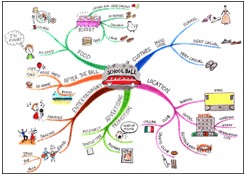
Tony Buzan’s grades were going down at university. Disappointed with his low marks, he went to the library to find a book on how to use his brain. He was directed to the medical section. Confused, he said to the librarian, “I don’t want to take my brain out, I just want to learn how to use it.” Her reply was simple: “There’s no book on that.”
“I thought to myself,” says Buzan, “if I buy a little radio, I get an instruction manual (说明书). If I buy a microwave, I get an instruction manual. But for the most important machine in the world, no instruction manual?”
Fifty years later, Buzan has become the world’s leading speaker on the brain and learning. In the late 1960s, he invented the mind map, a visual representation of thought processes.
This kind of thinking has become a popular tool for planning, organizing, problem solving, and communicating across the world. He has since authored and co-authored over 100 books that have appeared in more than 30 languages.
“I think in most cases, people use less than 1 percent of their brains,” he says.
But how do you expand this 1 percent? How do you become the best student you can be?
According to Buzan, the answer is simple. You take a section of whatever it is that you are trying to learn, he says, and you read it for its essence (精髓、要素). Then you make a mind map of all the important details. For a truly effective mind map, you start with a colored image in the center of your page. Draw the first image that comes to mind on the topic you are mind mapping. Branch off from your central image and create one of your main ideas. From your main branches draw some sub-branches and from those sub-branches you can draw even more branches. He emphasizes that you should use plenty of images and colors as these help with memory recall and encourage creativity.
By using this visual format (形式), according to Buzan, your mind will begin to make associations that will help you remember more information for longer periods of time.
Buzan believes that traditional note-taking methods, such as lists and summaries, do not stimulate the brain’s recall capacity or ability in the same way. Because of this, students will often find themselves locked away in their rooms for hours, trying hard to memorize separate details. Buzan believes that for a more effective and lasting way of studying, you must first understand how your brain works.
“Everyone is born smart,” he says. “You just have to learn how to learn.”
1.What is the main purpose of the first two paragraphs?
A.To show that Tony Buzan was worried about his study.
B.To invite us to think about the importance of manuals.
C.To prove that the mind map is a useful tool for the brain.
D.To show why Tony Buzan studies the brain and learning.
2.What does the word “stimulate” mean in the passage?
A.Excite. B.Improve. C.Encourage. D.Affect.
3.What can we infer from the passage?
A.If we learn the mind map, we will become the best student.
B.The mind map will help your brain connect separate details.
C.The mind map will be more effective if we put more details in it.
D.We will solve the problem if we make connections between ideas.
4.What is the best title for the passage?
A.How to make the mind map?
B.Is the mind map widely used?
C.Can your memory be mapped?
D.Is the mind map helpful in thinking?
Everyone needs friends. Friends bring us happiness and hope in our lives. But the ability to make friends changes from person to person. To some people, making friends is easy, and to others it’s very difficult.
Making friends is a skill, and the first thing is to know how to get along with others.
If you have trouble in making friends, maybe I can tell you how to do it.
★Realize your own good points. You have skills and talents that others will like.
★Believe that you are a good person and have something nice to share with others.
★Be humorous. Learn to laugh at yourself and your weakness. Remember to smile to others.
★Respect others. Everyone has his own idea. Learn how to listen to others’ ideas without trying to make them accept yours.
★Be kind. If you are kind to others, they will usually be kind to you. There are hundreds of little things you can do to show kindness. Open the door for someone. Wave to a friend and so on.
★Don’t complain. Learn to accept what you can’t change, and work hard to change what you can. No one is willing to hear your complaining all the time.
★Never give up. Even if you are faced with some closed-minded people, never give up. And try to find someone who will understand you.
【小题1】Why do we need friends according to the passage?
| A.Friends can do everything for us. | B.Friends can bring us happiness. |
| C.Friends accept our ideas all the time. | D.Without friends we could not live. |
| A.To help others. | B.To smile to others. |
| C.To get along with others. | D.To listen to others’ complaints. |
| A.Opening the door for someone. | B.Complaining to others all the time. |
| C.Laughing at ourselves and our weakness. | D.Finding someone who will understand us. |
| A.What makes good friends. | B.How to make friends. |
| C.What happiness means. | D.How to be friendly. |
湖北省互联网违法和不良信息举报平台 | 网上有害信息举报专区 | 电信诈骗举报专区 | 涉历史虚无主义有害信息举报专区 | 涉企侵权举报专区
违法和不良信息举报电话:027-86699610 举报邮箱:58377363@163.com