
题目列表(包括答案和解析)
Usually, when your teacher asks a question, there is only one correct answer. But there is one question that has millions of current answers. That question is "What's your name?" Everyone gives a different answer, but everyone is correct.
Have you ever wondered about people's names? Where do they come from? What do they
mean?
People's first names, or given names, are chosen by their parents. Sometimes the name of a grandparent or other member of the family is used. Some parents choose the name of a well-known person. A boy could be named George Washington Smith; a girl could be named Helen Keller Jones.
Some people give their children names that mean good things. Clara means "bright"; Beatrice means "one who gives happiness"; Donald means "world ruler"; Leonard means "as brave as a lion".
The earliest last names, or surnames, were taken from place names. A family with the name Brook or Brooks probably lived near brook (С?); someone who was called Longstreet probably lived on a long, paved road. The Greenwood family lived in or near a leafy forest.
Other early surnames came from people's occupations. The most common occupational name is Smith, which means a person who makes things with iron or other metals. In the past, smiths were very important workers in every town and village. Some other occupational names are: Carter - a person who owned or drove a cart(手推车); Potter -a person who made pots and pans.
The ancestors (祖先) of the Baker family probably baked bread for their neighbors in their native village. The Carpenter's great-great-great-grandfather probably built houses and furniture.
Sometimes people were known for the color of their hair or skin, or their size, or their special abilities. When there were two men who were named John in the same village, the John with the gray hair probably became John Gray. Or the John was very tall could call himself John
Tallman. John Fish was probably an excellent swimmer and John Lightfoot was probably a fast
runner or a good dancer.
Some family names were made by adding something to the father's name. English-speaking people added -s or -son. The Johnsons are descendants of John; the Roberts family's ancestor was Robert. Irish and Scottish people added Mac or Mc or O. Perhaps all of the MacDonnells and the McDonnells and the O'Donnells are descendants of the same Donnell.
【小题1】Which of the following aspects(方面)do the surnames in the passage NOT cover?
| A.Places where people lived. |
| B.People's characters. |
| C.Talents that people had. |
| D.People's occupations. |
| A.owned or drove a cart |
| B.made things with metals |
| C.made kitchen tools or contains |
| D.built houses and furniture |
| A.Beatrice Smith |
| B.Leonard Carter |
| C.George Longstreet |
| D.Donald Greenwood |
| A.后代 | B.朋友 | C.同事 | D.同伴 |
| 小题1: |
|
| 小题2: |
|
| 小题3: |
|
| 小题4: |
|
| 小题5: |
|
| 小题6: |
|
| 小题7: |
|
| 小题8: |
|
| 小题9: |
|
| 小题10: |
|
| 小题11: |
|
| 小题12: |
|
| 小题13: |
|
| 小题14: |
|
| 小题15: |
|
| A.Places where people lived. |
| B.People's characters. |
| C.Talents that people had. |
| D.People's occupations. |
| A.owned or drove a cart |
| B.made things with metals |
| C.made kitchen tools or contains |
| D.built houses and furniture |
| A.Beatrice Smith |
| B.Leonard Carter |
| C.George Longstreet |
| D.Donald Greenwood |
| A.后代 | B.朋友 | C.同事 | D.同伴 |
I was walking down the road one day when my cell phone rang. 36 voice on the other end spoke to me, “Dad, please come back soon. I miss you so much!” I thought that it was a wrong number. A short while later, the call came once again, so I 37 rudely, “You’ve dialed the wrong number!” and then hung up.
During the 38 days, I often got the 39 call. But I didn’t care much about it.
Then one day she kept calling me, 40 I didn’t answer. Finally I answered the phone and heard a weak voice, “Dad, please come back. I miss you so much! Dad, I’m in so much 41 ! Mom said you were too busy to take care of me. But, dad, please 42 me again, OK?” It was 43 to refuse the innocent(天真的, 无邪的) ask. I made a 44 kiss on the phone and heard the weak voice say, “Thank you…Dad, I am so…happy, so…happy…”
Shortly after this, I became curious(好奇)about 45 had been on the other end of my phone. So I called back, and a woman answered, “Sorry, sir. I am really sorry to have 46 you. My daughter has had bone cancer since she was born. And her father…died in a car 47 two weeks ago. I didn’t want to tell her the news. Poor baby. When she couldn’t 48 the painful chemotherapy(化疗), she would cry for her dad because her dad always 49 her. I really don’t know what to do, so I gave her a random(随意的) phone number…”
“How is your daughter now?” I couldn’t wait to ask.
“She has died. You 50 have kissed her on the phone, because she died with a smile, tightly holding the cell phone…” Tears full of my eyes….
36.A.A boy’s B.A child’s C.My daughter’s D.My son’s
37.A.spoke B.told C.returned D.replied
38.A.following B.front C.other D.coming
39.A.different B.same C.wrong D.funny
40.A.so that B.and C.as if D.though
41.A.danger B.trouble C.pain D.difficulty
42.A.look after B.kiss C.help D.encourage
43.A.easy B.sad C.happy D.difficult
44.A.soft B.sweet C.low D.loud
45.A.that B.what C.who D.how
46.A.troubled B.asked C.stopped D.reached
47.A.experiment B.event C.accident D.activity
48.A.receive B.fight C.stand D.face
49.A.encouraged B.amused C.caught D.missed
50.A.must B.might C.should D.need
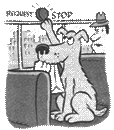 It was Sunday morning. A butcher(屠夫) heard the doorbell(门铃) and thought it must be a customer. But he was surprised to see that a dog was
coming into his shop. The dog had $10 and a note in its mouth. The butcher
took the note and read it. It said,“10 pork chops(排骨), please.”So the butcher took the money and put a bag of chops in the dog’ s mouth.
Then he quickly closed the shop because he decided to follow the dog. He found the dog on the street. The dog was waiting for a green light. Then the dog walked across the road. The dog went to a bus stop. When a bus arrived, the dog checked the number and then got on the bus.
After a while, the dog stood up on his back paws(爪子) to push the “stop” button(按钮). The bus stopped and the dog got off. Then the butcher followed it to get off the bus.
The dog ran to a house and dropped the bag in front of the front door. It then began to beat its head against the front door. After a while, a big man opened the door and began shouting at the dog. The butcher ran up and shouted at the man, “What are you doing? Your dog is a genius(天才).”
The owner of the dog said, “Genius? No way! I always tell him to take the keys when he goes to the stores. But he never listens to me!”
1 Who was the customer that Sunday morning?
A. A big man. B. A butcher. C. A dog. D. A little boy.
2 How much did the dog pay for the pork chops?
A. $20. B. $10. C. $5. D. $62.
3 How did the dog take the note?
A. In the bag. B. On its back.
C. In its mouth. D. Around its neck.
4 Which is NOT right according to the story?
A. The dog stood up on its back paws to push the “stop”
B. The butcher quickly closed the shop to follow the dog.
C. The big man was pleased with his do
D. The butcher thought the dog was a genius.
5 What is the story mainly about?
A. A customer. B. A smart dog. C. A butcher. D. A big man.
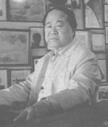 Mo Yan, a well-known Chinese writer, won the Nobel Prize for literature(文学) in 2012. He was also the first Chinese writer who got this prize in history. When he was interviewed, he said he was only a normal person who could tell stories. He especially thanked his mother. He thought his mother had a strong influence on him.
Mo Yan was born in a poor family in China’s rural area. When he was young, he was a little bit shy because he thought he wasn’t good-looking. His classmates often played jokes on his look. That made him very upset. His mother encouraged him to face the fact bravely. She told him not to look down on(看不起) himself. She said it didn’t matter if a person didn’t have a good look and it was important to work hard and never give up. She hoped that his son would be a useful person in society.
Mo Yan didn’t let her mother down. He worked hard at writing. He wrote many famous novels, such as Hong Gao Liang(《红高粱》)and Wa(《娃》). His success tells us a truth,“Nobody can beat you unless you beat yourself.”Hold on to your dream and y our dream will come true in the end.
6What does Mo Yan do?
A. He is a famou s singer. B. He is a famous actor.
C. He is a famous writer. D. He is a famous doctor.
7 When did Mo Yan win the Nobel Prize?
A. In 2010. B. Last year. C. In 2013. D. Last month.
8Why did Mo Yan feel upset when he was a little boy?
A. Because he was poor.
B. Because he couldn’t tell stories.
C. Because his classmates often laughed at his look.
D. Because he didn’t work hard.
9 What is the most important for a person according to the article?
A. Working hard. B. Money. C. A good job. D. A good look.
10 What can we learn from the story?
A. Mo Yan’s classmates were friendly to him.
B. Mo Yan was born in a rich family.
C. Mo Yan won the Nobel Prize for peace.
D. Mo Yan’s mother helped him a lot.
湖北省互联网违法和不良信息举报平台 | 网上有害信息举报专区 | 电信诈骗举报专区 | 涉历史虚无主义有害信息举报专区 | 涉企侵权举报专区
违法和不良信息举报电话:027-86699610 举报邮箱:58377363@163.com