
题目列表(包括答案和解析)
As we know, there are differences between western culture and Chinese culture. We can see differences when we pay attention to the way words are used. Let’s look at the words about animals and plants. Most expressions in Chinese about the dog, for example, “a homeless dog”, “a mad dog”, “a running dog” and “a dog catching a mouse” have negative(消极的) meanings. But in western countries, dogs are thought to be honest and good friends of humans. In English, people use the dog to describe positive(积极的) actions. For example, “you are a lucky dog” means you are a lucky person. And “every dog has its day” means each person has good luck sometimes. To describe a person’s serious illness, they say “sick as a dog”. The word “dog-tired” means very tired. However, Chinese love cats very much. But in western culture, “cat” is often used to describe a woman who is cruel(残酷的)。
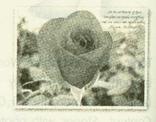
The rose is regarded as a symbol (象征) of love in both China and some western countries. People think the rose means love, peace, courage and friendship. And the rose is the national flower of England, America and many other countries.
The words about plants and animals are used in positive or negative ways in different cultures. We can learn about many differences in cultures by comparing how some words are used.
1.“Every dog has its day.” Means “__________”
A.Everybody in the world is lucky.
B.Each person lives his own way of life.
C.If one works hard, he’s sure to succeed.
D.Everybody has a time in life to be lucky.
2.Western people usually use “cat” to refer to “___________”.
A.a tired person
B.a brave man
C.a homeless person
D.an unkind woman
3.Which of the following is true according to the passage?
A.Words show differences in culture.
B.Chinese people prefer dogs to cats.
C.Western people think cats to be good friends.
D.Rose is the national flower of all western countries.
4.What’s the best title for the passage?
A.Negative or Positive
B.Different Countries Have Different Culture
C.Rose Means the Same in Chinese and English
D.What Dog and Cat Mean in English and Chinese
The American expression “shoo-in” means someone or something that seems sure to win a race or competition.
Before a big football game, supporters of each are certain to argue about which side will win.
Sometimes, however, one team appears so much stronger than the others that everyone agrees it will win.. The stronger team is a shoo-in. There is no way that it can lose.
The expression “shoo-in” comes from horse racing. It comes from the world “shoo”. That is not the shoe we wear on our feet. It’s another word, S-H-O-O. To shoo is an expression hundreds of years old that means to force an animal to move in a desired direction.
Many years ago dishonest riders sometimes agreed secretly to control their horses so that one chosen horse would win the race. but one of the riders would hold back their horses. The chosen rider would shoo his horse ahead of the others, and win the race.
The other riders would secretly bet large amounts of money that the chosen horse would win. The public soon learned about such about such race. They began to call the winners of such a race a “shoo-in”
These days, people use shoo into describe any athlete or competition that seems certain to win, even without cheating.
American runner Edewin Moses won more than hundred races before he ran the hurdle race in the 1984 Olympic Games. Everyone said Moses was a shoo-in, and that he could not lost. And they were right. He won the gold medal.
阅读上面的短文,从每题所给的四个选项中,选出一个最佳答案
1.One of the dishonest riders was sure to win the race because_______.
|
A.be used to be the best in riding |
|
B.the pubic had belief in him |
|
C.he could not control his horse easily |
|
D.the other riders had agreed to fail in the race |
2.The reason why American runner Edewin Moses was regarded as a
“Shoo-in” is _________.
|
A.due to his honest in the races he ran in |
|
B.duo to his great effort(努力) shown in more than one hundred races |
|
C.that he won over 100 competitions before the 1984 Olympic Games |
|
D.that the old meaning of “shoo-in’ had changed |
3.Which is the following statement is not true?
|
A.“Shoo-in” came from the word “shoo”. |
|
B.The US runner Moses was worthy of (配得上 ) a shoo-in. |
|
C.The public did not know they were being cheated |
|
D.Some riders bet a lot of money on the chosen horse. |
4.The main idea of the passage is that “shoo-in” is_______.
|
A.used for anyone or anything that is certain to win a game |
|
B.used to admire( 钦佩 ) a person who seems to be sure to win a race |
|
C.A word used to describe a dishonest person |
|
D.used for any athlete or competitor that too clever to be cheated |
5.In the last paragraph the author means to tell us ________.
|
A.who Edewin Moses was |
|
B.Moses won a lot of races |
|
C.Moses was the best runners in America |
|
D.We can use “shoo-in” to describe an excellent runner. |
The word “sharp” can be __ to describe many different things in your home, classroom, and places of work. In this chapter, the writer __sharp pencils, meaning pencils with a very fine __.The writer does not like dull pencils. 。
We can also use “sharp” to describe the blades of knives. Knives also have points. We can use “sharp” to describe a __ kind of point, such as the sharp points of kitchen and steak knives. Scissors have blades, too, and we can describe these blades as sharp or dull. Furthermore, the points of scissors are __ sharp or rounded spending on the kind of scissors. Some tools, such as saws, scrapers, and garden tools, also have blades. We can use the words “sharp” and “dull” to describe the blades of these tools, too. Sharp knives, scissors, and tools are__to use. They cut things easily and quickly, without effort.?
“Sharp” can be used to describe the edges of furniture and __some containers. For example, the edge of a table or desk can be __.In addition; we can describe the edge of __ open can as sharp. The top of a can is sometimes sharp__ to cut your hand. A piece of __ from a broken jar or bottle is ordinarily very sharp.
__we sometimes use “sharp” to describe people. A person who appears sharp is very well __.A person who is sharp, on the other hand, is intelligent, smart, and__ learn and understand.
To summarize, “sharp” can be used to describe many kinds of __ that have blades, points, and edges. When we used it to describe people, it can mean nice looking, well dressed, or intelligent. It is an expensive word because it can be used in many different ways.
1.A. written???????? B. used???????? C. seen???????? D. taken
2.A. talks about???? B. takes care of?? C. doesn't like to mention??? D. makes up his mind to
3.A. sharp???????? B. color????????? C. point????????? D. edge
4.A. some???????? B. any????????? C. only????????? D. certain
5.A. either???????? B. neither???????? C. too?????????? D. very
6.A. difficult?????? B. easy?????????? C. interesting????? D. clean
7.A. for?????????? B. with?????????? C. of???????????? D. at
8.A. seen???????? B. sharp?????????? C. smooth??????? D. hard
9.A. an?????????? B. a????????????? C. the??????????? D. /
10.A. so as???????? B. in order???????? C. so that??????? D. enough
11.A. news???????? B. glass?????????? C. information??? D. advice
12.A. However???? B. Finally???????? C. Therefore????? D. In this way
13.A. prepared????? B. dressed???????? C. mannered????? D. served
14.A. easy to?????? B .is to??? ??????? C. to???????????? D. quick to
15.A. funny things?? B. knives???????? C. objects????????? D. containers
| A.shows peace | B.stands for friendship |
| C.has a negative meaning | D.has a positive meaning |
| A.each person lives his own way of life |
| B.if one works hard, he is sure to succeed |
| C.everybody in the world is lucky |
| D.everybody has a time in 1ife to be lucky |
| A.a tired person | B.a brave man |
| C.a homeless person | D.an unkind woman |
| A.Words show differences in different cultures. |
| B.Chinese people like dogs better than cats. |
| C.Western people think of cats to be good friends. |
| D.Rose is the national flower of all western countries. |
| A.Negative or Positive. |
| B.Different Countries Have Different Cultures. |
| C.Rose Means the Same in Chinese and English. |
| D.What Dog and Cat Mean in English. |
湖北省互联网违法和不良信息举报平台 | 网上有害信息举报专区 | 电信诈骗举报专区 | 涉历史虚无主义有害信息举报专区 | 涉企侵权举报专区
违法和不良信息举报电话:027-86699610 举报邮箱:58377363@163.com