
题目列表(包括答案和解析)
Americans love sports . But this hobby sometimes has serious results—at least to the players. For example, when people play tennis, sometimes they hurt their elbow(肘部). Also it is easy to hurt a knee in a football game. These injuries(毁伤)happen while the player is having fun, but they still hurt.
A few months ago, Kathleen Simmons, who loves playing volleyball, hurt her knee in a volleyball game. Her doctor told her that she needed a very difficult operation(手术)or she might not be able to play again. She felt very sad
Then Simmons learned about “video operation”. With the help of this new science in medicine, doctors can now repair many injuries.
For this operation, her doctor didn’t have to open her knee. Instead he put a very small camera lens(镜头)inside her knee. The lens sent back pictures, which appeared on a television screen. As he worked, he could see the inside of her knee on the TV. With the help of the large pictures on the screen, the doctor knew exactly what to do when he was making the repairs.
Simmons started walking five days after her operation. “My knee hurt a lot the first few days,” she said. “But I felt better very quickly.” Now, six months after her operation, Simmons can do everything she did before her injury. “It feels like a new knee,” she said. “I can even play volleyball again.”
1.Do Americans love sports?
2.What sport is Simmons interested in?
3.What did the doctor put inside Simmons’ knee?
4.What problem may people have when they play sports?
5.Can Simmons do everything like before?
When you watch TV and play video games you make global(全球的) warming worse! It may seem hard to believe, but w hen
electricity is made, so are greenhouse gases(温室气体).
This means that every time you use electricity you help make global warming
worse!
hen
electricity is made, so are greenhouse gases(温室气体).
This means that every time you use electricity you help make global warming
worse!
Cars are also making global warming worse. They burn fossil fuels(化石燃料) in their engines, and send lots of greenhouse gases into the air.
Global warming may be a big problem, but we can
all help stop it. People can try to drive their cars less. Or even get ones
that  run
on sunlight! You can also help. Let’s try one of these top ideas:
run
on sunlight! You can also help. Let’s try one of these top ideas:
(1) Try to use less electricity. Turn off lights, your television, and your computer when you’ve stopped using them. To make electricity, fossil fuels are burned in big factories. But burning fossil fuels also makes greenhouse gases. You should also try to watch less TV.
(2) Plant trees. Not only is it a fun thing to do, but it is also a great way to lower the number of greenhouse gases in the air. Trees take carbon dioxide out of the air when they grow.
(3) Don’t throw away your rubbish, try to recycle it. If rubbish is not recycled, it is put in the ground. There it rots(腐烂) and makes a greenhouse gas called methane(甲烷).So try to recycle cans, bottles, plastic bags and newspapers. It’ll make you feel great! And it’ll help the Earth.
1.If we _____, we may make global warming worse.
A. use less electricity B. drive a car on sunlight
C. plant trees D. throw away rubbish
2. ______ will make global warming worse.
A. Methane B.
Cans C.
Newspapers D.
Bo ttles
ttles
3.Using less electricity does good to global warming because_______.
A. the less electricity is used, the more greenhouse gases are produced
B. the more electricity is used, the more greenhouse gases are produced
C. more electricity is used, less greenhouse gases are produced
D. less electricity is used, more greenhouse gases are produced
4.Which is the following is NOT TRUE according to the passage?
A. Driving cars on sunlight helps to stop global warming.
B. When cars burn fossil fuels, they
produce greenhouse gases.
C. When trees grow, they send carbon dioxide into the air.
D. By planting more trees, we can lower the number of greenhouse gases in the air.
People cannot reach an agreement on the use of science and technology. For example, will radiation from electronic equipment destroy the environment? Should medical scientists change gene structures to prevent genetic disease or to create “more perfect” human beings? While people are arguing about these and others, technology continues to influence our everyday lives—the home, health and education, entertainment and communication, and so on.
Some people carry on active social lives with computers —their own or the ones in public places like cafes, social centers, libraries, and so on. Communicating with others in chat rooms, computer users can get to know people they might never meet in traditional ways. With live online video connections, two people with cameras in their computers can see and talk to each other from separate places.
With modern telephone technology, most people stopped writing lettters—especially personal letters and notes. But now, writing to communicate has returned in electronic form, or e-mail, which is a way of sending messages from one computer to another. For some computer users, the wish to communicate intelligently or creatively with others makes them want to write better.
Computer technology has also made it possible to run a house electronically. From turning lights on and off to starting the coffee and cooking the hot meal, computers are taking care of people at home. Many modern machines have computer chips that allow their owners to program them. For instance, you can “instruct” a microwave oven how to cook a dish. Most entertainment equipment operates with computer technology too. Computers can even start cars automatically so that on cold winter mornings you can get into a warmed-up vehicle and drive off.
Although much of the technology in our everyday lives has good effects, there are some uses that raise questions. For example, are interactive media ( i.e., a combination of television, telephone, and computer) going to control minds, cause people to forget about family life and personal relationships? What effects will the genentic engineering of food have on people’s health? High-tech medical treatments can make a person live a much longer life, but can they improve the health and happiness of human beings? Only time will tell, but, in the meantime, science and technology will continue to move forward.
1. What does the underlined word “ chips” mean?
A. thin pieces of potatoes B. small holes C. small pieces of wood D. central parts
2.We can know from the passage that _________.
A. technology never stops changing our everyday lives
B. with computers each of us can live a comfortable life
C. people can do more activities with computers
D. the more you use computers, the better you might write
3.What can we infer from the underlined sentence in the last paragraph?
A. The longer you live, the happier you are.
B. High-tech medical treatments can’t improve our health and happiness.
C. High-tech medical treatments can’t help us with everything.
D.The writer questioned high-tech medical treatments somehow.
4.What is the best title for the passage?
A. Science and New Technology B. Computers Change Our Lives
C. Everyday Uses of Technology D. Only Time Will Tell
|
broadcast1/'brɔ:dkɑ:st||ˈbrɔdˌkæst/n[C] a programme on the radio or on television: a radio news broadcast | live broadcast ( = a programme that you see or hear at the same time as the events are happening) broadcast2 v past tense and past participle, broadcast 1 [ I,T] to send out radio or television programmes: The interview was broadcast live across Europe. 2 [T] to tell something to a lot of people: There was no need to broadcast the fact that he lost his job. broadcaster /ˈbrɔːdkɑːstə || ˈbrɔːdkæstər/ n [C] |
curious/ ˈkjʊəriəs || 'kjur-/ adj 1 wanting to know about something: When I mentioned her name everyone was curious. | [ +about] I’m incurious about this book she's supposed to be writing. |curious to see/hear/know etc: Mandy was curious to hear what Peter had to say himself.—opposite INCURIOUS 2 strange or unusual: a curious noise coming from the cellar | curious that It's very curious that she left without saying goodbye. curl1 /kɜ:l|| kɚrl/ n 1[C] a small mass of hair |
|
flask / flɑ:sk || flæsk/n [C] I BrE a special type of bottle that you use to keep liquids either hot or cold, for example when travelling 2 a flat bottle usually used to carry alcohol 3 a glass bottle with a narrow top, used in a LABORATORY flat1/ flæt / adj flatter, flattest 1▶ SURFACE◀ smooth and level, without raised or hollow areas, and not sloping or curving: a flat-bottomed boat |a perfectly flat sandy beach | flat as a |
pollute / pə'lu:t/ v [T] 1 to make air, water, soil etc dangerously dirty and not suitable for people to use: beaches polluted by raw sewage | industrial emissions that pollute the air 2 pollute sb’s mind to give someone immoral thoughts and spoil their character: fears that Lawrence's novels would pollute young minds--polluted adj: polluted rivers--polluter n [C] pollution / pəˈlu:ʃn /n [U] 1 the process of making |
1.The pronunciation of the word "broadcast" is ____ or/ˈbrɔdˌkæst /.
A. /'brɔ:dkɑ:st/ B. /'brəud'sɑ:st/ C. /bræd'kɔst/ D. /'bru:dkɑ:st/
2.The word"____ "can be used as an adjective (形容词).
A. pollute B. pollution C. curious D. curiously
3.Which of the following is a flask?

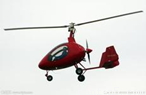

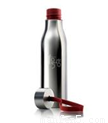
A. B. C. D.
4. The word "pollute" means "______".
A. to tell something to a lot of people B. wanting to know about something
C. a programme on the radio or on TV D. to make air. water, soil, etc dirty
5.These texts are probably from ______.
A. a magazine B. a dictionary
C. a newspaper D. an advertisement
Reading B
Mark was walking home from school one day when he noticed a boy ahead of him. He had tripped(绊倒) and dropped all of the books he was carrying, along with some clothes, a baseball bat and a glove.
Mark knelt(跪) down and helped the boy pick up the things. Since they were going the same way, he offered to carry some things for the boy.
As they walked, Mark discovered the boy’s name was Bill. He loved video games, baseball and history, but he was having trouble with some of his subjects.
They arrived at Bill’s home first. Mark was invited in for a Coke and to watch some television. The afternoon passed pleasantly with some laughs and talk. Then Mark went home.
They continued to see each other around school, had lunch together once or twice, then both graduated from junior school. Three days before graduation, Bill asked Mark if they could talk.
Three days before graduation, Bill asked Mark if they could talk.
Bill reminded Mark of the day years ago when they had first met. “Did you ever wonder why I was carrying so many things home that day?” asked Bill.
“You see, I took away all my things form school. I had stored away some of my mother’s sleeping pills. I was going home to kill myself. But after we spent some time talking and laughing, I realized that if I had died, I would have missed so many good times. So you see, Mark, when you picked up those books that day, you did a lot more. _____________.”
【小题1】When Bill fell down on his way home, Mark __________.
| A.didn’t notice that | B.went away quickly |
| C.helped him pick up the things | D.carried all the things for him |
| A.Mark was a warm-hearted boy. |
| B.Bill was good at all of his subjects. |
| C.Bill and Mark were in the same school. |
| D.Bill loved video games, baseball and history. |
| A.drink some Coke | B.watch TV |
| C.have a pleasant talk | D.play video games |
| A.wanted to tell him his story | B.wanted to kill himself again |
| C.hoped to have lunch together | D.hoped to go on holiday together |
| A.I should die. | B.You saved my life. |
| C.You did a good job. | D.You helped me a lot. |
湖北省互联网违法和不良信息举报平台 | 网上有害信息举报专区 | 电信诈骗举报专区 | 涉历史虚无主义有害信息举报专区 | 涉企侵权举报专区
违法和不良信息举报电话:027-86699610 举报邮箱:58377363@163.com