
题目列表(包括答案和解析)
Thomas Barnardo was born in Ireland in 1845. He was not very successful at school, but he wanted to help people. He moved to London and started to study medicine. London was full of poor children. Barnardo decided to help and opened schools for these children. The schools were popular. Later, he opened homes for the children without parents.
In 40 years he raised ?3,250,000. Barnardo made friends with rich and important people, he wrote letters and made speeches(演说). He started a club for Young Helpers with 34,000 members who raised money for the poor children. He also sold photos of children before and after they got help. These pictures  made his work famous and showed people the poor children had better lives because of their money.
Barnardo was so busy that he did not become a doctor until 1876. His next idea was to pay people to take care of homeless children and made the children have families. He helped many children go to Canada and Australia to live with their “new” parents (but not everyone thought this was a good idea). When Barnardo died in 1905, he had helped thousands and thousands of people and made their lives happier.
( )21. Which of the following is right?
A. Barnardo was a good student.
B. Barnardo moved to London to help the poor children.
C. Barnardo opened only schools for the poor children.
D. Barnardo thought it was better for the children to be in ordinary(普通) people's houses than to be in his homes.

( )23. Barnardo made friends with rich and important people because he ___________.
A. liked rich and important people.
B. could raise more money for the poor children.
C. needed their help himself.
D. wanted to write letters to them and make speeches for them
( )24. Barnardo sold photos of the children because ____________.
A. they could only show something about the children before they got help.
B. they could only show something about the children after they got help.
C. they could show something about the children before and after they got help.
D. they could show something about the helpers.
( )25. What can you learn from Barnardo?
A. We can learn some ways of making money.
B. We should open some schools for the poor children.
C. We should open homes for the poor children. 新课标第一网
D. We should be kind and try our best to help others.
听力部分(25分)
一、情景反应 根据你所听到的句子,从A、B、C三个选项中选出最恰当的答语。听完每个句子后你有4秒钟时间作答和阅读下一小题。每个句子读两遍。(共5小题,计5分)
1.A.She’s kind.
B.She’s beautiful.
C.She likes dancing.
2.A.No problem.
B.Don’t say so.
C.Not at all.
3.A.No, they haven’t.
B.No, they don’t.
C.No, they didn’t.
4.A.You’re welcome.
B.Sure.Here you are.
C.Yes, I can.
5.A.Sorry, I will.
B.Don’t worry about it.
C.Sorry, I won’t do it again.
二、对话理解
第一节:听5段小对话及问题,从A、B、C三个选项中选出最佳答语。听完每段对话和问题后,你有5秒钟时间作答和阅读下一小题。每段对话和问题均读两遍。(共5小题,计5分)
6.A.No, he won’t.
B.Yes, she will.
C.Yes, he will.
7.A.Judy.
B.Dolly.
C.Mike.
8.A.Across from the bookstore.
B.Next to the bookstore.
C.In No.2 street.
9.A.A teacher.
B.A doctor.
C.A policewoman.
10.A.It’s 10 thousand.
B.It’s 55 thousand.
C.It’s 60 thousand.
第二节:听一段长对话和一段独白,对话和独白后分别有几个小题,从A、B、C三个选项中选出最佳答语。对话和独白均读两遍。(共5小题,计7.5分)
听第11段材料,回答第11至12小题。听之前你有5秒钟时间阅读相关小题,听完后你有5秒钟时间作答。
11.Why does Steve like the painting Sunflowers? Because it’s _________.
A.lovely with dark colors
B.lively with dark colors
C.lively with bright colors
12.The woman likes _________ better.
A.Leonardo da Vinci
B.Vincent van Gogh
C.Qi Baishi
听第12段材料,回答第13至15小题。听之前你有10秒钟时间阅读相关小题,听完后你有5秒钟时间作答。
13.Peter got the book _________.
A.last year
B.two years ago
C.last month
14.What has Peter learned from the book?
A.People should help and understand each other.
B.People should love each other.
C.Both A and B.
15.Peter loves the book best, because the book is _________.
A.named Beautiful English
B.full of his mother’s deep love
C.full of beauty
三、短文理解 听短文,根据短文内容,从A、B、C三个选项中选出所给问题的最佳答案。听短文前你有15秒钟时间阅读相关小题,听完后你有10秒钟时间作答。短文读两遍。(共5小题,计7.5分)
16.What do you think of Anna?
A.Stupid.
B.Polite.
C.Clever.
17.Whom does Anna learn a lot from?
A.Her mother.
B.Her grandpa.
C.Her grandma.
18.How did his mother feel when Anna laughed at Tim?
A.Happy.
B.Sad.
C.Angry.
19.How many teachers are there in the story?
A.Two.
B.One.
C.Three.
20.Which of the following is right?
A.Anna’s grandpa took her to the party.
B.The guests all praised Anna.
C.Tim couldn’t answer all the questions.
听力测试
(一)单句理解(共10分)
A.听句子,选择与所听句子内容相符的图画,并将所选选项的字母代号填入题前括号内。每个句子听两遍。
( )1.A.

B.
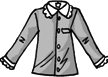
C.

( )2.A.

B.

C.

( )3.A.

B.

C.

( )4.A.

B.

C.

( )5.A.

B.

C.
B.情景反应:听句子,选择最恰当的答语,并将所选选项的字母代号填入题前括号内。每个句子听两遍。
( )6.A.No problem.
B.What a pity!
C.Great!
( )7.A.Don’t say so.
B.That’s right.
C.It’s a pleasure.
( )8.A.Good luck!
B.Enjoy yourself!
C.Well done!
( )9.A.Never mind.
B.Sorry, I’ll do it in a minute.
C.I’d love to.
( )10.A.I’ve had enough.
B.I don’t like it.
C.No, thanks.I’m full.
(二)对话理解:听五段小对话及问题,选择正确的选项,并将所选选项的字母代号填入题前括号内。对话和问题均听两遍。(共5分)
( )11.A.To the People’s Hospital.
B.To the post office.
C.To the cinema.
( )12.A.27cm.
B.35cm.
C.37cm.
( )13.A.Yes, he could.
B.Yes, he can.
C.No, he couldn’t.
( )14.A.Because she has no friends.
B.Because her mother is ill.
C.Because she failed the exam.
( )15.A.At 7∶45.
B.At 7∶55.
C.At 8∶25.
(三)短文理解(共10分)
第一节:听短文,根据短文内容,选择正确的选项,并将所选选项的字母代号填入题前括号内。短文听两遍。
( )16.What does Mr King do?
A.A doctor.
B.A driver.
C.A farmer.
( )17.Where were they going to travel?
A.Paris.
B.London.
C.New York.
( )18.How did they go there?
A.By train.
B.By bus.
C.By plane.
( )19.What happened to Mrs King one evening?
A.She got lost in the city.
B.She drank too much.
C.She didn’t feel well.
( )20.How would Mr King feel when he heard what the second young man said?
A.Disappointed.
B.Happy.
C.Thankful.
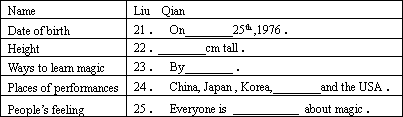
第二节:听短文,根据短文内容填写表格,每空一词。短文听三遍。
湖北省互联网违法和不良信息举报平台 | 网上有害信息举报专区 | 电信诈骗举报专区 | 涉历史虚无主义有害信息举报专区 | 涉企侵权举报专区
违法和不良信息举报电话:027-86699610 举报邮箱:58377363@163.com