
题目列表(包括答案和解析)
Some people bring out the best in you in a way that you might never have fully realized on your own. My mom was one of those people.
My father died when I was nine months old. Mom and I lived a very hard life. We had little money, but my mom gave me a lot of love. Each night, she spoke the words that would change my life, “Kemmons, you are certain to be a great man and you can do anything in life if you work hard enough to get it.”
At fourteen, I was hit by a car and the doctors said I would never walk again. Every day, my mother spoke to me in her gentle, loving voice, telling me that I could walk again if I wanted strongly enough. She drove that message so deep into my heart that I finally believed her. A year later, I returned to school — walking on my own!
When the Great Depression (大萧条) hit, my mom lost her job. Then I left school to support both of us. At that moment, I decided never to be poor again.
Over the years, I experienced various levels of business success. But the real turning point happened on a vacation I took with my wife and five kids in 1951. I wasn’t satisfied with the second-class hotels available for families and was angry that they asked me an extra $2 for each child. That was too expensive for many American families. I told my wife that I was going to open a motel (汽车旅馆) for families that would never ask extra for children. There were plenty of doubters at that time.
Of course mom was one of my strongest supporters. She worked behind the desk and even designed the room style. But with my mother’s support and encouragement, I never doubted we would succeed. Fifteen years later, we had the largest hotel system in the world — Holiday Inn. In 1979 my company had 1,759 inns in more than fifty countries with an income (收入) of $ 1 billion a year.
You may not have started out life in the best situation. But if you can find a task in life worth working for and believe in yourself, nothing can stop you.
1.According to the writer, who played the most important role in making him walk back to school again?
|
A.Doctors. |
B.Nurses. |
C.Friends. |
D.Mom. |
2.What caused Kemmons to start a motel by himself?
|
A.His terrible experience in the hotel. |
|
B.His various levels of business success. |
|
C.His mom’s support. |
|
D.His wife’s suggestion. |
3.Which of the following best describes Kemmons’ mother?
|
A.Modest, helpful, and hard-working. |
|
B.Careful, helpful and beautiful. |
|
C.Loving, supporting and strong-willed (意志坚强的). |
|
D.Strict, humorous and supporting. |
4.Which of the following led to Kemmons’ success according to the passage?
|
A.A poor family, hard work, higher education and self-confidence (自信). |
|
B.Mom’s encouragement, clear goals, self-confidence and hard work. |
|
C.Clear goals, mom’s encouragement, a poor family and higher education. |
|
D.Mom’s encouragement, a poor family, higher education and better chances. |
Napping(小睡) after learning something new could help improve your memory--- as long as you dream, scientists say.
They found people who dream about a new task do it better on waking than those who do not sleep or do not dream.
Volunteers were asked to learn the layout(布局,设计) of a 3D computer maze(迷宫) so they could find their way several hours later. Those allowed to take a pap and who also remembered dreaming of the task, found their way to a landmark quicker.
The researchers think the dreams are a sign that unconscious(无意识的) parts of the brain are working hard to process information about the task..
Dr. Robert Stickgold of Harvard Medical School, said dreams may be a marker that the brain is working on the same problem at many levels.
Study tips
Co-author Dr. Erin Wamsley said the study suggests our non-conscious brain works on the things that it deem(认为) are the most important.
“Every day we are gathering lots of information and new experiences,” she said. “It would seem that our dreams are asking the question, “How do I use this information to inform(影响) my life?”
The scientists say there may be ways to use this phenomenon(现象) for improving learning and memory. For example, students might be better studying hard before bedtime, or taking a nap after a period of afternoon study.
【小题1】 Scientists say ______ could help improve your memory.
| A.dream | B.nap | C.nap and dream | D.nap without dream |
| A.Take a nap. | B.Dream a task. | C.Learn about 3D computer. | D.Find their way out of a maze. |
| A.They are a sign that parts of the brain is unconscious. |
| B.They can help us fall asleep and improve learning and memory. |
| C.They tell us how to use this information to inform our life. |
| D.They may be a marker that the brain is working on the same problem. |
| A.Before bedtime. | B.After bedtime. | C.Before taking a nap. | D.In the afternoon. |
Learning a foreign language is difficult for many learners. The following tips may help you learn a foreign language quickly.
Reading aloud
When you start learning a foreign language, you should read aloud. Reading aloud instead of reading lowly only to yourself helps you in remembering. It helps with pronunciation, too.
Building your vocabulary
You’ll have to make a few word lists, you have to memorize and review them regularly. You may review the word lists at least once a day for two weeks.
Learning grammar
Learning the grammar of a foreign language is a dry and boring task. But it can speed your language learning. Don’t jump to learn tenses(时态), it’s better to be done after you’ve learned some of the language. The most important thing is that you shouldn’t worry about the mistakes you’ll make when you start. If you do like this, you’ll learn the language better.
Watching TV and movies
This is a wonderful way to learn a foreign language quickly. You can watch TV shows in the language you are learning. They’ll help you a great deal with the vocabulary as well as catching what others say and also your pronunciation.
根据短文内容,选择正确答案,(5分)
【小题1】 Reading aloud while learning a foreign language helps in ____________.
| A.talking to people | B.understanding words |
| C.learning grammar quickly | D.pronouncing words correctly |
| A.Writing the words again and again. | B.Listening to tapes in the language. |
| C.Reviewing words from time to time | D.Reading more articles in the language. |
| A.learn tenses first | B.try not to make mistakes |
| C.make at least one word list | D.learn from the mistakes you make |
| A.much | B.little | C.a few | D.never |
| A.Traditional ways of learning English |
| B.Some advice on learning a foreign language |
| C.The important of learning a foreign language |
| D.How to deal with difficulties in learning a language |
Bringing a giraffe into the world is a tall order. A baby giraffe is born 10 feet high and usually lands on its back. Within seconds it rolls over its legs under its body. Then the mother giraffe rudely introduces its children to the reality of life.
In his book, A View from the Zoo, Gary Richmond describes how a new-born giraffe learns its first lesson.
The mother giraffe lowers her head long enough to take a quick look. Then she puts herself directly over her child. She waits for about a minute, and then she does the most unreasonable thing. She throws her long leg and kicks her baby, so that it’s sent sprawling(四脚朝天).
When it doesn’t get up, the process is repeated again and again. The struggle to rise is important. As the baby giraffe grows tired, the mother kicks it again. Finally, it stands for the first time on its shaky legs. Then the mother giraffe kicks it off its feet again. Why? She wants it to remember how it got up. In the wild, a baby giraffe must be able to get up as quickly as possible to stay with its group, where there’s safety.
Another writer named Irving Stone understood this. He spent a lifetime studying greatness, writing stories about such men as Michelangelo, Vincent van Gogh, Sigmund Freud, and Charles Darwin.
Stone was once asked if he had found something that runs through the lives of all these great people. He said, “I write about people who sometime in their life have a dream of something. They’re beaten over the head, knocked down and for years they get nowhere. But every time they stand up again. And at the end of their lives they’ve realized some small parts of what they set out to do .”
1.What does the underlined part “a tall order” in Paragraph 1 mean?
A.A happy thing. B.A difficult task.
C.A big dream. D.A beautiful scene.
2.Which of the following statements is True according to the passage?
A.This passage is a description of giraffes’ living habits.
B.Baby giraffes can’t stand up until three months old.
C.Irving Stone spent a lifetime studying and writing stories about great people.
D.The great people can’t stand up after they’re knocked down for years.
3.What would be the best title for the passage?
A.How to keep a baby giraffe.
B.Learning to Get Back Up.
C.Stories about the great people.
D.A mother giraffe and its baby giraffe.
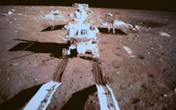
China's first moon rover (月球车), Yutu, set off from the lander early on December 15, several hours after the Chang'e-3 probe (探测器) soft-landed on the moon surface.
The 140 kg six-wheeled rover touched the moon surface at 4:35 a.m., leaving deep lines on the loose moon land. This was recorded by the camera on the lander and the images were sent to the earth, according to the Beijing Aerospace Control Center. After that, the rover and lander will take photos of each other and start their own science explorations.
Earlier this  morning,
engineers made final checks of the environment of the landing area and the
situation of the probe. Yutu, reached its solar panel (光板) and started to drive slowly to t
morning,
engineers made final checks of the environment of the landing area and the
situation of the probe. Yutu, reached its solar panel (光板) and started to drive slowly to t he
moon at 3:10 a.m.. It took Yutu nearly a whole hour to complete the simple task.
he
moon at 3:10 a.m.. It took Yutu nearly a whole hour to complete the simple task.
Chang'e-3 landed at the Bay of Rainbows on the moon, at 9:11 p.m. on December 14, making China the
third country in the world to carry out such
a mission (执行此类任务) after the United States and Russia.
In old Chinese tales, Yutu was the white pet rabbit of Chang'e’s. The name for the rover was selected following an online survey that collected several million votes from people around the world.
The rover, 1.5 meters long with its two wings folded (折叠), 1 m in width and 1.1 m in height, is a perfect robot controlled by the command center from the earth. It will face challenges including temperature differences of more th an
300℃ on the
moon.
an
300℃ on the
moon.
Yutu will do some research and look for natural resources (资源) for three months, while the lander will conduct an exploration at the landing place for one year. Then they will have a good rest on the moon and will not be used for a long time until China’s next probe visits the moon again.
1. Which is the best title for the passage above?
A. The first rover on the moon B. The tale of Chang’e
C. The journey to the moon D. Yutu explores the moon
2.Which is the correct order of the following events?
a. The 140 kg six-wheeled rover touched the moon surface.
b. The rover and lander will take photos of each other.
c. Yutu started to drive slowly to the moon.
d. Chang'e-3 landed at the Bay of Rainbows on the moon.
A. a-b-c-d
B.
c-d-a-b C.
d-c-a-b D.
c-a-b-d
3.What does the underlined word width mean in Chinese?
A. 智力 B. 宽度 C. 重量 D. 长度
4.Which of the following is true according to the passage?
A. The moon had been visited by only two countries before 2013.
B. Yutu is a
perfect robot under the control of its own computer.
C. Yutu and Chang’e will return to the earth after the one-year mission.
D. Chang’e-3 is 140 kg in weight.
5.There will soon be a second moon rover to explore the moon. Which is its proper name?
A. Chang’e-4 B. Yutu-2 C. Shenzhou-11 D.Tiangong-2
湖北省互联网违法和不良信息举报平台 | 网上有害信息举报专区 | 电信诈骗举报专区 | 涉历史虚无主义有害信息举报专区 | 涉企侵权举报专区
违法和不良信息举报电话:027-86699610 举报邮箱:58377363@163.com