
题目列表(包括答案和解析)
| |||||||||||||||||||||||||||||||||||||||||||||||||||||||||||||||||||||||||||||
|
broadcast1/'brɔ:dkɑ:st||ˈbrɔdˌkæst/n[C] a programme on the radio or on television: a radio news broadcast | live broadcast ( = a programme that you see or hear at the same time as the events are happening) broadcast2 v past tense and past participle, broadcast 1 [ I,T] to send out radio or television programmes: The interview was broadcast live across Europe. 2 [T] to tell something to a lot of people: There was no need to broadcast the fact that he lost his job. broadcaster /ˈbrɔːdkɑːstə || ˈbrɔːdkæstər/ n [C] |
curious/ ˈkjʊəriəs || 'kjur-/ adj 1 wanting to know about something: When I mentioned her name everyone was curious. | [ +about] I’m incurious about this book she's supposed to be writing. |curious to see/hear/know etc: Mandy was curious to hear what Peter had to say himself.—opposite INCURIOUS 2 strange or unusual: a curious noise coming from the cellar | curious that It's very curious that she left without saying goodbye. curl1 /kɜ:l|| kɚrl/ n 1[C] a small mass of hair |
|
flask / flɑ:sk || flæsk/n [C] I BrE a special type of bottle that you use to keep liquids either hot or cold, for example when travelling 2 a flat bottle usually used to carry alcohol 3 a glass bottle with a narrow top, used in a LABORATORY flat1/ flæt / adj flatter, flattest 1▶ SURFACE◀ smooth and level, without raised or hollow areas, and not sloping or curving: a flat-bottomed boat |a perfectly flat sandy beach | flat as a |
pollute / pə'lu:t/ v [T] 1 to make air, water, soil etc dangerously dirty and not suitable for people to use: beaches polluted by raw sewage | industrial emissions that pollute the air 2 pollute sb’s mind to give someone immoral thoughts and spoil their character: fears that Lawrence's novels would pollute young minds--polluted adj: polluted rivers--polluter n [C] pollution / pəˈlu:ʃn /n [U] 1 the process of making |
1.The pronunciation of the word "broadcast" is ____ or/ˈbrɔdˌkæst /.
A. /'brɔ:dkɑ:st/ B. /'brəud'sɑ:st/ C. /bræd'kɔst/ D. /'bru:dkɑ:st/
2.The word"____ "can be used as an adjective (形容词).
A. pollute B. pollution C. curious D. curiously
3.Which of the following is a flask?

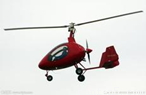

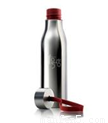
A. B. C. D.
4. The word "pollute" means "______".
A. to tell something to a lot of people B. wanting to know about something
C. a programme on the radio or on TV D. to make air. water, soil, etc dirty
5.These texts are probably from ______.
A. a magazine B. a dictionary
C. a newspaper D. an advertisement
broadcast1/'brɔ:dkɑ:st||ˈbrɔdˌkæst/n[C] a programme on the radio or on television: a radio news broadcast | live broadcast ( = a programme that you see or hear at the same time as the events are happening)
broadcast2 v past tense and past participle, broadcast 1 [ I,T] to send out radio or television programmes: The interview was broadcast live across Europe. 2 [T] to tell something to a lot of people: There was no need to broadcast the fact that he lost his job.
broadcaster /ˈbrɔːdkɑːstə || ˈbrɔːdkæstər/ n [C]
curious/ ˈkjʊəriəs || 'kjur-/ adj 1 wanting to know about something: When I mentioned her name everyone was curious. | [ +about] I’m incurious about this book she's supposed to be writing. |curious to see/hear/know etc: Mandy was curious to hear what Peter had to say himself.—opposite INCURIOUS 2 strange or unusual: a curious noise coming from the cellar | curious that It's very curious that she left without saying goodbye.
curl1 /kɜ:l|| kɚrl/ n 1[C] a small mass of hair
flask / flɑ:sk || flæsk/n [C] I BrE a special type of bottle that you use to keep liquids either hot or cold, for example when travelling 2 a flat bottle usually used to carry alcohol 3 a glass bottle with a narrow top, used in a LABORATORY
flat1/ flæt / adj flatter, flattest
1▶ SURFACE◀ smooth and level, without raised or hollow areas, and not sloping or curving: a flat-bottomed boat |a perfectly flat sandy beach | flat as a
pollute / pə'lu:t/ v [T] 1 to make air, water, soil etc dangerously dirty and not suitable for people to use: beaches polluted by raw sewage | industrial emissions that pollute the air 2 pollute sb’s mind to give someone immoral thoughts and spoil their character: fears that Lawrence's novels would pollute young minds--polluted adj: polluted rivers--polluter n [C]
pollution / pəˈlu:ʃn /n [U] 1 the process of making
86. The pronunciation of the word "broadcast" is ____ or/ˈbrɔdˌkæst /.
A. /'brɔ:dkɑ:st/ B. /'brəud'sɑ:st/ C. /bræd'kɔst/ D. /'bru:dkɑ:st/
87. The word"____ "can be used as an adjective (形容词).
A. pollute B. pollution C . curious D. curiously
88. Which of the following is a flask?


A. B. C. D.
89. The word "pollute" means "______".
A. to tell something to a lot of people B. wanting to know about something
C. a programme on the radio or on TV D. to make air. water, soil, etc dirty
90. These texts are probably from ______.
A. a magazine B. a dictionary
C. a newspaper D. an advertisement
完形填空(共12分,每小题1分)
阅读下面的短文,掌握其大意,然后从短文后各题所给的A、B、C、D四个选项中,选择最佳选项
I had my first job at the age of thirteen, when a friend of my mother’s who owned a book shop hired(雇佣) me for six hours a week to help her in the shop. I was very 1 to earn my own pocket money and my parents 2 interfered(干涉)with how I spent it, even when I was spending it foolishly. They believed that by earning money, spending it, and learning from the 3 , I would become more mature(成熟的) and responsible about how to handle work, relationships with others, and money.
Like many American parents, my parents also let me and my brothers do things over which they 4 a great deal. When I was sixteen, for example, after I finished high school and before I entered university, I wanted to spend the summer months traveling around Europe. My mother was against the idea of my traveling alone at such a young age, but my father felt that it would be a great 5 for me. In the end, my father won the argument(争论) on the 6 that I limited(限定)my traveling to France, my mother’s home, where I had many uncles, aunts and cousins spread out through the country who could 7 shelter(住处)and help if I needed them.
Three years later, my younger brother decided to 8 a year off after his first year in university and travel through the United States and the Caribbean. Again my mother was very worried and not eager to see my brother leave school, but my father encouraged him and my brother had a(n) 9 year working his way on trains and ships to 10 passage to different ports and cities, and discovering many fascinating places and people.
These kinds of experiences are probably rare(稀少的)for children in many countries but in the US they are fairly common. Most parents start 11 their children at a young age to do small things by themselves. By the time they have finished high school, many American kids have already had part-time jobs, traveled around the US or other countries on their own, have selected the university they plan to attend and maybe even 12 on their future career, and so on.
1. A.anxious B.content C.proud D.hopeful
2. A.never B.ever C.always D.even
3. A.problems B.mistakes C.disappointment D.failure
4. A.helped B.supported C.shared D.worried
5. A.journey B.experience
C.decision D.possibility
6. A.situation B.agreement C.gesture D.condition
7. A.promise B.afford C.provide D.serve
8. A.set B.put C.take D.keep
9. A.unusual B.hard C.strange D.busy
10. A.accept B.earn C.find D.search
11. A.bringing B.forcing
C.pushing D.protecting
12. A.worked B.decided C.carried D.tried
In Britain, people have different attitudes(态度)to the police. Most people generally 1 them and the job they do, but some people said that the police shouldn’t have special 2 .
What does a policeman actually do? It is not a(n) 3 job to describe. After all,a policeman has a number of jobs to do. A policeman often has to 4 traffic, either on foot in the centre of a town, or in a police car on the roads. Indeed,in Britain, he might be in the Traffic Police and spend a lot of time 5 up and down main roads. A traffic policeman has to help keep the traffic moving,stop speeding cars and help when there is a(n) 6 .
A policeman has to help keep the 7 ,too. If there is a fight, we 8 the police to come immediately. And they often have to deal with situation at great risk of their own 9 .
We want the police to solve crimes,of course,so an ordinary(普通) policeman, 10 he is not a detective,he will often have to help 11 criminals. And 12 do we call when there is an emergency—an air crash,a fire or an earthquake?Of course the police. So a policeman has to 13 to face any terrible emergency that may happen in the modern world.
The police do a 14 job,they do it so well that I support them. But I do not envy policemen. I do not think that I could 15 do the job of a policeman.
1. A.dislike B.protect C.admire D.suspect
2. A.power B.thoughts C.knowledge D.abilities
3. A.funny B.difficult C.attractive D.easy
4. A.control B.stop C.remove D.break
5. A.walking B.driving C.marching D.searching
6. A.murder B.robbery C.accident D.theft
7. A.peace B.balance C.situation D.rule
8. A.order B.encourage C.allow D.expect
9. A.family B.safety C.future D.work
10. A.only if B.as C.since D.even if
11. A.interview B.notice C.arrest D.warn
12. A.how B.where C.what D.who
13. A.hope B.promise C.prepare D.decide
14. A.comfortable B.hopeless C.necessary D.meaningless
15. A.hardly B.ever C.forever D.never
湖北省互联网违法和不良信息举报平台 | 网上有害信息举报专区 | 电信诈骗举报专区 | 涉历史虚无主义有害信息举报专区 | 涉企侵权举报专区
违法和不良信息举报电话:027-86699610 举报邮箱:58377363@163.com


