Social situations don’t bother you . 查看更多


题目列表(包括答案和解析)

阅读下面短文,然后根据短文内容选择最佳答案。

  Take a rapid look at someone, then look away.Do you realize you have made a statement? Hold the glance for a second longer, and you have made a different statement.Hold it for three seconds, and the meaning has changed again.For every social situation, there is an allowed time that you can hold a person's look without being close, rude or dangerous.If you are on a lift, what stare time are you permitted? To answer this question, consider what you specially do.You very likely give other passengers a quick look to judge of them and to let them believe that you mean no harm.Since being close to another person suggests the possibility of communication, you need to give a signal telling others you want to be left alone.So you cut off eye contact(接触), what Dr.Erving Goffman(1963)calls“a dimming of the lights”.You look down at the floor, at the lift door, or anywhere but into another passenger's eyes.If you break the rule against staring at a stranger on a lift, you'll make the other person gradually uncomfortable, and you are likely to feel a bit strange yourself.

  If you hold eye contact for more than 3 seconds, what are you telling another person? Much depends on the person and the situation.For instance, a man and a woman communicate interest in this matter.They may look at each other for about 3 seconds at a time, then drop their eyes down for 3 seconds, before letting their eyes meet again.But if one man gives another man a 3-second-plus stare, he signals,“I know you”,“I am interested in you”,or“You look strange and I am curious about you”.This type of stare often produces unfriendly feelings.

(1)

We can learn from the first paragraph that ________.

[  ]

A.

every glance has its meaning

B.

staring at a person is an expression of interest

C.

a glance longer than 3 seconds is unacceptable

D.

a glance carries more meaning than words

(2)

If you want to be left alone on a lift, the best thing to do is ________.

[  ]

A.

to look into another person's eyes honestly

B.

to avoid eye contact with other passengers

C.

go give a signal that you are not dangerous

D.

to keep a distance from other passengers

(3)

By“a dimming of the lights”, Dr.Erving Goffman means“________”.

[  ]

A.

closing one's eyes

B.

turning off the lights

C.

stopping staring at others

D.

reducing stare time to the least

(4)

Which sentence is true?

[  ]

A.

If you break the rule against staring at a stranger on a lift, you'll make the other person gradually comfortable.

B.

Hold the glance for a second longer, and you have made the same statement.

C.

If a man and a woman communicate interest in the matter, they may let their eyes meet again and again.

D.

If one man gives another man a 3-second-plus stare, this type of stare often produces friendly feelings.

(5)

The passage mainly discusses ________.

[  ]

A.

the limited time of eye contact

B.

the passing of ideas through eye contact

C.

proper manners in different social situations

D.

the role of eye contact in inter-personal communication

查看答案和解析>>

If you are confident enough, social situations don’t bother you in the slightest .

A. anymore          B. at all             C. as usual              D. in fact


查看答案和解析>>


Recent research from the Pew Internet Project suggests that 90% of Americans aged from 12 to 17 use the Internet, and 51% of those teens use social networks. However, there are many possible problems with social networking sites and the teenagers who use them.
Apart from the social advantages, social networking sites can be used to record school research, develop artistic talents and experiment with other forms of subject creation. They provide a way to communicate with others who share the same interests and to get helpful advice on ongoing projects.
Along with these advantages come some dangers. For example, most social networking sites are open to all, especially MySpace, which is the most popular social network among teens in America. It means that they could be put in unpleasant and frightening situations.
A greater danger is that teens may become objects of the people with secret purposes. The secrecy of some social networking sites makes it easy for dangerous people to find young teens and invite them into dangerous conversations. It’s easy for them to pretend as teens and draw children into dangerous real-world communication as well. Then further hurt might be on its way.
Another danger is identity stealing, which can happen when teens share too much information about their names, dates of birth and locations.
Therefore, it’s very important to make sure teens are safe when they use social networks.
Many of the same rules that work for online chat work for these sites:
※ Don’t use your real name.
※ Don’t give out personal information to people you don’t know. A last name and a town are enough for a bad guy to find where you are.
※ Don’t believe that people are who they say to be.
※ Immediately end any communication that makes you uncomfortable and report it to a parent.
Only if you are sure of your safety, can you enjoy the fun brought by social networking. Besides, trying to deal with all problems on your own can lead to terrible results. Remember, asking your parents or school officials for help doesn’t mean you are unable to do anything but wiser than many others.                                             
【小题1】How many dangers of using social networks are mentioned in the passage?
A.2.B.3.C.4.D.5.
【小题2】The writer takes MySpace as an example to show that ________.
A.students could be put into unreal situations on the Internet
B.teenagers are facing unknown dangers on the social networks
C.Internet provides more social websites to American teenagers
D.social networks are very popular among teenagers in America
【小题3】We can infer from the passage that ________.
A.the dangers are similar when chatting online and surfing social networks
B.more than half American teenagers aged from 12 to 17 use social networks
C.teens who ask for help are wiser when meeting problems on social networks
D.there are more disadvantages than advantages for teens to use social networks

查看答案和解析>>

Recent research from the Pew Internet Project suggests that 90% of Americans aged from 12 to 17 use the Internet, and 51% of those teens use social networks. However, there are many possible problems with social networking sites and the teenagers who use them.

Apart from the social advantages, social networking sites can be used to record school research, develop artistic talents and experiment with other forms of subject creation. They provide a way to communicate with others who share the same interests and to get helpful advice on ongoing projects.
Along with these advantages come some dangers. For example, most social networking sites are open to all, especially MySpace, which is the most popular social network among teens in America. It means that they could be put in unpleasant and frightening situations.
A greater danger is that teens may become objects of the people with secret purposes. The secrecy of some social networking sites makes it easy for dangerous people to find young teens and invite them into dangerous conversations. It’s easy for them to pretend as teens and draw children into dangerous real-world communication as well. Then further hurt might be on its way.
Another danger is identity stealing, which can happen when teens share too much information about their names, dates of birth and locations.
Therefore, it’s very important to make sure teens are safe when they use social networks.
Many of the same rules that work for online chat work for these sites:
※Don’t use your real name.
※ Don’t give out personal information to people you don’t know. A last name and a town
are enough for a bad guy to find where you are.
※ Don’t believe that people are who they say to be.
※ Immediately end any communication that makes you uncomfortable and report it to a
parent.
Only if you are sure of your safety, can you enjoy the fun brought by social networking. Besides, trying to deal with all problems on your own can lead to terrible results. Remember, asking your parents or school officials for help doesn’t mean you are unable to do anything but wiser than many others.                                             
【小题1】How many dangers of using social networks are mentioned in the passage?

A.2.B.3.C.4.D.5.
【小题2】The writer takes MySpace as an example to show that ________.
A.students could be put into unreal situations on the Internet
B.teenagers are facing unknown dangers on the social networks
C.Internet provides more social websites to American teenagers
D.social networks are very popular among teenagers in America
【小题3】We can infer from the passage that ________.
A.the dangers are similar when chatting online and surfing social networks
B.more than half American teenagers aged from 12 to 17 use social networks
C.teens who ask for help are wiser when meeting problems on social networks
D.there are more disadvantages than advantages for teens to use social networks

查看答案和解析>>

Recent research from the Pew Internet Project suggests that 90% of Americans aged from 12 to 17 use the Internet, and 51% of those teens use social networks. However, there are many possibleproblems with social networking sites and the teenagers who use them.
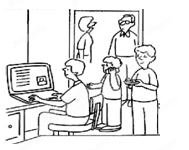
Apart from the social advantages, social networking sites can be used to record school research, develop artistic talents and experiment with other forms of subject creation. They provide a way to communicatewith others who share the same interests and to get helpful advice on ongoing projects.
Along with these advantages come some dangers. For example, most social networking sites are open to all, especially MySpace, which is the most popular social network among teens in America. It means that they could be put in unpleasant and frightening situations.
A greater danger is that teens may become objects of the people with secret purposes. The secrecy of some social networking sites makes it easy for dangerous people to find young teens and invite them into dangerous conversations. It’s easy for them to pretend as teens and draw children into dangerous real-world communication as well. Then further hurt might be on its way.
Another danger is identity stealing, which can happen when teens share too much information about their names, dates of birth and locations.
Therefore, it’s very important to make sure teens are safe when they use social networks.
Many of the same rules that work for online chat work for these sites:
※Don’t use your real name.
※ Don’t give out personal information to people you don’t know. A last name and a town
are enough for a bad guy to find where you are.
※ Don’t believe that people are who they say to be.
※ Immediately end any communication that makes you uncomfortable and report it to a
parent.
Only if you are sure of your safety, can you enjoy the fun brought by social networking. Besides, trying to deal with all problems on your own can lead to terrible results. Remember, asking your parents or school officials for help doesn’t mean you are unable to do anything but wiser than many others.                                             
【小题1】How many dangers of using social networks are mentioned in the passage?
A.2.B.3.C.4.D.5.
【小题2】The writer takes MySpace as an example to show that ________.
A.students could be put into unreal situations on the Internet
B.teenagers are facing unknown dangers on the social networks
C.Internet provides more social websites to American teenagers
D.social networks are very popular among teenagers in America
【小题3】We can infer from the passage that ________.
A.the dangers are similar when chatting online and surfing social networks
B.more than half American teenagers aged from 12 to 17 use social networks
C.teens who ask for help are wiser when meeting problems on social networks
D.there are more disadvantages than advantages for teens to use social networks

查看答案和解析>>


同步练习册答案
