
题目列表(包括答案和解析)
Some people remember the things by writing notes to themselves. Then they leave the notes in obvious(明显的) places, such as on the table or on the floor in the middle of the living room. I don’t think I like to write notes to myself. Most of the time I lose them or forget to look at them until it’s too late. I prefer to use an alarm clock to tell me what I should do. I have ten alarm clocks in my house. They could tell me about things. For example, if I have to make a telephone call at a certain time, I’ll set an alarm clock to go off a few minutes early and put the clock by the telephone. Or if I want to watch a certain television program, I’ll set an alarm clock at the right time and put the clock on top of the TV set. I can remember almost anything if I use my clocks. However, sometimes an alarm clock goes off and I don’t know what it means. I always remember setting it, but I do not know why I set it. If the clock is by the telephone, I know I may have set it to tell me to call someone, but I can’t be sure. I might have set it to tell myself that somebody was to call me at a certain time.
1. Some people like to write notes to themselves so that they can _______.
A. leave them in obvious places
B. remember what to do at a certain time
C. watch a certain program
D. make a phone call at a certain time
2. I don’t like to write notes to myself because ________.
A. they are easy to lose or forget to look at
B. I don’t know where to put them
C. my handwriting is poor
D. it gives me too much trouble
3.I often use _______ to help me remember things.
A. a notebook B. a computer
C. telephone calls D. alarm clocks
4. Sometimes an alarm clock can’t help me because _______.
A. I put the clock in a wrong place
B. the clock goes wrong
C. when the clock goes off, I forget why I set it
D. I’m not sure whom I should call
5. In this passage, “go off” means _______.
A. start off B. get off C. go away D. make a sudden noise
|
broadcast1/'brɔ:dkɑ:st||ˈbrɔdˌkæst/n[C] a programme on the radio or on television: a radio news broadcast | live broadcast ( = a programme that you see or hear at the same time as the events are happening) broadcast2 v past tense and past participle, broadcast 1 [ I,T] to send out radio or television programmes: The interview was broadcast live across Europe. 2 [T] to tell something to a lot of people: There was no need to broadcast the fact that he lost his job. broadcaster /ˈbrɔːdkɑːstə || ˈbrɔːdkæstər/ n [C] |
curious/ ˈkjʊəriəs || 'kjur-/ adj 1 wanting to know about something: When I mentioned her name everyone was curious. | [ +about] I’m incurious about this book she's supposed to be writing. |curious to see/hear/know etc: Mandy was curious to hear what Peter had to say himself.—opposite INCURIOUS 2 strange or unusual: a curious noise coming from the cellar | curious that It's very curious that she left without saying goodbye. curl1 /kɜ:l|| kɚrl/ n 1[C] a small mass of hair |
|
flask / flɑ:sk || flæsk/n [C] I BrE a special type of bottle that you use to keep liquids either hot or cold, for example when travelling 2 a flat bottle usually used to carry alcohol 3 a glass bottle with a narrow top, used in a LABORATORY flat1/ flæt / adj flatter, flattest 1▶ SURFACE◀ smooth and level, without raised or hollow areas, and not sloping or curving: a flat-bottomed boat |a perfectly flat sandy beach | flat as a |
pollute / pə'lu:t/ v [T] 1 to make air, water, soil etc dangerously dirty and not suitable for people to use: beaches polluted by raw sewage | industrial emissions that pollute the air 2 pollute sb’s mind to give someone immoral thoughts and spoil their character: fears that Lawrence's novels would pollute young minds--polluted adj: polluted rivers--polluter n [C] pollution / pəˈlu:ʃn /n [U] 1 the process of making |
1.The pronunciation of the word "broadcast" is ____ or/ˈbrɔdˌkæst /.
A. /'brɔ:dkɑ:st/ B. /'brəud'sɑ:st/ C. /bræd'kɔst/ D. /'bru:dkɑ:st/
2.The word"____ "can be used as an adjective (形容词).
A. pollute B. pollution C. curious D. curiously
3.Which of the following is a flask?

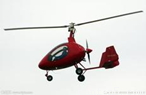

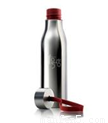
A. B. C. D.
4. The word "pollute" means "______".
A. to tell something to a lot of people B. wanting to know about something
C. a programme on the radio or on TV D. to make air. water, soil, etc dirty
5.These texts are probably from ______.
A. a magazine B. a dictionary
C. a newspaper D. an advertisement
I’d like a piece of papter_______.
A.to write B.to be writing C. to write on D.to write with
When I tidied up(整理)some old boxes under my bed, I found an old letter for me from my best friend. Her name was Minnie.
In the letter, Minnie wrote, “I am really sorry about before. Tell me if you will be my best friend again and tell me if you accept(接受)my apology . ”I wrote, “YES. I will be your best friend. ”
The twelve-year-old letter made me remember the time that Minnie and I spent together. We often wrote to each other during that time. One minute, Minnie and I would be playing happily together; the other moment we would get into arguments. But things would always be better again. She gave me a doll(洋娃娃)for my tenth birthday. I still keep it.
Finally things changed. We stopped writing letters to each other after she moved away, and I could no longer ride my bike to her house. Years later, she invited me to her sixteenth birthday party. I don’t see Minnie very often from then on. But I’ll always keep the letter and I’ll never forget the time we spent together.
1.Minnie wrote the letter to .
A.say sorry to the writer B.thank the writer
C.invite the writer to her party D.say goodbye to the writer
2.The writer got the letter years ago.
A.10 B.12 C.14 D.16
3.The underlined word “apology” means “ ” in Chinese.
A.劝告 B.帮助 C.道歉 D.祝福
4.Which of the following is TRUE, according to the passage?
A.The writer never had arguments with Minnie.
B.Minnie gave the writer a doll on one of her birthdays.
C.Minnie still writes letters to the writer.
D.The writer often rides her bike to Minnie’s house.
5.The writer wrote the passage to tell us about her with Minnie.
A.old boxes B.letter C.birthday party D.friendship
I am Steve. I was born and grew up in South Wales. My favorite place to play was out on the hills where my imagination had plenty of space to expand (拓展).
My family moved out of Wales when I was thirteen. I went to a new school. One of my subjects was French. Because I had never learned any French, my teacher told me to sit in the corner and write anything I was interested in. That’s the time I started writing, just for myself, and I’ve been writing ever since.
I have always loved BIG IDEAS, and so I enjoy writing fantastic stories. And I also write horror (恐怖) I think they are like the old fairytales (童话故事) ,and can teach you important things.
I am in my forties on the outside, twelve on the inside. I like rock music, Indian and Chinese food, and I enjoy drinking. I live in a small village with my wife Mary, ducks, cats, goats, hens and lots of rabbits. If you’d like to find out more about me and hope to buy any books, go to www. showkett. freeserve. co. uk
【小题1】When he was 13, the writer ________.
| A.wrote lots of poems | B.moved out of Wales |
| C.sold many story books | D.became a famous singer |
| A.expand his imagination | B.learn French |
| C.listen to stories | D.buy some books |
| A.12 | B.22 | C.32 | D.42 |
| A.cats, hens and pigs | B.ducks, goats and rabbits |
| C.hens, rabbits and dogs | D.rabbits, pigs and cats |
| A.lives in a big city with his son | B.likes eating Japanese and Indian food |
| C.lives in the countryside with his wife | D.introduces a nice book to us |
湖北省互联网违法和不良信息举报平台 | 网上有害信息举报专区 | 电信诈骗举报专区 | 涉历史虚无主义有害信息举报专区 | 涉企侵权举报专区
违法和不良信息举报电话:027-86699610 举报邮箱:58377363@163.com