
题目列表(包括答案和解析)
Tears came into this mother’s eyes when she talked about waking up her son.Every morning,her ten-year-old boy puts up one finger with his eyes still closed,begging for one more minute to sleep.
Why is he so sleepy? Because, like thousands of student“early birds”in China,he has to get up before 6 a.m.every morning.
School students usually need eight to ten hours’ sleep at night.But in Shanghai,it’s reported that 90%of the students do not get enough sleep.And studies show that without a good night’s sleep.students seem to be weaker than they should be.Many become nearsighted(近视)as a result.
Li Ming,a student at Qinghua High School,said that he usually goes to bed after 11P.m.But when he has exams coming up,he can stay up as late as midnight.This“night bird”lifestyle(生活方式)has made many students nod off(打瞌睡)in class.Li Ming said that it is during afternoon classes that he feels most sleepy.“My parents are usually happy to see me studying so late.”he said.“They think I work very hard and they make me cups of coffee.”
However,not all parents are happy about this.“My daughter gets up so early.She looks tired and it really hurts me,”said one of the parents.Why don’t so many students get enough sleep? Now many members of society began to think about it.
1.The ten-year-old boy’s mother talked about waking up her son with tears in her eyes because .
A.her son’s lack of(缺少)sleep hurt her but she had to wake him up
B.her son wasn’t good at lessons
C.she thought her son was too lazy
D.her son was badly ill
2.School students usually need to sleep for a night.
A.more than ten hours B.at least eight hours
C.less than eight hours D.six to eight hours
3.For school students,lack of sleep may lead to(导致) .
A.the body’s weakness B.nodding off in class
C.near sighted eyes D.all the above
4.Li Ming’s mother is to see him studying late.
A.sorry B.worried C.happy D.angry
5.Which one is true according to the passage?
A.All the parents hope their children stay up.
B.No students complain about their lack of sleep.
C.Most students watch TV or play computer games deep into the night.
D.Some parents are worried about the fact that most of the students don’t have enough sleep.
听力测试
(一)听句子,选择与画面一致的选项。每个句子听一遍。

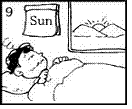
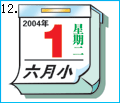
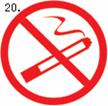
1. ( A B C ) 2. ( A B C ) 3. ( A B C ) 4. ( A B C )
(二)请听句子,选出恰当的答语。每个句子听一遍。
( )5. A. It’s my pleasure. B. I’m sorry to hear that. C. Never mind.
( )6. A. I’m not sure. B. Yes, please. C. That’s too much.
( )7. A. Nice to meet you. B. See you later. C. What a good idea!
( )8. A. Yes, I agree with you. B. Certainly, This way, please
C. Yes, it’s very nice of you.
( )9. A. What are you going to do?
B. I think so. Why?
C. Oh, what shall I do?
( )10. A. It’s cheaper than yours. B. Fifty yuan. C. It’s expensive.
(三)对话问答:选择正确答案对话听两遍。
( )11. Who is going to visit her friends this afternoon?
A. Betty. B. Betty’s sister. C. Bob’s sister.
( )12. Why did the girl get up so early?
A.To catch the early bus.
B. To prepare for an English exam.
C. To prepare for a math’s exam.
( )13. Where was the man last Sunday?
A. He was with his friend.
B. He took a walk with his friend.
C. He went shopping with his friend.
( )14. Where does the dialogue take place?
A. In a classroom. B. In a store. C. In a computer room.
( )15. What’s the woman?
A. A shop assistant. B. A librarian. C. A customer.
( )16. When does the dialogue probably happen?
A. In the morning. B. In the evening C. At 7:45 a.m.
( )17. What place is the woman looking for?
A. A hotel. B. A cinema. C. A hospital.
(四)对话理解:
听第一段对话,回答第18-21小题。对话听两遍。
( )18. What are they talking about?
A. The moon. B. Animals. C. Plants.
( )19. How far is the moon away from the earth?
A. Three hundred metres.
B. Three hundred and eighty thousand kilometres.
C. It’s not very far
( )20. Why can nothing live on the moon?
A. People don’t like to live there. B. There’ no air or water.
C. There’s no light.
( )21. What’s the weather like tonight?
A. Cloudy. B. Rainy. C. Clear.
听第二段对话,回答第22-25小题。对话听两遍。
( )22. Where are they talking?
A. At home. B. At the cinema. C. At a shop.
( )23. How much rice did the man buy?
A. One bag. B. Two bags. C. One bottle.
( )24. How many kinds of things did the man buy?
A. Four. B. Five. C. Three .
( )25. How much did all the things cost?
A. $13. B. £300. C. $30.
(五)听短文回答问题,短文听两遍。
( )26. Where was the telephone?
A. It’s in London’s school. B. It’s in her office. C. It’s in her home.
( )27. Who made the first telephone call?
A. A man. B. Linda’s father. C. Linda’s mother.
( )28. How many telephone calls did the man make in the story?
A. One. B. Two. C. Four
( )29. Who made telephone call three minutes later?
A. The man. B. Linda’s father. C. Linda’s mother.
( )30. How many persons are there in the story?
A. Two. B. Three. C. Four.
Maybe you're wondering how we spend our free time in the year 2059, so I, ll tell you what I did last weekend.
On Saturday morning, I stayed in bed until 11 o’clock, when my mother woke me up. “Wang Mang! Get out of bed, you lazy little pig!” she said. “You can’t lie in bed all day, and you’ve got homework to do, haven’t you?” Were mothers so annoying fifty years ago?
Anyway, I got out of bed and asked the robot to make me a quick brunch—hamburger and French fries. But the robot said, “Sorry, Mang. Your mother says I can only give you hamburgers 3 times a week, and you had 2 hamburgers yesterday. Fast food is not healthy. I suggest you have some of the dumplings I made yesterday. Or perhaps some fruit salad” You see, my mother has programmed the robot to stop it giving me the things 1 really want to eat. I feel like a prisoner (囚犯)!
After finishing my brunch, I got out my homework pad. The pad looks like a piece of paper, but it’s actually a computer. We don’t use paper much any more. Paper books are really expensive, so we usually buy cheap computer books.
I had to do my math homework on Saturday. We never need to use math in our daily lives—computers solve all the math problems for us. But our math teacher says that if people stop studying math, they’ll forget how to think and become like vegetables. Well, I want to be a vegetable. I hate math!
56. The underlined word “brunch” in the third paragraph means .
A. breakfast and lunch B. breakfast with milk
C. lunch with coffee D. lunch and dinner
57. Wang Mang says he feels “like a prisoner” because .
A. he is completely controlled by the robot B. he has to get out of bed too early
C. he doesn’t know how to use the robot D. he isn’t allowed to eat what he likes
58. One difference between the year 2059 and today is that .
A. computer books are cheaper than paper books
B. children aren’t allowed to eat fast food
C. students have to do homework at the weekend
D. there is no paper in the year 2059
59. Wang Mang thinks that studying math is .
A. interesting B. useless C. too hard D. too easy
60. Which can be the best title for the article?
A. A Day in the Future B. A Modern Robot at Home
C. Paper Books V.S. Computers D. Math or Vegetables
湖北省互联网违法和不良信息举报平台 | 网上有害信息举报专区 | 电信诈骗举报专区 | 涉历史虚无主义有害信息举报专区 | 涉企侵权举报专区
违法和不良信息举报电话:027-86699610 举报邮箱:58377363@163.com