
cold wind was blowing from the north. 查看更多


题目列表(包括答案和解析)

冠词填空。
1. His father, who is ______ honest man, is teaching in ______ university.
2. Which is heavier, ______ elephant or ______ horse?
3. ______ cold wind was blowing from the north.
4. He is always ready to help ______ old and ______ young.
5. ______ Greens are traveling in ______ South China.

查看答案和解析>>

阅读理解

  Hank was walking along the main street of a small seaside town in the north of England looking somewhere to make a telephone call. His car had broken down outside the town and he wanted to get in touch with the car factory. Low clouds were moving across the sky and there was a cold wet wind blowing off the sea. It had rained in the night and water was falling from the trees that lined the street. Hank was glad that he was wearing a thick coat.

  There was no sign of a call box, nor was there anyone at that early hour whom he could ask. Hank had thought he might find a small shop selling the Sunday papers or a milkman doing his job, but the town was completely dead.

  Then suddenly Hank found what he was looking for. In a dark narrow street there was a small post office and next to it was the town's only public call box. Hank hurried there but stopped in surprise when he saw through the dirty glass that there was a woman inside. She was very fat, and was wearing a cheap blue raincoat. Hank could not see her face-she was facing the phone with her back against the glass and didn't even raise her head at the sound of his coming nearer and nearer. Carefully, slowly and surprisedly, Hank moved forward, stood a few feet away and lit a cigarette (香烟).

1.How was the weather of the day when the story happened?

[  ]

A.Cold, windy but clear.

B.Wet, cloudy but warm.

C.Rainy, windy and cold.

D.Windy, cold and cloudy.

2.Why did Hank want to get in touch with the car factory?

[  ]

A.He lost his way while walking along the street.

B.He wanted to find a public call box.

C.He needed to be helped over the difficulty.

D.He felt afraid in the deadly quiet place.

3.The underlined word what in the passage refers to (指的是) ________.

[  ]

A.the call box
B.the small shop
C.the post office
D.the car factory

4.Hank was surprised when he saw a woman in the box because ________.

[  ]

A.she was too fat to turn around

B.she was wearing a cheap raincoat

C.he could not see the woman's face

D.he never thought it had been taken up

5.Hank stood a few feet away from the box because ________.

[  ]

A.he wanted to have a smoke and take a short rest

B.the woman inside didn't know that he had come nearer

C.he thought it was not safe to be close to the strange woman

D.he thought it was not polite to listen to others' phone calls

查看答案和解析>>

  How could we tell time if there were no watches or clocks anywhere in the world?
The sun is probably the world’s first “clock”, except in the far north, where the Eskimos(爱斯基摩人) live. There, it’s dark most of the winter, and light most of the summer. But in most of the world, people have used the sun as a clock. Even today, if you don’t have a clock, you can still know that when the sun shines, it’s day and when it’s dark, it’s night. The sun can also tell you if it’s morning, noon, or afternoon.
Some people live near the sea from the tides. In the daytime, for about six hours, water rises higher and higher on the beach. And then it goes down and down for about six hours. The same thing happens again at night. There are two high tides and two low tides every 24 hours. Seamen on the ship learn how to tell time by looking at the moon and the stars. The whole sky is their clock.
In some places in the world the wind comes up at about the same time every day or changes direction or stops blowing. In these places the wind can be the clock.
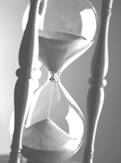
A sand clock is an even better clock. If you had fine dry sand in a glass shaped like the one in the picture, you would have what is called an hourglass. The sand in the hourglass goes from the top part to the bottom in exactly one hour. When the hourglass is turned over, the sand will take another hour to go back again
小题1: From the passage we can know there are _______ways to tell time besides the clock and watch.
A.3B.4C.5D.7
小题2:. The Eskimos in the far north can’t use the sun for a clock because________
A.they know very little about the sun
B.the sun there never goes down in winter
C.it’s too cold for them to go out to watch the sun
D.it has long dark winters and long light summers
小题3:. What does the underlined word “tides” mean in the passage?
A.洋流B.潮汐C.海啸D.波浪
小题4: In which page of newspaper can you probably read this passage?
A.NewsB.ScienceC.AdvertisementD.Sports
小题5: What is the best title for the passage?
A.Different Ways to Tell TimeB.How the Clock Was Invented
C.The Development of the ClockD.A Useful Machine to Tell Time

查看答案和解析>>

阅读理解。
     How could we tell time if there were no watches or clocks anywhere  in the world? The sun was 
probably the world's first  "clock" ,  except in  the far north, where the Eskimos (爱斯基摩人) live.  
There, it's  dark most of the winter, and light most of the summer.  But in most of  the world, people 
have used the sun for a clock.  Even today, if you  don't have a clock, you still know that when the sun 
shines, it's day,  and when it's dark,  it's night.  The sun can also tell you if it's morning,  noon, or 
afternoon.       
     People who live near the sea can tell time from the tides.  In the daytime, for about six hours, the 
water rises higher and higher on the   beach.  And then it goes down and down for about six hours. The 
same   thing happens again at night.  There are two high tides and two low tides every 24 hours.        
     Seamen on a ship learn how to tell time by looking at the moon and  the stars. The whole sky is their 
clock.        
     In some places in the world the wind comes up at about the same time every day or changes 
direction or stops blowing. In these places the wind can be the clock.       
     A sand clock is an even better clock.  If you had fine dry sand in a glass shaped like the one in the 
picture,  you would have what is called an hourglass. The sand in the hourglass goes from the top part 
to the bottom part in exactly one hour. When the hourglass is turned over, the sand will take another 
hour to go back again.   
1. According to the passage, there are ______ ways to tell time besides the clock and watch.
A. 3             
B. 4
C. 5             
D. 7
2. The Eskimos in the far north can't use the sun for a clock  because ______.                 
A.  they know very little about the sun                 
B.  the sun there never goes down in winter                
C.  it's too cold for them to go out to watch the sun                
D.  it has long dark winters and long light summers
3. The underlined word "tides" in the passage means  ______.         
A. 洋流            
B. 潮汐         
C. 海啸            
D. 波浪
4. In which page of a newspaper can you most probably read  this passage?           
A. News.               
B. Science.           
C. Business.           
D. Advertisement.
5. What's the best title for the passage?                 
A. Different Ways to Tell Time                 
B. Useful Machines to Tell Time                 
C. The History of the Clock                 
D. The Development of the Clock

查看答案和解析>>

How could we tell time if there were no watches or clocks anywhere in the world?

The sun was probably the world’s first “clock”, except in the far north, where the Eskimos (爱斯基摩人) live.There, it’s dark most of the winter, and light most of the summer.But in most of the world, people have used the sun fooday, if you don’t have a clock that shows time, you still know that when the sun shines, it’s day, and when it’s dark, it’s night.The sun can not only tell you whether it’s day or night but also it’s morning, noon, or afternoon.When the sun is almost directly overhead, it’s noon.
People who live near the sea from the tides.In the daytime, for about six hours, the water rises higher and higher on the beach.And then it about six hours.The same thing happens again at night.There are two high tides

and two low tides every 24 hours.

Seamen on a ship tell time by looking at the moon and the stars.The whole sky is their clock.

In some places in the world the wind comes up at about the same

time every day or changes direction or stops blowing.In these places

the wind can be the clock.

A sand clock is an even better clock.If you had fine dry sand in a

glass shaped like the one in the sand will take another hour to go back again.

1.From the passage we can know there are _____ ways to tell time besides the clock and watch.

   A.3                             B.4                          C.5                                   D.7

2.The Eskimos in the far north can’t use the sun for a clock because ______.

  A.they know very little about the sun

  B.the sun there never goes down in winter

  C.it’s too cold for them to go out to watch the sun

  D.it has long day and long light summers

3.The underlined word “tide” in the passage means _______.

A.洋流                        B.潮汐                       C.海啸                             D.波浪

4.In which page of the newspapers probably read this passage?

   A.News.                   B.Science.               C.Advertisement                D.Sports.

5.What’s the best title for the passage?

   A.Different Ways to Tell Time                          B.How the Clock Was Invented

C.The Development of the Clock                       D.A Useful Machine to Tell Time      

查看答案和解析>>


同步练习册答案