
题目列表(包括答案和解析)
听力(本大题共30小题,每小题1分,共30分)
A)在下列每小题内,你将听到一个或两个句子并看到供选择的A、B、C三幅图画.找出与你所听句子内容相匹配的图画.
1.
A.
B.
C.
2.
A.
B.
C.
3.
A.
B.
C.
4.
A.
B.
C.
B)在下列每小题内,你将听到一个问句并看到供选择的A、B、C三个答案.找出能回答你所听到的那个问句的最佳选项.
5.A.He's tall.
B.He's 13.
C.He's happy.
6.A.That's a great idea!
B.It doesn't matter.
C.Me too.
7.A.No, we haven't
B.No, we aren't
C.No, we weren't
8.A.He's a doctor.
B.He's short and lat.
C.He's driving.
9.A.It's John.
B.It's John's
C.Yes, it is.
10.A.With my father.
B.Sports news.
C.After supper.
11.A.They played table tennis.
B.They're cleaning the classroom.
C.They have had dinner.
12.A.It's over there.
B.It's very big.
C.It's new.
13.A.In the zoo.
B.Last Friday.
C.Mr.Brown.
14.A.At the airport.
B.For 2 days.
C.2 kilometres.
C)下面你将听到十组对话,每组对话都有一个问题.根据对话内容,从每组所给的A、B、C三个选项中找出能回答所提问题的最佳选项.
15.Where does Jim's grandpa live?
A.In Japan
B.In Britain.
C.In India.
16.When will the train leave?
A.At 6∶10.
B.At 6∶20.
C.At 6∶30.
17.How did the man go to school when he was a boy?
A.By bus.
B.On foot.
C.By car.
18.Which bag does the boy like?
A.The biue one.
B.The red one.
C.The green one.
19.What's Betty going to do on Sunday?
A.She's going to see her friend.
B.She's going shopping with with her mother.
C.She's going to revise for her test.
20.What sport can Tony play?
A.Basketball.
B.Volleyball.
C.Football.
21.How often does Jane use the computer?
A.Never.
B.Once a week.
C.Twice a week.
22.How many girls are there in their class?
A.20
B.24
C.46
23.Where are the two speakers?
A.In a hospital
B.In a library
C.In a shop
24.Why was Jack late for school yesterday?
A.He was ill.
B.He met a friend.
C.He got up late.
D)听下面长对话或独白.每段长对话或独白后都有几个问题,从题中所给的A、B、C三个选项中选出最佳选项.
听下面一段材料,回答第25至第27题.
25.Where's Mike from?
A.China.
B.Caneda
C.England.
26.What's Mike's hometown famous for?
A.The Grand Canyon.
B.Cambridge University.
C.The Great Wall.
27.What's Han Mei's favourite subject?
A.History.
B.Chinese.
C.English
听下面一段材料,回答第28至第30题.
28.How long did they spend on the way?
A.Half an hour.
B.One hour.
C.One and a half hours.
29.How did Lingling feel about the park?
A.It was small
B.It was lovely
C.It was far away from the city centre.
30.What did they do in the park?
A.They went boating with foreigners.
B.They bought fish and ducks.
C.They climbed up to Tiaoyuan Tower.
听力理解(本大题共30小题,每小题1分,共30分)
A)在下列每小题内,你将听到一个或两个句子并看到供选择的A、B、C三幅图画。找出与你所听句子内容相匹配的图画。
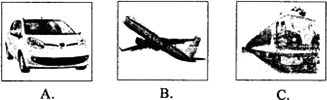
1.
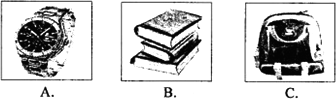
2.
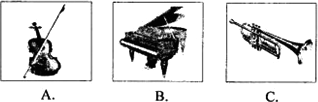
3.
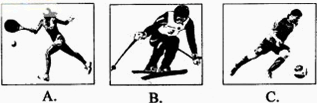
4.
B)在下列每小题内,你将听到一个问句并看到供选择的A、B、C三个答语。找出能回答你所听到的那个问句的最佳选项。
5.A.It’s Sunday.
B.It’s September.
C.It’s red.
6.A.Yes, I will.
B.Yes, I can.
C.No, I’m not.
7.A.It’s beautiful.
B.It’s big.
C.No, it isn’t.
8.A.He’s better.
B.I’m here.
C.She’s twelve.
9.A.Yes, please.
B.I don’t like orange.
C.It’s cheap.
10.A.She’ s kind.
B.She’s cooking.
C.She’s a teacher.
11.A.To the park.
B.With my dog.
C.I was walking.
12.A.Yes, he is.
B.Once a week.
C.Last night.
13.A.Yes, it is.
B.No, it can’t.
C.It’s new.
14.A.She’s drinking now.
B.She likes dancing.
C.She’s tall with long hair.
C)下面你将听到十组对话,每组对话都有一个问题。根据对话内容,从每组所给的A、B、C三个选项中找出能回答所提问题的最佳选项。
15.What can Mike do?
A.He can ride a bike.
B.He can swim.
C.He can drive a car.
16.How mangy chairs are there in Betty’s classroom?
A.30.
B.45.
C.50.
17.What does the woman want to do?
A.To read some books.
B.To borrow some books.
C.To buy some newspapers.
18.Why didn’t Tom come to school yesterday?
A.His father was ill.
B.He was ill.
C.His mother was ill.
19.What’s the weather like now?
A.Cloudy.
B.Rainy.
C.Snowy.
20.What are they going to make for Jack?
A.A cake.
B.A toy.
C.A model ship.
21.Where is Jerry’s T-shirt?
A.On the bed.
B.On the table.
C.In the living room.
22.What’s the man going to do?
A.To see a film.
B.To hold a party.
C.To have a swim.
23.When will the speakers meet?
A.At 6∶30.
B.At 7∶00.
C.At 7∶30.
24.Where’s the woman from?
A.Australia.
B.Japan.
C.China.
D)听下面长对话或独白。每段长对话或独白后都有几个问题,从题中所给的A、B、C三个选项中选出最佳选项。
听下面一段材料,回答第25至第26题。
25.What’s Lingling doing?
A.Reading a storybook.
B.Listening to music.
C.Watching TV.
26.What’s Peter interested in?
A.Stamps.
B.Movies.
C.Animals.
26.Who will go with Peter?
A.Lingling.
B.Peter’s mother.
C.Peter’s sister.
听下面一段材料,回答第26至第30小题。
26.How were Mr Wang’s classes?
A.Boring.
B.Bad.
C.Interesting.
29.Which of the following is NOT talked about in the passage?
A.Mr Wang visited his students’ home.
B.Mr Wang bought useful books for his students.
C.Mr Wang asked his students to listen carefully in class.
30.What did Mr Wang promise to do in the last class?
A.To see his students soon.
B.To stay with his students.
C.To play with his students.
听力(共四节,满分30分)
第一节
听句子,选择与句子内容相关的图画,选择最佳答案。每个句子听两遍。(共5小题,每题1分,满分5分)
1.
A.

B.

C.

2.
A.

B.

C.

3.
A.

B.

C.

4.
A.

B.

C.

5.
A.

B.

C.

第二节
听句子,选出与所听句子内容相符的正确答语,选择最佳答案。每个句子听两遍。(共5小题,每题1分,满分5分)
6.A.You can sing it well.
B.It’s a pleasure.
C.That’s right.
7.A.Because he wants to study harder.
B.Because he’s the best of all.
C.Because he’s afraid he’ll be late.
8.A.Put them over there, please.
B.I am afraid not.
C.I think so.
9.A.Yes.I'll choose one.
B.Yes.I'd better do it.
C.Yes.The one next to the park.
10.A.For two hours.
B.In another 20 minutes.
C.At two o'clock.
第三节
听对话,选出能回答问题的正确选项,选择最佳答案。每段对话听两遍。(共10小题,每题1分,满分10分)
听第一段对话,回答第11-12小题。
11.How will the man go to Europe?
A.By sea.
B.By train.
C.By air.
12.How long will the man stay in Europe?
A.About a week.
B.About three days.
C.About four days.
听第二段对话,回答第13-14小题。
13.Who are the two speakers?
A.Father and daughter.
B.Two friends.
C.Teacher and student.
14.What are they talking about?
A.About a good friend.
B.About learning English.
C.About learning Chinese.
听第三段对话,回答第15-17小题。
15.Where is the new sports center?
A.On Green Street.B.Behind the post office.
C.Near Green Street.
16.What did Tony do in the sports center last week?
A.He played basketball and table tennis.
B.He played volleyball and tennis.
C.He played tennis and basketball.
17.When will Cathy and Tony go to the sports center?
A.Next Tuesday.
B.Next Friday.
C.Next Thursday.
听第四段对话,回答第18-20小题。
18.What does the woman think of the TV programs?
A.They don't talk about that.
B.They are wonderful.
C.It is a waste of time.
19.Which program does the man dislike most?
A.News programs.
B.Love stories.
C.Education programs.
20.How does the man feel about the news report?
A.It's not good enough.
B.It's the best program.
C.It tells him everything.
第四节
听短文,完成下列信息表格。将所选答案的字母代号填入相应空格内。短文听两遍。(共5小题,每题2分,满分10分)

21.A.tomatoes
B.cabbages
C.potatoes
22.A.milk
B.juice
C.tea
23.A.orange juice
B.coffee
C.water
24.A.seafood
B.duck
C.pork
25.A.oranges
B.apples
C.strawberries
A、听句子根据所听句子的内容和所提的问题,选择符合题意的图画回答问题。每小题听一遍。(本题共5小题,每小题1分,共5分)
1.How will the boy go to school?
A.
B.
C.
2.What was Mrs Green doing at this time yesterday?
A.
B.
C.
3.What is the boy going to be when he grows up?
A.
B.
C.
4.What did Julia buy for her teacher?
A.
B.
C.
5.What happened to the boy?
A.
B.
C.
B、听对话 根据所听对话的内容回答每段对话后面的问题,在所给的三个选项中选出一个最佳答案。每段对话听两遍。(本题共10小题,每小题1分,共10分)
听第1段对话,回答第6小题。
6.What's the time now?
A.8∶15.
B.8∶20.
C.8∶25.
听第2段对话,回答第7小题。
7.How many e-mails has Mike got this week?
A.Eleven.
B.Twelve.
C.Thirteen.
听第3段对话,回答第8小题。
8.What kind of food might Tina often eat?
A.Vegetables.
B.Junk food.
C.Fish and chips.
听第4段对话,回答第9小题。
9.Where can the two speakers be?
A.In a restaurant.
B.At a drugstore.
C.At a bookstore.
听第5段对话,回答第10小题。
10.Who has been to the most countries?
A.Jack Read.
B.Mr Read.
C.Mrs Read.
听第6段对话,回答第11~12小题。
11.Who will do the housework?
A.Jie and Mary.
B.Tom and Mary.
C.Mary herself.
12.Why would Tom like Mary to come to his house?
A.He wants Mary to help him with English.
B.He wants Mary to do housework for him.
C.He wants Mary to help him treat(接待)his Chinese friend Jie.
听第7段对话,回答第13~15小题。
13.What may Miss White be?
A.A worker.
B.A manager.
C.A student.
14.Why does Miss White prefer part-time work?
A.Because she has to look after her children.
B.Because she has to be busy with her study.
C.Because she has to study for three hours every day.
15.Can Miss White get this job in the end?
A.Yes, she needs three hours for it.
B.Yes, but she has to work all day.
C.No, she is too busy with study to work.
C、听短文 根据所听短文的内容,在每小题给出的三个选项中,选出一个能回答问题的最佳选项。短文听两遍。(本题共5小题,每小题1分,共5分)
16.When was the survey(调查)done?
A.Yesterday.
B.Last week.
C.The day before yesterday.
17.How many students use the computer for fun?
A.23.
B.10.
C.21.
18.What does the speaker use the computer for?
A.Drawing and designing.
B.Writing computer programs.
C.Playing games.
19.What does the speaker want to become in the future?
A.A teacher.
B.A designer.
C.A scientist.
20.How many students are there in the class?
A.Thirty-nine.
B.Forty-one.
C.Forty.
D、听填信息,请根据所听内容,填写正确的信息完成记录。短文听两遍。此题不是选择题,请直接填写所缺信息。(本题共5小题,每小题2分,共10分)

Recently a specialist(专家) in teenager studies does some research on teenage problems. He thinks parents shouldn’t be blamed of themselves because there is nothing they can do to deal with the teenage problem. Whatever they do, sometimes a wonderful, kind and helpful child will turn into a terrible animal.
I’ve seen friends deal with it in all kinds of different ways. One strict mother insisted that her son, should stand up, open doors and shake hands like a gentleman whenever anyone entered the room. I saw him last week when I visited them. Lying on the sofa, he made no attempt to turn off the loud TV he was watching as I walked in. His mother was angry. “I don’t know what to do with him these days,” she said. “He’s forgotten all the manners we taught him.”
He hasn’t forgotten them. He’s just decided that he’s not going to use them. She said that she would like to throw him down from the sofa onto the floor.
Another good friend of mine let her two daughters climb all over the furniture, reach across the table, stare at me and say, “I don’t like your dress, it’s ugly.” One of the daughters has recently been driven out of school. The other has left home.
“Where did we go wrong?” Her parents are now very sad. Probably nothing is wrong with the parents.
【小题1】This text is most probably written by________.
| A.A specialist in teenager studies |
| B.a headmaster of a middle school |
| C.a parent with teenage children |
| D.a doctor for mental health problems |
| A.the change of the children from good to bad |
| B.the way that parents often blame themselves |
| C.the opinion that a child has of his parents |
| D.the advice that parents want their children to follow |
| A.lazy | B.quiet |
| C.unusual | D.rude |
| A.Parents have no choice but to try to accept it. |
| B.Parents should pay more attention to the change. |
| C.Parents should work more closely with school teachers. |
| D.Parents are a fault for the change in their children. |
湖北省互联网违法和不良信息举报平台 | 网上有害信息举报专区 | 电信诈骗举报专区 | 涉历史虚无主义有害信息举报专区 | 涉企侵权举报专区
违法和不良信息举报电话:027-86699610 举报邮箱:58377363@163.com