
题目列表(包括答案和解析)
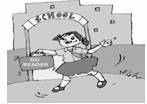
Who wants to carry a bulky bag to school? No children. Nobody wants one shoulder to be lower than the other, and paining(疼痛)too. In India, most of us would look at the reduction(减少)of textbooks as a way out. But in a country like America, there are always more choices. A company called goReader has created a "school bag" which is the size of a laptop computer(笔记本电脑), weighing about 2.5 kg. The goReader has a color screen and can "hold" all the textbooks that a student may need, says a report in 'The Asian Age' newspaper.
The company plans to work closely with the publishers(出版商) of textbooks so that these books can be supplied on the Internet. All the students will have to do is to download(下载) their textbooks. Making notes and marking important parts of a lesson can be done just as lots of students have done on their textbooks before.
At present, the plan is being tested out in a university. Richard Katzmann, the owner of the company is having his creation tested at Chicago's DePaul University, where he studied.Does that mean it is goodbye to the new paper, and the smell of the black ink?
( )1.What does the underlined word “bulky” in the first line mean?
A.light B.small C.big and heavy D.old
( )2.What would Indians do to solve(解决)the problem?
A.They would reduce the textbooks.
B.They would tell the parents to help students.
C.They would tell the teachers to help students.
D.They would take students to school by bus.
( )3.The writer may think that Americans have a ________ way to solve the problem.
A.more stupid B.worse C.better D.quicker
( )4.The go Reader may be a machine ________.
A.that can work as a teacher B.that can be used as textbooks
C.that can cheat students D.that can hurt students
( )5.When the new machine is used, it is possible that ________.
A.students might study harder
B.students might study at home
C.students might not need teachers
D.students might study without paper textbooks
“When can I get a cell phone?” The answer is when your parents think you need one, though many kids seem to be getting them around age 12 or 13. Some younger kids may have them because their parents see it as a matter of safety and convenience. For example, a kid can call mom and dad when sports practice is over. And a cell phone can give kids almost instant access(快捷通道) to their parents if something goes wrong or they need help. It can give parents quick access to their kids so they can check on them and make sure they’re OK.
If you do get a cell phone, make some rules with your parents, such as how many minutes you’re allowed to spend on the phone, when you can use your phone, when the phone must be turned off, and what you will do if someone calls you too often, and so on.
You’ll also have to learn to take care of the phone in your life. Keep it charged(充电) and store it in the safe place so it doesn’t get lost. And whatever you do, don’t use it in the bathroom. I know someone who dropped her phone in the toilet!
1.Parents buy cell phones for their kids because ___________.
|
A.they think it is necessary |
|
B.they think their kids are old enough |
|
C.they have asked the author for advice |
|
D.they want to follow their kids wherever they are. |
2.The author of the passage ___________.
|
A.wants to describe how children use cell phones |
|
B.knows nothing about when children can have a cell phone |
|
C.may have done a survey on kids using cell phones |
|
D.has been a teacher for many years |
3.Which of the following is true?
|
A.It is too young for kids of 12 or 13 to get a cell phone. |
|
B.A cell phone is useful for kids and their parents. |
|
C.The author is against the idea of kids to have cell phones. |
|
D.Most kids are considering having cell phones. |
4.Who is the passage most probably written by?
|
A.Parents who have bought phones for their kids. |
|
B.Someone who does cell phone business. |
|
C.A teacher who cares most about school safety. |
|
D.Someone who works for children’s education. |
5. Which might not be a rule for kids with a cell phone?
|
A.Keep it on all the time. |
|
B.Make a call if something goes wrong. |
|
C.Don’t use it in the bathroom. |
|
D.Take care not to lose it. |
--Listen! Is it Linda singing in the next room?
--No, it __________ be her. She is still in Shanghai.
A.can't B.couldn't C.may not D.might not
1
How could we live without the Internet? That's how most of us keep in touch with friends, find homework support, research cool place to visit, or find out the latest news. You can use it to do research for school, find out what movie is on near you, check out a college you're thinking about, or find a job or volunteer opportunity. Almost anything you can think of has a website about it.
You've probably heard stories about people who get into trouble in chat rooms. Because users can easily keep anonymous, you may be cheated in the chat room. Everyone in the chat room looks like wearing a mask(面具). Chat rooms often attract people who are interested in more than just chatting. They will sometimes ask visitors for information about themselves. The information might be about their families, or where they live. It shouldn't be given away.
Usually, the people who request personal information like home addresses, phone numbers, and email addresses use the information to do some illegal(违法的) things. This might harm a person's or family's well-being.
Of course, the Internet is home to millions of places you can and should visit. However, remember to protect yourself while online.
1.The first paragraph is mainly about _________of the Internet.
A. the advantage B. the safety
C. The interest D. the trouble
2.Which can't the Internet do for you according to the passage?
A. Find out the latest news.
B. Research a cool place to visit.
C. Do homework
D. Get information of your school
3.The underlined words "keep anonymous" mean "______" in the passage.
A. keep its name different
B. keep its name unknown
C. keep its story interesting
D. keep its name known
4.The Internet is an unsafe place because_____.
A. There are many illegal things
B. Your personal information may be given away.
C. The computers may be harmed
D. Your e-mail address might be changed
5.What can we learn from the passage?
A. Internet users should wear a mask.
B. The Internet makes it difficult to use the computer.
C. We'd better not give away the personal information on the Internet.
D. It's difficult to get cheated on the Internet.
湖北省互联网违法和不良信息举报平台 | 网上有害信息举报专区 | 电信诈骗举报专区 | 涉历史虚无主义有害信息举报专区 | 涉企侵权举报专区
违法和不良信息举报电话:027-86699610 举报邮箱:58377363@163.com