
题目列表(包括答案和解析)
阅读下面的短文,掌握其大意,然后从短文后各题所给的A、B、C、D四个选项中,选择最佳选项。
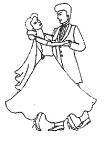 My favorite class at school was dance class. It was a new experience for me. At first, I didn’t think I’d like it, but I decided to give it a chance.
To begin with, it was 35 to have to hold with a boy and dance. The steps were okay, and the music was okay, but boys were not really okay. The teacher was nice and funny, and she got us used to working together as a 36 . Then it wasn’t so strange working with a partner any more.
As the lessons 37 and I learned new dances like waltz(华尔兹), I really began to enjoy myself. Even being with partners wasn’t bad. In fact, I started enjoying dancing with partners who tried hard and know our steps. Some of the boys thought it was a 38 . And they didn’t take it seriously. I hated dancing with them, but I politely took my turn with them anyway.
To be a proper lady was another thing I learned while I was dancing. I never thought much about it before, but the teacher expected me to 39 like a lady, which meant I had to accept dance partners politely 40 I didn’t like them. Just like life, you sometimes have to do things you don’t want to, the teacher 41 . Yet, that didn’t mean I didn’t enjoy dancing with a boy who had the proper height and good steps to be a great partner.
As the classes neared their end, I was happy to hear I’d been 42 as a finalist. That meant I and my partner, Todd, would be representing my school and going dancing at a competition.
The competition was like 43 out of a storybook. Everyone was smiling, wearing great clothes, and hair was done nicely. It was hard not to be 44 , but it was hard not to feel special, too. Todd and I, along with my teammates, 45 our way through the competition. It was hard, and all the other dancers were so good!
It was sad not to win the competition, but a third place finish was 46 . Maybe next year our dancers would come in first place. I was proud I learned a lot. I just know I loved to dance, especially the waltz.
35. A. different B. difficult C. common D. strange
36. A. class B. club C. team D. task
37. A. went on B. went by C. came over D. came back
38. A. joke B. step C. lesson D. chance
39. A. look B. learn C. behave D. practice
40. A. as if B. so that C. ever since D. even though
41. A. agreed B. smiled C. replied D. explained
42. A. tested B. chosen C. known D. regarded
43. A. something B. everything C. anything D. nothing
44. A. surprised B. excited C. nervous D. serious
45. A. continued B. danced C. found D. took
46. A. comfortable B. acceptable C. reasonable D. enjoyable
In the United States in the nineteenth century,many children studied in one-room schoolhouses.Students in Grades One to Eight shared the same classroom.A one-room schoolhouse was usually built of wood and painted white or red.
Children walked or rode horses to go to school.When it was time for school to begin,the teacher rang a bell.Then the children went inside.The smallest children sat in the smallest desks at the front of the room.These children were the closest ones to the teacher's desk.The tallest children sat in the back.
The children studied maths,geography,science,history,reading and art.Teachers wrote lessons on a blackboard at the front of the room.Students did maths problems or practiced writing on the blackboard.In some schools,students had their own small stone blackboards to write on.One teacher had to teach all grade levels(水平),so teachers often taught the children one at a time.
The teacher expected the children to behave well and punished those who did not.The teacher would hit the child with a stick as punishment.The children had lunch at school.Lessons continued in the afternoon.When school ended for the day,the children went home.They hardly had homework and often helped their parents work on the farm.
1.How many subjects did the children study at school?
A.Five. B.Sire C.Seven. D.Eight.
2.When school was over,the children often________
A.stayed at school B.practiced writing on the blackboard
C.helped their parents on the farm D.played basketball on the playground
3.Which of the following is not mentioned in this passage?
A.The children had two examinations every term.
B.After school,the children often had no homework to do.
C.The children from Grades One to Eight shared the same classroom.
D.In the classroom,the smallest children sat closest to the teacher's desk.
4.The best title of this passage is________
A.American Education B.One-Room Schoolhouse
C.Teachers in the United States D.Blackboard in the Classroom
A famous study was done in a school by a professor (教授) from a university. At the start of the school year, the teachers were given the names of five children. They were told that these five were the most excellent students in the class. But the fact was that these students were only average(中等),and they were not the best students at all. Well, guess what? At the end of the year, all the five average students scored among the highest in the class.
What made these average students change so much to become top students?The only difference was the change in their teachers’ attitude(态度). Because the teachers believed that these five kids were the top students,they expected(期望) more from them. And so these five average students began to believe and expect more from themselves. So they worked harder to do as well as they could.
Do you know why? If you expect the best from people, they’ll usually want to give you their best. A great leader said, “Treat(对待) a person just how he appears to be on the outside, and you’ll make him even worse. But treat a person like he’s already a success,and you’ll help make him the best he can be.”
Like the true story of 7-year-old Johnny, his teacher got so angry with him that one day she said,“Johnny,you’re the naughtiest(最顽皮的) boy in this class. I’m sure you’ll never change.” The next year Johnny had a new teacher. And on the first day of class,she met with Johnny after school and said,“Johnny, I’ve heard a lot about you! But do you know that I don’t believe a word of it.” And every day after that, this new teacher treated Johnny as if he was one of the smartest students even when Johnny did naughty things. Later on, Johnny became a school leader. Because that’s the power of our belief(信任) and attitude(态度) toward children.
1.The professor started his research(研究)by _______.
A. teaching the five children himself
B. asking the five children to find a new teacher
C. telling the five students to work harder than ever before
D. telling the teacher the five students were the best in the class
2.The five average students became top students mainly because of ________.
A. the professor’s study
B. the teachers’ hard work
C. the change in the teachers’ attitude
D. the change in the professor’s attitude
3.Why did the writer tell us the story of 7-year-old Johnny?
A. To let us know how good his new teacher was.
B. To show the importance of encouragement.
C. To show that the boy was clever enough.
D. To let us know the famous boy.
4.The writer writes the passage mainly by ______.
A. giving reasons and result
B. giving result and examples
C. describing what he thinks
D. asking and answering questions
5.What does the passage mainly tell us?
A. If you want to get more,you should have new teachers.
B. A professor’s study can help you score highest.
C. Only teachers can make you a top student.
D. Attitude and belief can change a person.
阅读下面短文,从每题所给的四个选项中,选出最佳答案。
This year some twenty-three hundred teenagers(young people aged from13~19)from all over the world will spend about ten months in U.S. homes. They will attend U.S. schools, meet U.S. teenagers, and form impressions of the real America. At the same time, about thirteen hundred American teenagers will go to other countries to learn new languages and gain a new understanding of the rest of the world.
Here is a two-way student exchange in action. Fred, nineteen, spent last year in Germany with George’s family. In turn, George’s son Mike spent a year in Fred’s home in America.
Fred, a lively young man, knew little German when he arrived, but after two months’ study the language began to come to him. School was completely different from what he had expected—much harder. Students rose respectfully when the teacher entered the room. They took fourteen subjects instead of the six that are usual in the United States. There were almost no outside activities.
Family life, too, was different. The father’s word was law, and all activities were around the family rather than the individual. Fred found the food too simple at first. Also, he missed having a car.
“Back home, you pick up some friends in a car and go out and have a good time. In Germany, you walk, but you soon learn to like it.”
At the same time, in America, Mike, a friendly German boy, was also forming his idea. “I suppose I should criticize(批评)American schools,” he said. “It is far too easy by our level. But I have to say that I like it very much. In Germany we do nothing but study. Here we take part in many outside activities. I think that maybe your schools are better in training for citizens. There ought to be some middle ground between the two.”
【小题1】This year ________teenagers will take part in the exchange programme between America and other countries.
| A.twenty-three hundred |
| B.thirteen hundred |
| C.over three thousand |
| D.less than two thousand |
| A.help teenagers in other countries know the real America |
| B.send students in America to travel in Germany |
| C.let students learn something about other countries |
| D.have teenagers learn new languages |
| A.America food tasted better than German food |
| B.German schools were harder than American schools |
| C.Americans and Germans were both friendly |
| D.There were more cars on the streets in America |
| A.there is some middle ground between the two teaching buildings |
| B.there are a lot of after-school activities |
| C.students usually take fourteen subjects in all |
| D.students go outside to enjoy themselves in a car |
In life, people come across many experiences, which they remember all their lives. I had a similar experience, too.
It was the day of my last paper of the final exam. My uncle had invited me to spend my vacation with him. I was especially excited about the invitation that my uncle had given me to stay with him for a few days in Cambridge.
On that day we got into our classroom. The teacher quickly handed out the paper. The exam would last two hours and some of the expected questions came. I finished it almost forty-five minutes earlier. But since it was a rule not to collect the paper before the allotted(规定的)time. I had to sit till the teacher collected the paper. I checked my paper twice and corrected some of the mistakes in it. I started thinking about the place my friends and I had planned to go to after the exam. The time seemed to be endless. So I thought of drawing something on the paper and turned it overleaf. I was shocked to see that the page which I had supposed to be blank had four more questions on it which carried 20 marks and would take at least half an hour to complete. There were only 10 minutes left. I was so nervous that I could hardly write anything. They were the sub-questions(小题)of the last question. Suddenly our physics teacher came in and told all of us that in the last question, out of 6 sub-questions only 2 had to be solved. I felt very relieved.
From then on, I realized that my anxiousness and excitement could have cost me to lose 20 marks and decided never to make such a mistake again.
【小题1】Which of the following statements is true?
| A.The writer didn’t work hard at physics. |
| B.The writer lost 20 marks for the last question. |
| C.The writer made some mistakes during the exam. |
| D.The questions on the paper were difficult for the writer. |
| A.less worried | B.less afraid |
| C.more surprised | D.more nervous |
| A.the writer did 2 sub-questions of the last question |
| B.the writer finished doing all the sub-questions |
| C.the writer spent 45 minutes finishing the paper |
| D.the writer got full marks in the physics exam |
| A.learn some exam skills |
| B.be careful not to make mistakes in the exam |
| C.try our best to do well in the exam |
| D.concentrate on what we are doing |
湖北省互联网违法和不良信息举报平台 | 网上有害信息举报专区 | 电信诈骗举报专区 | 涉历史虚无主义有害信息举报专区 | 涉企侵权举报专区
违法和不良信息举报电话:027-86699610 举报邮箱:58377363@163.com