( ) A. so B. but C. or D. for 查看更多


题目列表(包括答案和解析)

A girl complained to her father about her hard life.She didn't know what she had to do and wanted to give up.She felt tired of fighting and fighting.One problem had been finished but another came over.
Her father,a cook,took her into the kitchen.He poured water into three pans and boiled(煮沸) them.After boiling,in the first pan was put some carrots,the second was put some eggs and the last was put with coffee.
The girl waited impatiently (不耐烦的),confused by what her father did.About 20 minutes later,her father took out the carrots and put them in a bowl.He took the eggs and put them in a bowl.After that the coffee was poured into a cup.“My sweet heart,what do you see?” he asked.
“Carrots,eggs and coffee,” she replied.
Her father told her to close her eyes and asked her to touch the carrots.She did so and felt that the carrots were soft.After that he asked her to take the eggs and break them.After peeling (剥开) them,she got the eggs,cooked and hard.The last,the father let her smell the coffee. She asked,“What did you do this for,Father?” He explained that each had the same unlucky experience—the boiling water,but each had a different result. The strong and hard carrots had become soft and weak.The fragile eggs became hard after being cooked. The coffee was very special,they could change water.“Who are you?” asked her father.“When bad luck knocks at your door,what is your decision? Are you carrots,eggs or coffee?”

  1. 1.

    The girl complained about her hard life because she didn't ________.

    1. A.
      want to give up
    2. B.
      finish one problem
    3. C.
      know what to do
    4. D.
      get tired of fighting
  2. 2.

    The girl's father took her to the kitchen to ________.

    1. A.
      ask her how to boil eggs
    2. B.
      show her how to make coffee
    3. C.
      teach her how to be a cook
    4. D.
      tell her how to face difficulties
  3. 3.

    After about twenty minutes,the carrots became ________.

    1. A.
      soft
    2. B.
      hard
    3. C.
      salty
    4. D.
      sweet
  4. 4.

    The underlined word “fragile” in the passage means “________”.

    1. A.
      美味的
    2. B.
      易碎的
    3. C.
      特别的
    4. D.
      可怜的
  5. 5.

    What can we learn from the passage?

    1. A.
      The girl's father liked to eat some kinds of food.
    2. B.
      Bad luck always knocks at strong people's doors.
    3. C.
      Boiled carrots,eggs and coffee had the same result.
    4. D.
      People should make right decisions when in trouble.

查看答案和解析>>

A new term has begun. Teachers are   1  about the fact that new students are not easy to deal with(对付). They like to bring telephones(手机) and MP3 players to school. What is   2  , some students even use telephones to do out-of-class matters in class, or sometimes just for fun. Some otherstudents listen to MP3 players when they are having a lesson that they are not interested in.
Are these new students really that  3 ? “Yes.” says Delaney Kirk, a professor at Drake University.   4  she says it’s not their fault(过错).   5 , the teachers should be blamed(责备). Mrs Kirk first began thinking about students’ manners six years ago. “I had my first class in which students were sleeping or talking to each other. It seemed that learning well had nothing to do with them.” she says. “At first, I got worried about this.” but then I said to myself, “You’re giving   6  , and you need to deal with this kind of situation (情况). These students need to know more about manners. It’s time to help them develop some good   7  . They shouldn’t waste time doing nothing when they are young. Sooner or later, they may regret(后悔) the time they have wasted.”
Mrs Kirk also   8  a list of suggestions(建议) to help teachers better manage (控制) their classes. The following are among her suggestions:
l     On the first day of class, tell students how they will benefit(受益) by taking the class and the importance   9  listening carefully in class.
l     Do not allow(允许) them to bring telephones or MP3 players to the class at all.
l     Tell them how to use telephones or MP3 players   10  .
【小题1】
A.excitedB.worriedC.surprised D.interested
【小题2】
A.bad B.worseC.goodD.better
【小题3】
A.rudeB.politeC.friendlyD.boring
【小题4】
A.But B.HoweverC.AndD.So
【小题5】
A.Such asB.For exampleC.LikeD.Instead
【小题6】
A.MathB.EnglishC.ChineseD.lessons
【小题7】
A.ideasB.problems C.habits(习惯)D.classes
【小题8】
A.makesB.produces C.designsD.gets
【小题9】
A.onB.ofC.atD.by
【小题10】
A.carefullyB.properly C.clearlyD.quickly

查看答案和解析>>


A passenger(乘客)told an air hostess(空姐)that he needed a cup of water to take medicine when the plane just took off. She told him that she would bring him the   26 soon.
Twenty minutes   27 , when the passenger's ring for service sounded, the air hostess realized it at once. She was kept so busy that she   28  to bring him the water. Therefore, the passenger was held up(延迟)to take his medicine. She hurried over to him with a cup of water, but he  29 it.
In the following hours on the flight,   30 time the air hostess passed the passenger, she would ask him with a smile  31 he needed help or not. But the passenger never    32 her words.
When he was going to get off the  33 ,the passenger asked the air hostess to hand him  the passengers' booklet(意见簿).She was very  34 . She knew that he would write down  sharp (刻薄的) words, which might make her  35 the job.  36   with a smile she handed it to him.
Off the plane, she   37  the booklet and smiled, for the passenger put it, "On the flight, you asked me if I needed help for twelve times  38 . How can I refuse   39  twelve sincere (真诚的) smiles?"
That's right! It was the twelve smiles of the air hostess that touched(感动)the passenger  40  and of course she wouldn't lose her job!
【小题1】
A.milkB.juiceC.coffeeD.water
【小题2】
A.lateB.laterC.agoD.after
【小题3】
A.rememberedB.forgotC.wantedD.learned
【小题4】
A.acceptedB.took C.refusedD.received
【小题5】
A.someB.eitherC.anotherD.each
【小题6】
A.why B.when C.whetherD.how
【小题7】
A.paid attention toB.thought ofC.heard ofD.worried about
【小题8】
A.coachB.busC.trainD.plane
【小题9】
A.happyB.cheerful C.sadD.excited
【小题10】
A.loseB.losesC.losingD.lost
【小题11】
A.AndB.SoC.Then D.But
【小题12】
A.openedB.closedC.destroyedD.hid
【小题13】
A.at all B.in allC.of allD.all over
【小题14】
A.herB.your C.theirD.our
【小题15】
A.peacefully B.comfortablyC.deeplyD.slowly

查看答案和解析>>

A desert is a very dry land where there is hardly any rain. In the day, it can be so hot that you could fry an egg on the ground. But during the night it is sometimes so could that water would turn into ice.
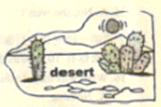
Many desserts are covered in sand. But some have mountains, rocks, or lakes that have dried up in the heat. The Great American Dessert has cliffs(悬崖) that have been made into amazing and beautiful shapes by the wind. The Sahara Desert in Africa is mostly sand. The Australian Desert has red sand.
Sometimes it does not rain for a whole year in the desert. But there is water deep under the ground and some plants have roots that go very deep to find it. Other plants have roots that spread out(延伸) a long way so they can suck up the rain as soon as it falls.
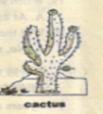
One desert plant is the cactus, which has long, spreading roots. The cactus stores water inside its hard skin. This skin protects it from heat and cold.
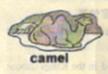
Camels are a bit like cactus plants! They store water too—inside their bodies. They have special fur which protects them from the sun during the day and keeps them warm at night.
Some other animals live in deserts, too. They have to be very good at seeing and hearing because most of them only come out at night. This is why many desert animals have extra big eyes or ears.
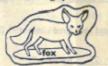
A desert fox has bigger ears than a normal for. A gerbil has huge eye, so that it can see at night. It stays cool in the day by staying underground, like most desert animals.
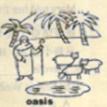
Some people live in the desert but they always make their homes near an oasis. An oasis is where water comes from an underground river. Near an oasis, people can grow lots of plants and keep animals.
Life is hard in the desert, for people, animals and plants. But desert people like to live there.
【小题1】A desert is very dry because__________.
A.it is sandyB.there is so little rain
C.the wind is strongD.there is no water deep under the ground
【小题2】What does the underlined phrase"suck up"in paragraph 3 mean_________?
A.围堵B.讨好C.释放D.吸收
【小题3】Some desert animals have extra big eyes or ears because__________.
A.the sunlight is too strong in the dayB.they need to see and hear well at night
C.it is very cold at nighD.they store water in them.
【小题4】Most desert animals stay cool in the day by_________.
A.storing water in side their bodiesB.drinking water as much as they can
C.staying undergroundD.growing lots of plants
【小题5】Which of the following is true?
A.Desert people like to live in the desert though life is hard.
B.People in the desert usually fry eggs on the ground.
C.Camels have special fur to store water.
D.All the deserts are covered in sand.

查看答案和解析>>


A young girl called Ida in Sweden decided to travel to a place she hadn't seen for 22 years. She had a happy life until some kids asked, "Why don't you look like your mom?" Ida was sent to her adopted(收养) family in Sweden right after she was born.She really didn't know anything about her birthplace, Korea, except for some information she recently heard about her birthparents.
During her schooldays, she was often questioned about her looks. Ida considered herself a normal Swedish person. She tried to be part of the group in her school, but she found it hard. She was still seen as an outsider.
As she grew older, she accepted(接受)who she  was. Still, she
wanted to find the missing piece of the puzzle (困惑). After finding out the place of her birthparents, Ida went to Korea in 2008. When she first arrived, she was surprised to see so many people who looked like her. However, apart from her looks, not much could be shared (分享) with others. She knew little about the culture, food, especially the language. Being in Korea wasn't always easy for her.
Perhaps Ida can never truly fit in either culture, but it's worth visiting her birthplace because she finally realized how special and different she is. She has two loving families, and most of all a better understanding of who she is. This helps her to have a positive view of her life.
【小题1】 Where was Ida born?
A.In Japan.B.In Sweden.C.In England.D.In Korea.
【小题2】Why was she seen as an outsider in Sweden?
A.Because of the culture.B.Because of her looks.
C.Because of the food.D.Because of the language.
【小题3】What does the phrase "apart from" in Paragraph 3 mean?
A.exceptB.as forC.as well asD.besides
【小题4】What can we learn from the passage?
A.Ida hadn't seen her birthparents for at least 22 years.
B.Ida found it easy for her to get used to living in Korea.
C.Ida still couldn't accept who she was after she went back to Sweden.
D.Ida realized she can't live a happy life either in Sweden or in Korea.

查看答案和解析>>


同步练习册答案