
题目列表(包括答案和解析)
A year ago,I paid no attention to English idioms (习语), though my teacher told us the importance again and again. But soon, the importance of English idioms was shown in an amusing experience.
One day, I happened to meet an Englishman on the road, and soon we began to talk. As I was talking about how I was studying English, the foreigner seemed to be surprised. Gently shaking his head,shrugging his shoulders, he said,“You don’t say!” “You don’t say!” I was puzzled. I thought , perhaps this is not a right topic. “Well, I’d better change the topic.” So I said to him. “Well, shall we talk about the Great Wall? By the way, have you ever been there?” “Certainly, everyone back home will laugh at me if I leave China without seeing it. It was wonderful.” He was deep in thought when I began to talk like a tourist guide. “The Great Wall is one of the wonders in the world. We are very proud of it.” Soon I was interrupted (打断) again by his words: “You don’t say!” I couldn’t help asking, “Why do you ask me not to talk about it?” “Well, I didn’t ask you to do so,” he answered, greatly surprised. I said, “Didn’t you say ‘you don’t say’?” Hearing this, the Englishman laughed to tears. He began to explain, “ ‘You don’t say’ actually means ‘really!’ It is an expression of surprise. Perhaps you don’t pay attention to English idioms.” I realized I had made a fool of myself. Since then I have been more careful with idiomatic expressions. Remember: what the English teachers said is always right to us students.
【小题1】A year ago, I paid no attention to English idioms because .
| A.I had no interest in them |
| B.English idioms were very difficult |
| C.I did not realize the importance of them |
| D.my teacher didn’t tell us the importance of them |
| A.I had talked too much |
| B.I had to stop talking |
| C.he was not interested in the topic |
| D.he was only interested in the Great Wall |
| A.interesting | B.important | C.terrible | D.unlucky |
| A.The Englishman wanted me to act as his guide. |
| B.The Englishman left China without seeing the Great Wall. |
| C.The Englishman wanted to see the Great Wall after I talked about it. |
| D.The Englishman visited the Great Wall and thought it worth visiting. |
| A.I felt very silly |
| B.the Englishman became a real fool |
| C.I became more carefully in everything |
| D.I thought the Englishman had made me a fool |
A famous study was done in a school by a professor (教授) from a university. At the start of the school year, the teachers were given the names of five children. They were told that these five were the most excellent students in the class. But the fact was that these students were only average(中等),and they were not the best students at all. Well, guess what? At the end of the year, all the five average students scored among the highest in the class.
What made these average students change so much to become top students?The only difference was the change in their teachers’ attitude(态度). Because the teachers believed that these five kids were the top students,they expected(期望) more from them. And so these five average students began to believe and expect more from themselves. So they worked harder to do as well as they could.
Do you know why? If you expect the best from people, they’ll usually want to give you their best. A great leader said, “Treat(对待) a person just how he appears to be on the outside, and you’ll make him even worse. But treat a person like he’s already a success,and you’ll help make him the best he can be.”
Like the true story of 7-year-old Johnny, his teacher got so angry with him that one day she said,“Johnny,you’re the naughtiest(最顽皮的) boy in this class. I’m sure you’ll never change.” The next year Johnny had a new teacher. And on the first day of class,she met with Johnny after school and said,“Johnny, I’ve heard a lot about you! But do you know that I don’t believe a word of it.” And every day after that, this new teacher treated Johnny as if he was one of the smartest students even when Johnny did naughty things. Later on, Johnny became a school leader. Because that’s the power of our belief(信任) and attitude(态度) toward children.
【小题1】The professor started his research(研究)by _______.
| A.teaching the five children himself |
| B.asking the five children to find a new teacher |
| C.telling the five students to work harder than ever before |
| D.telling the teacher the five students were the best in the class |
| A.the professor’s study |
| B.the teachers’ hard work |
| C.the change in the teachers’ attitude |
| D.the change in the professor’s attitude |
| A.To let us know how good his new teacher was. |
| B.To show the importance of encouragement. |
| C.To show that the boy was clever enough. |
| D.To let us know the famous boy. |
| A.giving reasons and result |
| B.giving result and examples |
| C.describing what he thinks |
| D.asking and answering questions |
| A.If you want to get more,you should have new teachers. |
| B.A professor’s study can help you score highest. |
| C.Only teachers can make you a top student. |
| D.Attitude and belief can change a person. |
A year ago, I paid no attention to English idioms(习语), though my teacher told us the importance again and again. But soon, the importance of English idioms was shown in an amusing experience.
One day, I happened to meet an Englishman on the road, and soon we began to talk. As I was talking about how I was studying English, the foreigner seemed to be surprised. Gently shaking his head,shrugging his shoulders, he said,“You don’t say!” “You don’t say!” I was puzzled. I thought, perhaps this is not a right topic. “Well, I’d better change the topic.” So I said to him. “Well, shall we talk about the Great Wall? By the way, have you ever been there?” “Certainly, everyone back home will laugh at me if I leave China without seeing it. It was wonderful.” He was deep in thought when I began to talk like a tourist guide. “The Great Wall is one of the wonders in the world. We are very proud of it.” Soon I was interrupted(打断)again by his words: “You don’t say!” I couldn’t help asking, “Why do you ask me not to talk about it?” “Well, I didn’t ask you to do so,” he answered, greatly surprised. I said, “Didn’t you say ‘you don’t say’?” Hearing this, the Englishman laughed to tears. He began to explain, “ ‘You don’t say’ actually means ‘really!’ It is an expression of surprise. Perhaps you don’t pay attention to English idioms.” I realized I had made a fool of myself. Since then I have been more careful with idiomatic expressions. Remember: what the English teachers said is always right to us students.
【小题1】A year ago, I paid no attention to English idioms because .
| A.I had no interest in them |
| B.English idioms were very difficult |
| C.I did not realize the importance of them |
| D.my teacher didn’t tell us the importance of them |
| A.I had talked too much | B.I had to stop talking |
| C.he was not interested in the topic | D.he was only interested in the Great Wall |
| A.interesting | B.important | C.terrible | D.unlucky |
| A.The Englishman wanted me to act as his guide. |
| B.The Englishman left China without seeing the Great Wall. |
| C.The Englishman wanted to see the Great Wall after I talked about it. |
| D.The Englishman visited the Great Wall and thought it worth visiting. |
| A.I felt very silly | B.the Englishman became a real fool |
| C.I became more careful in everything | D.I thought the Englishman had made me a fool |
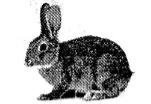
A hare was very popular with the other animals who all said they were her friends.But one day she heard the hounds(猎犬)getting close and hoped to escape them by the aid of her many friends. So,she went to the horse,and asked him to carry her away from the hounds on his back.But he refused,because he had important work to do for his master. He felt sure that all her other friends would come to help her.
She then came to the bull,and hoped that he would repel the hounds with his horns (角).The bull replied,"I am very sorry,but I have an appointment with a lady;but I feel sure that our friend the goat will do what you want." The goat,however,feared that his back might do her some harm if he took her upon it.The sheep,he felt sure,was the proper friend to ask for help.
So she went to the sheep and told him the situation.The sheep replied,"Another time,my dear friend. I do not like to have anything to do with it,as hounds have been known to eat sheep as well as hares."
The hare then went,as a last hope,to the calf (小牛),who regretted that he was unable to help her,as he did not like to take the responsibility (责任) upon himself,as so many older persons than himself had refused the task.By this time the hounds were quite near,and the hare took to her heels and luckily escaped.
根据材料内容选出最佳选项,并在答题卡上将该项涂黑。
1.What do we know about the hare?
A.She was strong enough to face all the dangers.
B.She was friendly and all animals loved to help her.
C.She was ready to help other animals when necessary.
D.She got along well with other animals and had a lot of friends.
2.What happened to the hare one day?
A.The horse carried her away on his back.
B.Her enemy came near and she was in danger.
C.She had an argument with her friend,the bull.
D.The goat hurt her when taking her upon his back.
3.What does the underlined word "repel" mean in Chinese?
A.击退????????????? ????????????? ????????????? B.厌恶????????????? ????????????? ????????????? C.排斥????????????? ????????????? ????????????? D.拒绝
4.What do you think of the sheep?
A.Helpless.????????????? ????????????? B.Brave. ????????????? ????????????? C.Friendly.????????????? D.Smart.
5.What does the story want to tell us?
A.Don't judge a book by its cover.
B.One's mind works fast in time of danger.
C.Sometimes enemies can become good friends.
D.Having too many friends means no friends sometimes.
A boy carefully took his blind father to a seat in a noodle restaurant.
He called 1 for two bowls of beef noodles. When the restaurant owner was going to 2 the food, the boy suddenly whispered to him,“Only one bowl with 3 , the other without ---just plain noodles.”
In fact, the boy had a light purse and couldn’t afford 4 bowls of beef noodles. He called loudly just to let his 5 know.
When the noodles were sent to them, the father wasn’t in a hurry. He used his chopsticks to search in his bowls, trying to 6 a piece of beef. As soon as he succeeded in finding one, he picked it out 7 put it into his son’s bowl, saying kindly, “Eat some more. Have enough 8 so that you can study well.”
The boy accepted silently(默默地) and then quietly put the beef 9 to his father’s bowl.
When the restaurant owner saw this, he was 10 , then he asked a waiter to bring 11 some dishes from the kitchen. The boy thought 12 the waiter took the dishes to a wrong table, but the owner came up explaining with a smile, “Today is my restaurant’s anniversary(周年庆). The dishes are 13 .”
After the father and son left, the waiter 14 the bowls from the table and found some coins 15 one of them. The sum is just the price of the dishes.
1. A.quickly B.slowly C.loudly D.quietly
2. A.ask B.prepare C.eat D.heat
3. A.pork B.chicken C.beef D.fish
4. A.five B.two C.three D.four
5. A.mother B.father C.friend D.waiter
6. A.look B.listen C.find D.see
7. A.so B.but C.or D.and
8. A.money B.book C.food D.work
9. A.back B.up C.down D.off
10. A.angry B.afraid C.moved D.nervous
11. A.us B.him C.her D.them
12. A.who B.that C.where D.how
13. A.free B.cheap C.expensive D.best
14. A.found B.cleaned C.finished D.came
15. A.out B.in C.on D.under
湖北省互联网违法和不良信息举报平台 | 网上有害信息举报专区 | 电信诈骗举报专区 | 涉历史虚无主义有害信息举报专区 | 涉企侵权举报专区
违法和不良信息举报电话:027-86699610 举报邮箱:58377363@163.com