
题目列表(包括答案和解析)
When I was a kid in Minnesota, watermelon was expensive. One of my father’s friends, Bernie, was a rich businessman, who owned a large store in St. Paul.
Every summer, when the first watermelons arrived, Bernie would call. Dad and I would go to Bernie’s place. We’ d sit on the edge of the dock(码头), feet dangling(摇晃), and got ready for a big meal.
Bernie would take his knife, cut our first watermelon, hand us both a big piece and sit down next to us. Then we’d bury our faces in watermelon, eating only the heart—the reddest, juiciest, firmest, sweetest, most seed-free part—and throw away the rest.
Bernie was my father’s idea of a rich man. I always thought it was because he was such a successful businessman. Years later, I realized that it was not Bernie’s wealth itself but his way of dealing with it that my father liked. Bernie knew how to stop working, get together with friends and eat only the heart of the watermelon.
What I learned from Bernie is that being rich is a state of mind. Some of us, no matter how much money we have, will never be free enough to eat only the heart of the watermelon. If you don’t take the time to dangle your feet over the dock and enjoy life’s small pleasure, your work is probably hurting your life.
For many years, I forgot that lesson I’d learned as a kid on the loading dock. I was too busy making all the money I could.
Well, I’ve relearned it. I hope I have time left to enjoy the success of others and to take pleasure in the day. That’s the heart of the watermelon. I have learned again to throw the rest away.
1. We learned from the second paragraph that the writer and his father were feeling ______.
A. relaxed B. worried C. hungry D. proud
2.How did the writer and his father eat the watermelon?
A. They ate it in a polite way. B. They only ate its best part.
C. They ate every part of it. D. They shared only one piece.
3. In the eyes of the writer’s father, Bernie ______.
A. was just a rich businessman B. worked hard all the time
C. lived a rich but healthy life D. knew how to make money
4.The underlined part “the heart of the watermelon” in the last paragraph refers to ______.
A. the best part of the watermelon B. the writer’s busy life
C. the writer’s decision of making money D. the writer’s hope of enjoying life
5.It can be learned from the passage that ______.
A. one has to work hard to reach his goal B. a friend in need is a friend in deed
C. watermelon is the healthiest fruit D. one should keep work-life balance
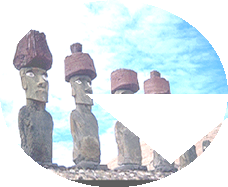
One of the greatest mysteries on Earth is the statues which stand on Easter Island. Easter Island, which was almost uninhabited when it was discovered on Easter Day in 1722 by a Dutch captain, is the most distant island in the world covered with hundreds of giant statues, each weighing several tons and some standing more than 30 feet tall.
Who built these statues and why and how did they get there? Nobody knows the answer for sure.
One theory suggests that Easter Island was first inhabited by Polynesians, who traveled thousands of miles in their canoes(独木舟)in 400 A.D. However, the ocean currents(洋流)which carried them there would not take them back, so that they could not leave.
The statues appear to have been made out of the top edge of the walls of a volcano on the island. Then, it may have been rolled or dragged down to the foot of the volcano(火山). Then, it was stood upright(直立)and ropes were tied around it, which was made to act as a pulley(滑轮). Over a period of months, a statue could be walked for miles down to the ocean. Finally, it was placed in line with other statues, all of them looking towards the center of the island.
This process was difficult. If a statue fell over, it was too heavy to be pulled upright again, so the islanders went back and carved another statue.
The population of Easter Island must have reached 11,000. Later, the resources of the island were used up and people began fighting and eating each other. Work on the statues stopped and the statues were knocked over. When the first Europeans finally arrived on the island, most of these people had died out.
【小题1】This passage is mainly about ________ .
| A.the discovery of Easter Island | B.the statues on Easter Island |
| C.the history of Easter Islanders | D.the earliest population on Easter Island |
| A.c-d-a-b | B.d-b-a-c | C.a-c-b-d | D.d-a-b-c |
| A.Easter Island is the most distant island in the world |
| B.Easter is the name of a holiday |
| C.not all the statues were placed in a line |
| D.the island was once rich in natural resources |
| A.mysterious | B.lost |
| C.unknown to the world | D.with no people living there |
Tibet is among the most popular places for Chinese tourists. The number of travelers to Tibet has grown by 10% every year for a few years. Since July 1,2006, when the first train ran 1956 kilometers from Xining to Lhasa, more and more people have been going to Tibet.
The train stops at several famous places along the way, such as Qinghai Lake, Kunlun Mountain, and the Potala Palace. Passengers can also enjoy many activities during the journey, like Tibetan dancing and Karaoke.
On the train, passengers can have tea, eggs and noodles for breakfast, and fried chicken and green vegetables for lunch and dinner. Unlike most Chinese trains which have open – hole toilets, this one has special toilets which can collect the waste. There is also a special rubbish system (系统) in the train that keeps the environment clean. All the windows on the train can protect people from the bright sunlight. TV and electrical sockets (插座) for computers and mobile phones can be found on the train.
Because there isn’t much oxygen there, trains will have oxygen masks (氧气罩) for those who need them. It makes passengers feel more comfortable when they have enough oxygen on the famous “roof of the world”. There are also doctors on the train to make sure that all of the travelers are safe.
【小题1】Which of the following is NOT among the places of interest?
| A.Qinghai Lake |
| B.Karaoke. |
| C.Kunlun Mountain. |
| D.The Potala Palace. |
| A.windows | B.toilets | C.sockets | D.rubbish |
| A.oxygen masks | B.doctors | C.oxygen | D.passengers |
| A.flying to Tibet is impossible |
| B.train to Lhasa is too clean to take |
| C.train trip to Tibet is popular with travelers |
| D.taking train to Lhasa causes a lot of trouble |
| A.Tibet – Roof of the World |
| B.Magic Train to Magic Tibet |
| C.Beautiful Views in Tibet |
| D.A Comfortable Trip to Tibet |
Hi Hongbo,
I’m so glad to read about the changes talking place in your city. It’s really good news that you can travel by subway in Xi’an, though there’s only one line there. Here in London we have twelve lines. By the way, we don’t use the word “subway” here. It’s American English. We call it “the Underground”, instead.
The London Underground is very famous. It’s famous for several reasons. First of all, part of the underground railway today is the oldest in the world, which opened in 1863. Secondly, the London Underground is also the first line to have electric trains, in 1890. Thirdly but not the last, the London Underground is the second largest metro system in the world, after the Shanghai Metro. There are 270 stations in the Underground and it has 402 kilometres of tracks(轨道). What’s more, the city of London itself helps make the transportation system famous! I’ve got a few photos to help you build a clear picture of the Underground in my city. They are together with this mail.
In your email, you also said workers were building more lines. I’m sure your city is developing fast. Maybe you can send me a few photos of your city today. I really want to see the changes taking place there. I’m happy for you to live there in an ancient city with such a new look!
So much for now. I’ll write soon again. Best wishes!
1. Where is the writer from?
|
A.From Xi’an. |
B.From Shanghai |
C.From London |
D.From New York |
2. The second paragraph mainly tells us ?
|
A.when the first subway was opened in the world. |
|
B.when the London Underground first used electric trains |
|
C.why the London Underground is the oldest subway in the world. |
|
D.why the London Underground is famous in the world |
3.In the email, the words “subway”, “underground”, and “metro” mean .
|
A.almost the same thing |
B.two different things |
|
C.three different things |
D.nothing like each other |
4. What does the writer want Hongbo to do?
|
A.To buy a good book about Xi’an for him. |
|
B.To post him some postcards of Xi’an. |
|
C.To tell him more about Xi’an subway. |
|
D.To send him a few photos of Xi’an. |
 I was born in the computer age. 【小题1】. They were already adults when the first personal computer came out. But with the development of technology, more jobs need skills like typing, sending e-mails, etc.
|
湖北省互联网违法和不良信息举报平台 | 网上有害信息举报专区 | 电信诈骗举报专区 | 涉历史虚无主义有害信息举报专区 | 涉企侵权举报专区
违法和不良信息举报电话:027-86699610 举报邮箱:58377363@163.com