
题目列表(包括答案和解析)
| 完形填空。 | |||
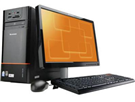 We live in the "computer age". People like scientists, teachers, writers and even students use computers to do __1__ work. But more than 30 years ago, __2__ couldn't do much. They were very big and expensive. Very __3__ people were interested in them and knew how to use them. Today computers are smaller and __4__. Because they can do __5__ work, many people like to use them. Some people even have them at home. Computers have become very important because they can work __6__ than men and they make fewer mistakes. Computers can __7__ people do a lot of work. Writers now use computers to write, teachers use them to teach and children use them to study. Computers can also remember what you put __8__ them. Computers are very __9__ and helpful. Do you want to __10__ a computer? | |||
| ( ) 1. A. lot of ( ) 2. A. computers ( ) 3. A. a few ( ) 4. A. cheap ( ) 5. A. a few ( ) 6. A. faster ( ) 7. A. ask ( ) 8. A. on ( ) 9. A. friendly ( ) 10. A.lend |
B. much B. rockets B. few B. dearer B. a little B. slow B. help B. up B. hcavy B. sell |
C. a lot C. machines C. a little C. more expensive C. many C. slower C. use C. into C. careful C. spend |
D. many D. scientists D. little D. less expensive D. a lot of D. quickly D. make D. at D. useful D. have |
Can you imagine a classroom without one thing that has long been considered a necessary part? No notebooks, no textbooks, no test papers. Nor are there any pencils or pens, which always seem to run out of ink at the critical moment.
A “Paperless classroom” is what more and more schools are trying to realize. Students don’t do any handwriting in this class. Instead, they use hand-sized or specially-designed computers. The teacher downloads texts from Internet libraries and sends them to every student’s personal computer.
Having computers also means that students can use the Web. They can look up information on any subject they’re studying, from maths to social science.
A high school teacher, Judy Herrel in Florida, US, described how her class used the Web. “Using a book that’s three or four years old is impossible,” she said.
A paperless classroom is a big step towards reducing the waste of paper.
“Think about the money and trees we could save with the computers,” she said.
But, with all this technology, there’s always a risk that the machines will break down. So, in case of a power failure or a technical problem, paper textbooks should still be widely available (可得到的) for these students.
1.The underlined word “critical” in the first paragraph probably has the same meaning as _______.
A. worrying B. dangerous C. happy D. important
2.You are sure to find __________ in a paperless classroom.
A. pens B. computers C. test papers D. notebooks
3.According to Judy Herrel, __________.
A. the Web can talk the students everywhere
B. the Web can take the place of teachers
C. the Web is a better tool for information
D. the Web is for downloading information
4.The paper textbooks should still be widely available because __________.
A. students won’t have trouble with their pens
B. computers may break down sometimes
C. students may not get all information from the Internet
D. paper textbooks may give students more information
Do you like drinking Coke? As a symbol of American culture, Coca-Cola is liked by many people, especially young people all around the world. But from now on, perhaps it will be hard for students in the US to get it on campus. A new agreement will end almost all sales of high-sugar fizzy drinks in US schools. The agreement allow only unsweetened juice, low-fat milk and water in primary and middle school vending machines(自动销售机) and cafeterias. Former American president Bill Clinton helped the American Heart Association and the beverage industry(饮料业) to come up with the agreement. He suffered from a weight problem and has had a heart operation since leaving the White House. He takes the agreement as “a bold step forward in the struggle to help 35 million young people lead healthier lives”.
Rising childhood obesity(肥胖) has become a big problem in America. A federal report noted that obesity has tripled among teenagers in the past 25 years. It called for new limits on the marketing of junk food to children. Soda is a particular target because of its caloric content and popularity among children.
Britain has already taken similar steps to fight obesity. A recent study shows that people in the UK are much healthier than the people in the US. However, it’s better late than never. Now American schools are trying to make new rules to guide the students to choose healthy drinks. American schools say goodbye to Coca-Cola.
【小题1】What kind of beverage is NOT allowed to sell on campus?
A. High-sugar fizzy drinks. B. Unsweetened juice.
C. Low-fat milk. C. Water.
【小题2】What dose the underlined word “tripled” in the second paragraph mean?
| A.Became as much. |
| B.Became twice as much. |
| C.Became three times as much. |
| D.Became four times as much. |
| A.Positive | B.Neutral | C.Negative | D.Unclear |
| A.Coca-Cola causes students’ obesity. |
| B.Coca-Cola makes people unhealthier. |
| C.Coca-Cola isn’t very popular in the world. |
| D.Coca-Cola is bad for our body. |
| A.Say “Goodbye” to Coca-Cola |
| B.The Junk Coca-Cola |
| C.Coca-Cola in China |
| D.Coca-Cola in the World |
Do you like drinking Coke? As a symbol of American culture, Coca-Cola is liked by many people, especially young people all around the world. But from now on, perhaps it will be hard for students in the US to get it on campus. A new agreement will end almost all sales of high-sugar fizzy drinks in US schools. The agreement allows only unsweetened juice, low-fat milk and water in primary and middle school vending machines(自动售货机)and cafeterias. Former American president Bill Clinton helped the American Heart Association and the beverage industry(饮料业) to come up with the agreement. He suffered from a weight problem and has had a heart operation since leaving the White House. He takes the agreement as “a bold step forward in the struggle to help 35 million young people lead healthier lives”.
Rising childhood obesity(肥胖)has become a big problem in America. A federal report noted that obesity has tripled among teenagers in the past 25 years. It called for new limits on the marketing of junk food to children. Soda is a particular target because of its caloric content and popularity among children.
Britain has already taken similar steps to fight obesity. A recent study shows that people in the UK are much healthier than the people in the US. However, it’s better late than never. Now American schools are trying to make new rules to guide the students to choose healthy drinks. American schools say goodbye to Coca-Cola.
【小题1】What kind of beverage is NOT allowed to sell on campus?
| A.High-sugar fizzy drinks. | B.Unsweetened juice. |
| C.Low-fat milk. | D.Water. |
| A.Became as much. | B.Became twice as much. |
| C.Became three times as much. | D.Became four times as much. |
| A.Positive. | B.Neutral. | C.Negative. | D.Unclear. |
| A.Coca-Cola causes students’ obesity. |
| B.Coca-Cola makes people unhealthier. |
| C.Coca-Cola isn’t very popular in the world. |
| D.Coca-Cola is bad for our body. |
| A.Say “Goodbye” to Coca-Cola |
| B.The Junk Coca-Cola |
| C.Coca-Cola in China |
| D.Coca-Cola in the World |
Do you like drinking Coke? As a symbol of American culture, Coca-Cola is liked by many people, especially young people all around the world. But from now on, perhaps it will be hard for students in the US to get it on campus. A new agreement will end almost all sales of high-sugar fizzy drinks in US schools. The agreement allows only unsweetened juice, low-fat milk and water in primary and middle school vending machines(自动售货机)and cafeterias. Former American president Bill Clinton helped the American Heart Association and the beverage industry(饮料业) to come up with the agreement. He suffered from a weight problem and has had a heart operation since leaving the White House. He takes the agreement as “a bold step forward in the struggle to help 35 million young people lead healthier lives”.
Rising childhood obesity(肥胖)has become a big problem in America. A federal report noted that obesity has tripled among teenagers in the past 25 years. It called for new limits on the marketing of junk food to children. Soda is a particular target because of its caloric content and popularity among children.
Britain has already taken similar steps to fight obesity. A recent study shows that people in the UK are much healthier than the people in the US. However, it’s better late than never. Now American schools are trying to make new rules to guide the students to choose healthy drinks. American schools say goodbye to Coca-Cola.
1.What kind of beverage is NOT allowed to sell on campus?
|
A.High-sugar fizzy drinks. |
B.Unsweetened juice. |
|
C.Low-fat milk. |
D.Water. |
2.What does the underlined word “tripled” in the second paragraph mean?
|
A.Became as much. |
B.Became twice as much. |
|
C.Became three times as much. |
D.Became four times as much. |
3.What is the writer’s attitude(态度)towards limits on junk food?
|
A.Positive. |
B.Neutral. |
C.Negative. |
D.Unclear. |
4.Which of the following statements is WRONG?
|
A.Coca-Cola causes students’ obesity. |
|
B.Coca-Cola makes people unhealthier. |
|
C.Coca-Cola isn’t very popular in the world. |
|
D.Coca-Cola is bad for our body. |
5.Which is the best title of the passage?
|
A.Say “Goodbye” to Coca-Cola |
|
B.The Junk Coca-Cola |
|
C.Coca-Cola in China |
|
D.Coca-Cola in the World |
湖北省互联网违法和不良信息举报平台 | 网上有害信息举报专区 | 电信诈骗举报专区 | 涉历史虚无主义有害信息举报专区 | 涉企侵权举报专区
违法和不良信息举报电话:027-86699610 举报邮箱:58377363@163.com