A. eyes B. legs C. mouth D. head 查看更多


题目列表(包括答案和解析)


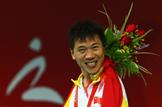
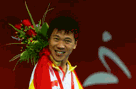
He Junquan is a Chinese swimmer and has won many Paralympic(残奥会) gold medals. Born in Jingmen, Hubei province, He Junquan was a healthy boy. But one day at the age of three, he climbed up to the high-voltage electricity(高压线) box and lost both of his arms forever. He became a disabled boy!
From then on he learnt to do everything with his feet: writing, eating, getting dressed and taking things. Seeing other pupils swimming in the river, he jumped in, too. Without arms, he suffered a lot in the river at the beginning. But he finally learnt to balance himself in water and could swim much faster than the other pupils. Once he even saved a little boy who fell into the water and couldn’t swim. His father was so happy to see that this son had a talent in swimming.
In 1995, He Junquan became a real swimmer. He practices swimming for more than four hours every day. Since 1996, he has won more than twelve gold medals of the world class. At the 2008 Summer Paralympics, he won a silver medal. Reporting on the competition at the 2008 Games, Will Swanton of the Sydney Morning Herald wrote:
“The Water Cube has been a sight for sore(气愤的) eyes. China’s He Junquan, with no arms, was leading the 50m backstroke(仰泳) final. … He came to the finish— and had to crash into the wall with his head. As he slowed down to lessen(减少) the impact(撞击力), Brazilian Daniel Dias hit the wall first with a hand. You’ve never heard a silence like it.”
【小题1】What happened to He Junquan when he was three?

A.He climbed up the tree but failed onto the ground.
B.He saved a little boy who fell into the river and couldn’t swim.
C.He climbed up to the high-voltage electricity box and lost his two arms.
D.He began to practice swimming in the swimming pool with the other children.
【小题2】How did He Junquan do everything after he became disabled?
A.With his feet. B.With his mouth.
C.With his legs.D.With his hands.
【小题3】How many gold medals did He Junquan win after he became a real swimmer?
A.Only one.B.Less than four.C.About ten.D.More than twelve.
【小题4】What might Swanton’s report want to tell us?
A.He Junquan should not take part in the 2008 Games.
B.Daniel Dias didn’t hit the wall first at the 2008 Games.
C.The match was a little unfair for He Junquan because he had no arms.
D.He Junquan swam a little faster than Daniel Dias but he won a gold medal.
【小题5】What’s the best title for the passage?
A.A Terrible Accident.B.A Disabled Boy.
C.An Unforgettable Experience.D.A Hero without Arms.

查看答案和解析>>


He Junquan is a Chinese swimmer and has won many Paralympic(残奥会) gold medals. Born in Jingmen, Hubei province, He Junquan was a healthy boy. But one day at the age of three, he climbed up to the high-voltage electricity(高压线) box and lost both of his arms forever. He became a disabled boy!
From then on he learnt to do everything with his feet: writing, eating, getting dressed and taking things. Seeing other pupils swimming in the river, he jumped in, too. Without arms, he suffered a lot in the river at the beginning. But he finally learnt to balance himself in water and could swim much faster than the other pupils. Once he even saved a little boy who fell into the water and couldn’t swim. His father was so happy to see that this son had a talent in swimming.
In 1995, He Junquan became a real swimmer. He practices swimming for more than four hours every day. Since 1996, he has won more than twelve gold medals of the world class. At the 2008 Summer Paralympics, he won a silver medal. Reporting on the competition at the 2008 Games, Will Swanton of the Sydney Morning Herald wrote:
“The Water Cube has been a sight for sore(气愤的) eyes. China’s He Junquan, with no arms, was leading the 50m backstroke(仰泳) final. … He came to the finish— and had to crash into the wall with his head. As he slowed down to lessen(减少) the impact(撞击力), Brazilian Daniel Dias hit the wall first with a hand. You’ve never heard a silence like it.”
小题1:What happened to He Junquan when he was three?
A.He climbed up the tree but failed onto the ground.
B.He saved a little boy who fell into the river and couldn’t swim.
C.He climbed up to the high-voltage electricity box and lost his two arms.
D.He began to practice swimming in the swimming pool with the other children.
小题2:How did He Junquan do everything after he became disabled?
A.With his feet. B.With his mouth.
C.With his legs.D.With his hands.
小题3:How many gold medals did He Junquan win after he became a real swimmer?
A.Only one.B.Less than four.C.About ten.D.More than twelve.
小题4:What might Swanton’s report want to tell us?
A.He Junquan should not take part in the 2008 Games.
B.Daniel Dias didn’t hit the wall first at the 2008 Games.
C.The match was a little unfair for He Junquan because he had no arms.
D.He Junquan swam a little faster than Daniel Dias but he won a gold medal.
小题5:What’s the best title for the passage?
A.A Terrible Accident.B.A Disabled Boy.
C.An Unforgettable Experience.D.A Hero without Arms.

查看答案和解析>>

阅读理解

  He Junquan is a Chinese swimmer and has won many Paralympic(残奥会)gold medals.Born in Jingmen, Hubei province, He Junquan was a healthy boy.But one day at the age of three, he climbed up to the high-voltage electricity(高压线)box and lost both of his arms forever.He became a disabled boy!

  From then on he learnt to do everything with his feet:writing, eating, getting dressed and taking things.Seeing other pupils swimming in the river, he jumped in, too.Without arms, he suffered a lot in the river at the beginning.But he finally learnt to balance himself in water and could swim much faster than the other pupils.Once he even saved a little boy who fell into the water and couldn't swim.His father was so happy to see that this son had a talent in swimming.

  In 1995, He Junquan became a real swimmer.He practices swimming for more than four hours every day.Since 1996, he has won more than twelve gold medals of the world class.At the 2008 Summer Paralympics, he won a silver medal.Reporting on the competition at the 2008 Games, Will Swanton of the Sydney Morning Herald wrote:

  “ The Water Cube has been a sight for sore(气愤的)eyes.China's He Junquan, with no arms, was leading the 50m backstroke(仰泳)final.…He came to the finish- and had to crash into the wall with his head.As he slowed down to lessen(减少)the impact(撞击力), Brazilian Daniel Dias hit the wall first with a hand.You’ve never heard a silence like it.”

(1)

What happened to He Junquan when he was three?

[  ]

A.

He climbed up the tree but failed onto the ground.

B.

He saved a little boy who fell into the river and couldn't swim.

C.

He climbed up to the high-voltage electricity box and lost his two arms.

D.

He began to practice swimming in the swimming pool with the other children.

(2)

How did He Junquan do everything after he became disabled?

[  ]

A.

With his feet.

B.

With his mouth.

C.

With his legs.

D.

With his hands.

(3)

How many gold medals did He Junquan win after he became a real swimmer?

[  ]

A.

Only one.

B.

Less than four.

C.

About ten.

D.

More than twelve.

(4)

What might Swanton's report want to tell us?

[  ]

A.

He Junquan should not take part in the 2008 Games.

B.

Daniel Dias didn't hit the wall first at the 2008 Games.

C.

The match was a little unfair for He Junquan because he had no arms.

D.

He Junquan swam a little faster than Daniel Dias but he won a gold medal.

(5)

What's the best title for the passage?

[  ]

A.

A Terrible Accident

B.

A Disabled Boy

C.

An Unforgettable Experience

D.

A Hero without Arms

查看答案和解析>>

阅读下面1篇短文,短文后有6个句子,用这6个句子分别为每段话找出最佳的段意,其中第1段
已给出答案。
                                                   Healthy Days Raymond Knott 
                                     Published by Macbooks, London, 2004 212 pages
    Bookshops are full of books on healthy living. A new book needs a new idea. Raymond Knott's idea is
to organize his book like the human body with chapters on the head, eyes, chest and so on.
    Knott believes that we keep healthy by having a peaceful mind. He thinks we should not get too excited
about anything. He says people cannot be happy if they are not healthy, and cannot be healthy if they are
not happy. Some readers, like this one, may not agree with this.
    Knott has a lot to say about diet. One problem with the book is that he often says the same thing more
than once, so the same information on diet is given in the chapters on the skin, heart and stomach. Maybe
he does not expect people to read the book from start to finish, but only to read the chapters they are
interested in.
    Knott tells us to eat very little meat. He says fruit and vegetables are much more healthy for us. In the
chapter on the mouth, he advises us not to eat much sugar, and in the chapter on the heart, he writes a lot
about how dangerous salt is. Knott is a fan of water, and thinks we should drink as much as possible to
wash away things that are bad for us. He thinks this is the way to have good skin.
    In the chapter on the chest, Knott tells us to keep our lungs healthy by not smoking, and by making
them work hard. He believes that climbing stairs, steps and even mountains is very good exercise. This
exercise is also good for the heart. Knott says a lot more on exercise in the chapters on the arms and legs.
These are my favourite chapters. There are a lot of ideas for keeping fit and strong. Clear diagrams explain
the movements and they are easy to follow. 
    Knott believes that we can all be healthy by following his advice. I do not really agree with him. Healthy
living is very important, but not all ill-health is caused by the way we live. Sometimes our bodies are weak
and the problem is genetic, coming from our family, not from our habits. Knott does not say much about
doctors either. Going for health checks and tests is important, especially as we get older. Knott's book has
lovely pictures and some interesting ideas, but not all of them are good.
A. Reviewer's opinion of the book
B. Healthy diet advice
C. Organization of the book
D. Exercise advice
E. Repeated information Health and happiness advice
F. Health and happiness advice
Paragraph 1:       C      
1. Paragraph 2:               
2. Paragraph 3:               
3. Paragraph 4:               
4. Paragraph 5:               
5. Paragraph 6:               

查看答案和解析>>

When you wave to a friend you are using sign(手势) language. When you smile at someone, you mean to be __1__. When you put one finger in front of your __2__, you mean, "Be quiet. " Yet, people in different countries may use different sign languages. Once an Englishman was in Italy. He could __3__ a little Italian. One day while he was walking in the street, he felt __4__ and went into a restaurant. When the waiter came, the Englishman __5__ his mouth, put his fingers into it and took them out again and moved his lips. In this way, he __6__ to say, "Bring me something to eat. "But the waiter brought him a lot of things to __7__, first tea, then coffee, then milk, but no food. The Englishman was sorry that he was not able to tell the waiter he was hungry. He was __8__ to leave the restaurant when another man came in and put his hands on his stomach. And this sign was __9__ enough for the waiter. In a few minutes, the waiter brought him a large plate of bread and meat. __10__ the Englishman had his meal in the same way.

(1)

A. well B. friendly C. fine D. careful

[  ]

(2)

A. eyes B. legs C. mouth D. head

[  ]

(3)

A. write B. read C. say D. speak

[  ]

(4)

A. hungry B. tired C. cold D. ill

[  ]

(5)

A. pointed to B. reached for C. touched D. opened

[  ]

(6)

A. needed B. meant C. decided D. had

[  ]

(7)

A. eat B. watch C. drink D. read

[  ]

(8)

A. ready B. sure C. again D. afraid

[  ]

(9)

A. quick B. big C. strong D. clear

[  ]

(10)

A. At once B. At last C. At first D. At times

[  ]

查看答案和解析>>


同步练习册答案