题目列表(包括答案和解析)
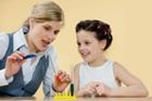 Children are natural scientists, very interested in the world around them. Helping them enjoy science can be easy; there’s no need for a lot of scientific terms(科学术语)or modern labs. You only have to share your children’s interests.
Firstly, listen to their questions. I once visited a classroom of seven-year-old children to talk about science as a job. The children asked me “textbook questions” about schooling, the money I got and whether I liked my job. When I finished answering, we sat facing each other silently. Finally I said, “Now that we’ve finished with your lists, do you have questions of your own about science?”
After a long wait, a boy put up his hand, “Have you ever seen a grasshopper(蚱蜢) eat? When I try eating leaves like that, I get a stomachache. Why?” This began a lot of questions that lasted nearly two hours.
Secondly, give them time to think. Studies over the past 30 years have shown that, after asking a question, many teachers usually wait only one second or less for an answer, no time for a child to think. When teachers increase their “wait time” to three seconds or more, children give better answers.
Thirdly, watch your language. When the child is having a science discussion, don’t jump in with “That’s right” or “Very g ood”. These words work well when i
 t comes to encouraging a child to help others. But in talking about science, these words make a child think that the discussion is over. Instead, keep things going by saying, “That’s interesting” or “I’ve never thought of it that way before”, or coming up with more questions or ideas.
Lastly, show; don’t tell. Let children look at their hands through a microscope(显微镜), and they’ll understand why you want them to wash before dinner….
81. To help children enjoy science, the most important thing for teachers to do is ___________.
A. let them see the world around B. let them study in modern labs
C. tell them the difficult terms on science D. share the children’s interests
82. In the last sentence of the second paragraph, the words “your lists” mean ____________.
A. your answers to the questions B. your own questions about science
C. your questions from textbooks D. all the questions of your own
83. According to the passage, children can give better answers to the questions if teachers ____.
A. ask them to answer quickly B. wait for one or two seconds after a question
C. tell them to watch their language D. wait at least three seconds after a question
84. The writer talks about all of the following ways except that teachers should ____________.
A. tell their children stories instead of telling them to remember facts
B. offer their children chances to see things for themselves
C. allow enough time for their children to find answers to the questions
D. encourage their children to ask questions of their own
85. The writer of the passage is probably ____________.
A. a teacher B. a scientist
C. a seven-year-old boy’s father D. a reporter
Children are natural scientists. They are interested in looking into the world around them. Helping them enjoy science can be easy; there’s no need for a lot of expensive lab tools. You only have to share your children’s curiosity(好奇).
Firstly, listen to their questions. I once visited a classroom of seven-year-old students to talk about working as a scientist. The children asked me questions about schooling and whether I liked my job. When I finished answering, we sat facing one another quietly. Finally I said, “Now that we’ve finished, do you have questions of your own about science?”
After a long pause, a boy put up his hand, “Have you ever seen a grasshopper(蚂蚱) eat? When I try eating leaves like that, I get a stomachache. Why?” This began a set of questions that lasted nearly two hours.
Secondly, give them time to think. Studies have shown that, after asking a question, adults usually wait only one second or less for an answer, do not leave time for children to think. When adults increase their “wait time” to three seconds or more, children can give more logical(合逻辑的), complete and creative answers.
Thirdly, watch your language. Once you have a child telling his idea in a science discussion, don’t jump in with “That’s right. ” or “Very good. ”. These words work well when it comes to encouraging good behavior. But in talking about science, quick praise can mean that discussion is over. Instead, you can say “That’s interesting. ” or “I’d never thought of it that way before. ” or come up with more questions or ideas.
Never push a child to “Think”. Children are always thinking, without your telling them to. What’s more, this can turn a conversation into a performance. The child will try to find the answer you want in as few words as possible, so that he will be a smaller target(目标)for your disagreement.
Lastly, show; don’t tell. Real-life feeling of nature is far more exciting than any lesson children learn from a book. Let children look at their fingertips(指尖) through a magnifying lens(放大镜), and they’ll understand why you want them to wash before dinner.
( )53. When children are in a science discussion, adults should ________.
A. speak highly of the children.
B. praise the children immediately
C. end up their discussion with “That’s interesting”
D. leave time for them to come up with better ideas
( )54. What does “this” refer to in the 6th paragraph?
A. Pushing children to think.
B. Finding the answer you want.
C. Talking about science.
D. Telling children to discuss.
( )55. These are the ways for adults to share children’s curiosity EXCEPT ________.
A. telling them encouraging stories instead of boring facts
B. offering them chances to see things by themselves
C. being patient when the children answer questions
D. persuading them to ask the questions of their own
| |||||||||||||||||||||||||||
| |||||||||||||||||||||||||||||||||||||||||||||||||||||||||||||||||||||||||
As you are working, keep your eyes on your own test booklet(小册子) and answer document (答题卷). If you have a question, raise your hand, but do not look around. If you are involved in any of the actions listed below, you will be dismissed (让...离开) and your answer document will not be scored. Prohibited (禁止的) behaviors include:
▲ continuing to write after time is called on each test (You must put your pencil down when time is called.)
▲ looking at another student’s test booklet or answer document.
▲ using any device to share or exchange information at any time during testing or during the break (all electronic devices, including mobile phones and MP4s, must be turned off from the time you are allowed to test until you are disissed after testing.)
▲ trying to remove test materials, including questions or answers, from the test room.
▲ not following instructions by the rules (规则) of the test center.
▲ allowing a clock or mobile phone to sound in the test room.
If you finish before time is called, review your work on the test you have just finished. If you are satisfied (满意的) with your answers, place your answer document inside your test booklet and close the cover. Sit quietly until the teacher gives you further instructions.
You will have two tests in the morning and a short break between the tests. Do not leave the building during the break. You must ask permission (允许) to leave the room during testing to go to the restroom; you will not be allowed(允许)to make up (弥补) the time you miss.
You will be required (要求) to sit quietly until you are dismissed. After all answer documents and test booklets have been collected, the teacher will dismiss you.
( ) 10. The passage is written mainly about ___________.
A. the importance of the test B. the rules of the test
C. the functions of the test D. the results of the test
( ) 11. If a student uses his mobile phone during the break, he will _______.
A.be dismissed and get no score at all
B.be asked to turn it off and continue testing.
C.be asked to stay in the rest room for a long time.
D.be ordered to remove the test materials from the test room.
( ) 12. When a student finishes testing before time is called, the right order of what to dot is ____________.
① close the cover
② review the work on the test
③ place the answer document inside the test booklet
④ sit quietly until the teacher tells you what to do next
A. ②①③④ B. ④②①③ C. ②③①④ D. ③②④①
( ) 13. Which of the following is TRUE according to the passage?
A.Clocks can sound to tell students time during testing.
B.Students can walk out of the building during the break.
C.It’s possible for students to make up the time they miss.
D.Students can’t go to the restroom during testing without permission.
湖北省互联网违法和不良信息举报平台 | 网上有害信息举报专区 | 电信诈骗举报专区 | 涉历史虚无主义有害信息举报专区 | 涉企侵权举报专区
违法和不良信息举报电话:027-86699610 举报邮箱:58377363@163.com