
Learn the differences between Chinese and foreign poetry. Teaching Difficult Points: Write a letter with what we learn in this unit. Teaching Preparation: pictures Teaching Aids: audiotape, flashcards, pictures Type of lesson: new lesson Teaching Procedure: Step1: Show the type of the letter. Let the students sum how to write a letter. Pay attention to the written style of the envelope. Step2: Listening task Listen to the tape and fill in the blanks. 查看更多


题目列表(包括答案和解析)

What do you do if you're stranded(处于困境的)on a lonely island? Surely you need to find a way to get in touch with the outside world. Your best chance of doing this is to draw the attention of a passing plane.
  Body signals(信号)
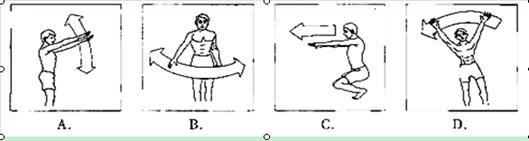
  Pilots from different countries understand body signals if they have the correct training. When you wave your arms up and down in a straight line, it means "yes". When you point downwards and swing your arm from side to side, it means "no". If you want the pilot to know that it's safe to land, push your hands out in front of you and bend(弯曲)your knees. If you want to say that it's not safe to land, put your arms in the air and move them to one side.
  Smoke signals
  The smoke from a fire can be seen from far away, so it's a good way to draw attention. If the weather is dry, it isn't hard to start a fire. Remember, however, that fires can be very dangerous if they get out of control. Never light a fire unless you're sure that it can't spread. If the ground is dark, light smoke can be seen more easily. Green grass and leaves produce light smoke.
  Ground-to-air signals
  It's a good idea to build some signals, too. Use large pieces of wood to make the symbols(标记). If you can't find any wood, use earth. Some useful symbols are:
  F "I need food and water."
  II "I need medicine."
  I "I am badly hurt."
  X" I am unable to move from here."
  Pilots' replies
  If the pilot lowers the plane's wings from side to side, this means "message received and understood". (At night, the pilot flashes the plane's green lights.) If the pilots flies the plane in a clockwise circle, this means "message received but not understood".(At night, the pilot flashes the plane's red lights.)
However, there is no signal which means "message not received". Why not?
【小题1】 Which picture means "it's not safe land"?

 
【小题2】 What can we learn from the passage?
A.Swinging your arm from side to side means "yes".
B.If the ground is dark, light smoke can't be seen.
C.If you need some medicine, make a symbol "II".
D.The pilots make replies with a blue light at night.
  【小题3】 What is the passage mainly about?
A.The explanation of building signals on an island.
B.The importance of making signals on an island.
C.Ways of sending out signals on a lonely island.
D.Ways of receiving signals from a lonely island

查看答案和解析>>

You don’t need to speak French to understand the Parisians. You just need to know how to make gestures. A new guide has come out by French tourism officials, which is to help foreign visitors understand Parisians with a list of commonly used gestures like “shut up”. “If you use them the next time when you’re in Paris, people will start mistaking you for a native (当地人) in no time,” says the online guide at www.cestsoparis.com.
Some of the city’s rude native people in Paris have been a headache for the tourism authorities(旅游当局) for a long time. They have tried their best to ask Parisians to be more friendly to foreign visitors. They have decided to show visitors commonly used gestures by Parisians at www.cestsoparis.com. Visitors can learn and get help from there.
The website includes the common gestures such as “Bof” and “Camembert”. “Bof” is used to mean “I don’t know” or “I disagree”, and “Camembert” is to tell someone to shut up.
And it also includes a note, which warns visitors not to use the gestures too freely.Otherwise, they may see some even ruder Parisian expressions.
(   )16. The coming out of that new guide in France is    .
A. to help foreign visitors to learn French well
B. to help foreign visitors understand Parisians
C. to make a suitable website in Paris
D. to tell people the importance of speaking French
(   )17. The gesture “Camembert” in the website means    .
A. I don’t know         B. I disagree
C. Don’t speak          D. Don’t stop speaking
(   )18. The underlined word “They” refers to(指代)    .
A. the rude native people in Paris    B. the tourism authorities in Paris
C. the commonly used gestures     D. the foreign visitors in Paris
(   )19. Which of the following is NOT true according to the passage?
A. Some native Parisians are rude to foreign visitors.
B. The new guide is mainly for foreign tourists.
C. You’ll be regarded as a native if you use the gestures at www.cestsoparis.com.
D. You can use the gestures in Paris as freely as you want.
(   )20. The BEST title for this passage is    .
A. How to learn French          B. What places to visit in Paris
C. Gestures make you a Parisian   D. How rude Parisians are

查看答案和解析>>

A young father was visiting an old neighbor. They were standing in the old man’s garden, and talking about children. The young man said,“How strict should parents be with their children?”
   The old man pointed to(指着)a string (细绳) between a big strong tree and a thin young one.
  “Please untie (解开) that string.” said the old man. “But first pull the string tight so that(以便于)the young tree is straight again.” The young man did so. He untied the string and only found that the young tree bent(弯)over to one side.
  Then the old man said,“There, it is the same with children. You must be strict with them. But sometimes you must untie the string to see how they are getting on. If they are not yet able to stand alone,you must tie the string tight again. But when you find that they are ready to stand alone,you can take the string away.”
【小题1】The story is about ____________.
      A. how to take care of young trees    
B. how strict parents should be with their children
C. how the young father should get on with his old neighbor
【小题2】 The young man untied the string ________________.
      A. in order to throw it away    
B. so that both of the trees wouldn’t grow straight
      C. and found that the young tree bent over to one side
【小题3】When could the string be taken away?
      A. When the old man left.     
B. When the young man untied it next time.
     C. When the young tree grew strong enough.
【小题4】 At last the old man told the young man ________________.
      A. that he should be strict with his children if they could not 
stand alone
      B. that he should always be strict with his children
     C. that he should be hard on his children
【小题5】We learn that the big strong tree and the thin young one are like _________.
A. the young father and the old neighbor     
B. parents and their children
       C. the old neighbor and the children of young father

查看答案和解析>>

Food or friends? Lip salve (润唇膏) or iPod? What is the most important thing in the US teenagers’ lives today? Let’s take a look.

Some find that they can’t do without people.

“My biggest need is my friends. Without them, I wouldn’t do much,” said Adrian Fernandez, a 14-year-old boy.

With others, food always comes first.

“I do not think that I could live without chili con carne (辣子肉丁). I eat it every day. And if I didn’t have it, it’s all I would think about,” said Max Wu, an 8th-grade boy.

Sometimes, the things teenagers can’t do without are strange.

Take 14-year-old girl Hannah Sacchini for example. “I cannot live without lip salve, especially in winter,” said Hannah Sacchini. “I go mad if my lips get dry.”

Of course, today everybody uses mobile phones and computers. Some teens can’t live without these high-tech (高科技的) things.

Justin Beck, a 15-year-old boy, feels like this: “I would not be able to live without my iPod. I use it for so many different things. I always have it with me,” he said.

So, now we know the things US kids really must have. What about you and your classmates? What can’t you live without?

根据短文内容,选择最佳选项。 (10分)

1.To Adrian Fernandez,     is the most important.

A.a friend           B.lip salve           C.a computer        D.chili con carne

2.How often does Max Wu eat chili con carne?

A.Once a week.                          B.Every day.

C.Twice a day.                            D.Three times a week.

3.Hannah Sacchini will become     if her lips get dry.

A.fat               B.excited           C.shy              D.annoyed

4.We can learn that Justin Beck     takes his iPod to school.

A.never            B.sometimes         C.always            D.hardly ever

5.The passage mainly tells us    .

A.what things the US kids really must have

B.what the US teenagers do every day at school

C.what the most important food in the US teenagers’ lives is

D.how the US teenagers’ lives are every day at school


查看答案和解析>>

What’s a blog? A blog is a personal online diary(日记). It’s cool, it’s hot, and everyone is doing it. People talk about it often. Sound like a fashion? In fact, It’s another trend (流行趋势). And the word “blogger” means a person who writes diaries online. Are you a blogger?  
Many bloggers are teenagers who log (进入) onto websites to discuss anything in their lives. Many of today’s teenagers are not afraid to openly discuss everything in their lives. Teenagers complain about their parents and homework. They share diaries, post(发布) songs from the latest bands and show pictures of theirs. They write their own poems, say something about their girlfriends or boyfriends and complain to each other or offer support. But mostly they just write down what they do every day.  
However, many parents are worried about these young bloggers. Parents see the kids talking about how they got drunk last weekend and how they don’t like studying. They are using the language that is surprising to their parents. Besides hearing from their friends, teen bloggers also get messages from strangers. Most of the time, it’s older men asking to meet teenage girls. “These strange men are dangerous for my kids. They sometimes teach my kids bad words.” said Cara Cabral, a mother of two children.  
Many teenagers and young adults know it’s not safe to use blogs on the Internet. They know they are putting information about themselves in a place where it can be seen by anyone. But teenagers are unwilling to give up these new communication tools that have become a way of life for many of them.   
【小题1】 The underlined word “it” in the first paragraph means ________.  
A. the fashion          B. the Internet       C. the blog      
【小题2】 Which of the following is NOT TRUE?  
A. Teenagers don’t tell about their personal life in their blogs.  
B. Teenagers mostly write down what they do every day in their blogs.  
C. Teenagers complain about their parents and homework in their blogs.  
【小题3】 What’s the main idea of the third paragraph?  
A. Many parents don’t understand kids’ language in their blogs.  
B. Many parents are worried about these young bloggers.   
C. Many parents can understand why their kids don’t like studying.  
【小题4】 Many parents think it’s         for their children to get messages from strangers.  
A. dangerous     B. interesting        C. surprising   
【小题5】 We can learn from the last paragraph that         .  
A. It’s easy for many teenagers to give up blogging on the Internet                   
B. It’s safe for many teenagers to put their personal information on the Internet  
C. It’s popular for many teenagers to use blogs on the Internet 

查看答案和解析>>


同步练习册答案