
题目列表(包括答案和解析)
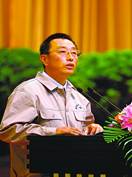
Chairman Mao once said: “It is not hard to do one good deed. It is hard to do good deeds all your life.” Guo Mingyi, 52, a worker in Anshan, Liaoning, did just that. Over the past 20 years, Guo has donated 60,000 milliliters(毫升) of blood. That is the blood of 10 people put together.
Once, on a cold winter of 2009, Guo got a call from the hospital. The doctors told him that a patient needed a blood donation. Guo didn’t have time to eat lunch. He travelled in the snow to get to the hospital. When he finished donating the blood, he was so tired that he fell asleep on the hospital bed.
Guo and his family live a simple life. He and his wife and daughter live in a house of only 40 square meters. They don’t have a lot of money, but Guo saves money to support poor children. In the past 16 years, he has donated over 100,000 yuan to more than 180 poor students. When the parents met him, many cried. “He looks poorer than us,” they said.
Guo has also offered hands to thousands of workers, friends and strangers. His warm heart has moved many people. They call him a “Modern-Day Lei Feng”.
Recently, Chinese leaders called on people to learn from Guo. They say young people especially should learn his selfless devotion(无私奉献).But Guo said he did these things in order not to get famous. “It’s just that some people need some help, and there should be someone standing out to give them a hand,” he said.
【小题1】When was Guo Mingyi born in Anshan, Liaoning?
| A.In 1940 | B.In 1950 | C.In 1960 | D.In 1970 |
| A.Because they are good friends. |
| B.Because he had no money to eat lunch. |
| C.Because he wanted to sleep in the hospital |
| D.Because he wanted to help the patient very much. |
| A.He is a common businessman. |
| B.He has a very rich family. |
| C.He wants to be famous a lot. |
| D.He devotes what he has to helping others |
| A.To learn from Gou Mingyi’s selfless devotion. |
| B.To donate blood to the people in need. |
| C.To raise money for poor students. |
| D.To remember Lei Feng. |
| A.Sports news | B.Health care | C.People | D.Nature |
Once upon a time, a young man was standing in the middle of the town announcing that he had the most beautiful heart in the world. A large crowd gathered, and they al praised his heart for it was perfect.
Suddenly, an old man appeared and said, “Why ,your heart is not as beautiful as mine.”
The old man’s heart was ful of scars(伤疤). Some pieces of his heart were removed and some pieces from other people were put in, but they didn’t fit quite right. So there were several jagged(锯齿状的)edges. In fact, there were stil some holes in his heart where the pieces were missing.
The young man laughed,“Comparing yours with mine, mine is perfect and yours is a mess.”
“Yes,”said the old man. “But, every scar shows that I took out a piece of my heart and gave it to a person, and often he gave me a piece of his heart in return.”
“Why do you have some jagged edges in your heart?”asked the young man.“Because the shapes of the pieces weren’t the same.”“Then the holes?”“Sometimes I gave pieces of my heart away, and the other person hasn’t given back a piece of his, so … but I don’t care.”“How come?”“They remind me of the love we shared.”
The young man was deeply moved. He walked up to the old man, took a piece of his heart out and gave it to the old man.
The old man placed it in his heart, then took a piece from his old scarred heart and placed it in the wound(伤口)in the young man’s heart. It fitte d, but not perfectly, as there were some jagged edges.
The young man looked at his heart, not perfect any more but more beautiful than ever.
How sad it must be to go through life with a whole untouched heart!
【小题1】 The young man stood in the town to _____.
| A.meet the old man | B.compare his heart with others’ |
| C.show his beautiful heart | D.give pieces of his heart to others |
| A.a sily man | B.a humorous man |
| C.a wel-known man | D.a kind-hearted man |
| A.lost | B.moved | C.hurt | D.untouched |
| A.he didn’t expect others’return |
| B.he didn’t feel pain |
| C.he didn’t think it serious |
| D.he cared nothing |
| A.ideas | B.scars | C.love | D.beauty |
短文填空。
Do you know Sweden?It l (1)in the north of Europe. It is the fourth largest country in Europe with an area of 450,000 square kilometers and a p (2) of about 8.5 million. Over one third of them live in the three largest cities, namely Stockholm, Goteborg and Malmo.
More than half of Sweden is c (3) with trees. It is one of the r (4) countries in the world. About 100 years ago Sweden became industrialized(工业化). Today less than one third of the people are f (5).
Sweden is the country where the world-famous Nobel Prizes are awarded. Many people who have been to Stockholm, the c (6) of Sweden, must have visited the places where Nobel Prizes are awarded.
The first language of Sweden is Swedish. English is the first f (7)language in schools. Many middle-school students can s (8) two to three languages. Most of the Swedish people, men and women, o (9) and young, can speak English. So there is no p (10) speaking with them in English.
I lost my sight when I was four years old by falling off a box and landing on my head. Now I am thirty-two. I can vaguely(模糊地) 1 the brightness of sunshine and what color red is. It would be wonderful to see things again, 2 a disaster can do strange things to people. It happened to me the other day that I might not have come to love 3 as I do if I hadn’t been blind. I believe in life now. I am not sure that I would believe in it so 4 . I don’t mean that I would prefer to go without my eyes. I 5 mean that the loss of 6 made me enjoy more of 7 I have now.
Life asks us to keep making 8 to reality. If a person is able to get ready for anything changeable his world will 9 more meaningful. I became blind, but I was 10 . My parents and my teachers saw 11 in me-a potential(潜力) to live, you might call it-which I didn’t see, and they make me fight it out with blindness.
The hardest 12 I had to learn was to believe in myself. That was what I had to do at least. If I hadn’t been able to do that, I would become a chair rocker for the 13 of my life. When I say I believe in myself I am not talking about simply the kind of self-confidence that helps me down an unfamiliar staircase 14 . That is part of it. But I mean something bigger than that: A belief that I could deal with anything alone; that somewhere in the 15 there is a special place where I can make myself fit.
1. A. imagine B. find C. remember D. guess
2. A. but B. though C. so D. because
3. A. myself B. life C. eyes D. blindness
4. A. that B. therefore C. happily D. deeply
5. A. seldom B. just C. hardly D. always
6. A. them B. it C. blindness D. light
7. A. that B. what C. which D. where
8. A. moments B. encouragements C. improvements D. changes
9. A. become B. change C. look D. end
10. A. brave B. lucky C. sad D. wise
11. A. something B. everything C. nothing D. anything
12. A. problem B. experience C. difficulty D. lesson
13. A. rest B. whole C. need D. last
14. A. lonely B. alone C. self D. person
15. A. company B. group C. society (社会) D. family
湖北省互联网违法和不良信息举报平台 | 网上有害信息举报专区 | 电信诈骗举报专区 | 涉历史虚无主义有害信息举报专区 | 涉企侵权举报专区
违法和不良信息举报电话:027-86699610 举报邮箱:58377363@163.com