
题目列表(包括答案和解析)
听力(共两节,计25分)
第一节(共9小题;每小题1分,满分9分)
听下面9段对话。每段对话后面有一个小题,从题后所给的A,B,C三个选项中选出最佳选项。听完每段对话后,你将有10秒钟的时间来回答有关小题和阅读下一小题。每段对话仅读一遍。
1
.A.Once a month.B
.Once a week.C
.Once a year.2
.A.She is coming to the party.B
.She is doing her homework.C
.She is having a piano lesson.3
.A.On foot.B
.By bike.C
.By bus.4
.A.Lucy.B
.Lily.C
.We don’t know.5
.A.Two.B
.Three.C
.Four.6
.A.Sharks, seals and fish.B
.Sharks and seals.C
.Seals and fish.7
.A.In 1992.B
.In 1995.C
.In 1998.8
.A.A computer programmer.B
.A doctor.C
.A teacher.9
.A.It’s very boring.B
.It’s very interesting.C
.It’s very exciting.第二节(共16小题;每小题1分,满分16分)
听下面5段对话或独白。每段对话或独白后面有几个小题,从题后所给的A,B,C三个选项中选出最佳选项。听每段对话或独白前,你将有时间阅读各个小题,每小题5秒钟。听完后,你将有5秒钟的时间来回答有关小题和阅读下一小题。每段对话或独白读两遍。
听第10段材料,回答第10~11小题。
10
.How many watermelons do they need?A.Only one.
B
.Two.C
.Three.11
.What do they need for the fruit salad?A.Apples, oranges, watermelons and yogurt.
B
.Apples, oranges, bananas and yogurt.C
.Oranges, watermelons and bananas.听第11段材料,回答12~14小题。
12
.Where did Frank go on the school trip?A
.He went to the park..B
.He went to the zoo.C
.He went to the aquarium.13
.What animals didn’t they see?A.Dogs.
B
.Lions.C
.Pandas.14
.Where did they have lunch?A.At school.
B
.In the zoo.C
.At home.听第12段材料回答第15~17小题。
15
.What is Donna going to be when she grows up?A
.A basketball player.B
.A ping-pong player.C
.A tennis player.16
.When was Deng Yaping born?A.In 1973.
B
.In 1978.C
.In 1975.17
.When did Deng Yaping join the national table tennis team?A
.At the age of 14.B
.In 1988.C
.In 1990.听第13段材料回答第18~21小题。
18
.How many people are there in Laura’s family?A.There are three.
B.There are four.
C.There are five.
19
.What is Laura going to do?A
.She’s going to get lots of exercise.B
.She’s going to eat healthier food.C
.She’s going to learn to play the piano and practice singing.20
.Who is going to visit some interesting places?A.Laura.
B.Laura’s mother.
C.Dave.
21
.What does Dave do?A
.He is a student.B
.He is a teacher.C
.He is a worker.听第14段材料回答第22~25小题。
22
.What do people think of Mozart?A.He was a talented musician.
B.He was a good music teacher.
C.He could sing songs very well.
23
.When was Mozart born?A.On January 27th, 1756.
B.On January 17th, 1756.
C.On February 27th, 1756.
24
.When did Mozart start writing music?A.In 1758.
B.In 1759.
C.In 1760.
25
.How did Mozart learn to play the violin?A
.He had some violin lessons.B.His parents taught him to play it..
C.He learned it by himself.
听力部分
一.听对话,选择与对话内容相符的图片,将代表图片的字母填在相应的序号后。每段对话读两遍。(共5分,每小题1分)
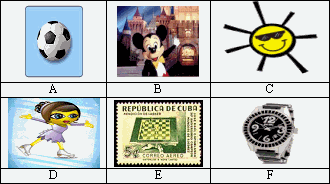
1.________ 2.________ 3.________ 4.________ 5.________
二.听对话,根据对话内容,判断句子的正误。正确的写T,错误的写F。每段对话读两遍。(共5分,每小题1分)
听第一段对话,判断第6-7小题。
( )6.They need people for the basketball team.
( )7.Richard has been playing basketball for five years.
听第二段对话,判断第8-10小题。
( )8.Sunny has never been to the Beijing Aquarium.
( )9.They will ride their bikes to go there.
( )10.Joe has been to the zoo only once.
三.听对话,根据对话内容,从下列各题所给的A、B、C三个选项中,选择最佳选项。对话读两遍。(共5分,每小题1分)
听对话,回答第11-15小题。
11.What is Ben going to do today?
A.To fly a kite.
B.To pick up the shells.
C.To visit the aquarium.
12.How old was Ben when he started collecting kites?
A.Thirty years old.
B.Thirteen years old.
C.Ten years old.
13.Why does Ben like to collect shells?
A.They are cheap.
B.It is difficult to find them.
C.They are beautiful and easy to get.
14.How many shells has Ben been collecting?
A.About 300.
B.About 130.
C.About 113.
15.Where are they talking probably?
A.In the park.
B.At the bus stop.
C.In the aquarium.
四.听短文,根据短文内容,完成下面的表格。短文读三遍。(共5分,每小题1分)
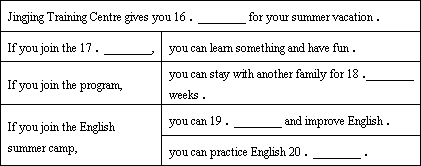
听力部分
第一部分 听对话回答问题(10分)
本部分共有10道小题,每小题你将听到一段对话,每段对话听两遍。在听每段对话前,你将有5秒钟的时间阅读题目;听完后,你将有5秒钟的时间选择你认为最合适的答案。
1.What did the boy and his friends do this afternoon?

2.How does Jane always go to school?

3.What does Mum think the boy should do?

4.How much money does the woman have with her?
A.30 yuan.
B.40 yuan.
C.50 yuan.
5.Who did the woman want to speak to?
A.Mike.
B.Mike's mother.
C.Mike's father.
6.What does the man mean?
A.He doesn't know the way to the Animal Centre, either.
B.He doesn't like talking to the people who he doesn't know.
C.He's on a visit there.He has no time to help others,
7.How would the woman go to the Beijing Wildlife Park?
A.By bus.
B.By bike.
C.By underground.
8.When will they visit the new building?
A Today.
B.Tomorrow.
C.The day after tomorrow.
9.What does the woman mean?
A.Kate will be back in January.
B.Kate won't be back in January.
C.Kate won't be back.
10.Which seats does the woman recommend?
A.The seats near the entrance.
B.The front seats.
C.The back seats.
第二部分 听对话和短文回答问题(10分)
你将听到两段对话和一篇短文,各听两遍。每段对话或短文后各有几道小题。听每段对话或短文前,你将有时间阅读相关小题,每小题5秒钟;听完后,每小题你将有5秒钟的时间选择你认为最合适的答案。
听第一段对话,回答11-12小题。
11.Where are they talking now?
A.Near the airport.
B.On the way to the airport.
C.In a small mountain village.
12.How will the man go?
A.By taxi.
B.By bus.
C.By car.
听第二段对话,回答13-15小题。
()13.When will they go to the zoo?
A.Next month.
B.Tomorrow.
C.Next Saturday.
()14.How will they go there?
A.By bike.
B.By bus.
C.By underground.
15.What is the man going to take?
A.An umbrella.
B.Bird food.
C.A camera.
听一篇短文,回答16-20小题。
16.What did the rich man want to do?
A.To be richer.
B.To be happy.
C.To be a farmer.
17.Who told the rich man how to be happy?
A.A clever old man.
B.Another rich man.
C.A farmer.
18.Where did the rich man find the farmer?
A.In his country.
B.On the road.
C.On a farm.
19.What did the farmer give to the rich man?
A.Nothing.
B.A shirt.
C.A good idea.
20.Who felt happy?
A.The rich man.
B.The farmer.
C.The clever old man.
湖北省互联网违法和不良信息举报平台 | 网上有害信息举报专区 | 电信诈骗举报专区 | 涉历史虚无主义有害信息举报专区 | 涉企侵权举报专区
违法和不良信息举报电话:027-86699610 举报邮箱:58377363@163.com