
题目列表(包括答案和解析)
How do most students spend(度过) their free time? Do they have time to do things they like? Let’s see what some students do during their free time. Ben is eleven. He has a sister, Kate. Both of them like going to the cinema. Every Sunday morning, they go to the town by train and then they go to the cinema because they live in the country(乡下) and there is no cinema there. They arrive in the town at noon. They usually have a big dinner in their favourite restaurant first, and then buy some food in the supermarket before they go to their favourite cinema called the Star Cinema. They like it because the seats there are the most comfortable and the films shown in the cinema are always the newest. They always have a good time on Sundays but when the weather is bad or they are busy with their homework, they can’t go.
( ) 56. Ben and Kate always spend their Sundays _________.
A. watching TV B. going shopping
C. doing homework D. going to the cinema
( ) 57.They go to see a film______________.
A. at home B. by bus C. on foot D. by train
( ) 58. They like the cinema because _________.
A. they like the food there
B. there is no cinema near their hometown
C. they don’t know other cinemas
D. they like the comfortable seats and the films
( ) 59. When they are in the town, they ________ first.
A. go to the cinema B. buy food
C. have dinner D. play in the street
( ) 60.They can’t go to the cinema when _________.
A. it is fine
B. they want to watch TV
C. they have little homework
D. the weather is bad or they get too much homework
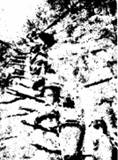
At the beginning of 2009,Li Guilin and his wife Lu Jianfen were honored(授予……荣誉)as “People Who Moved China in 2008” in this annual(一年一次的)event.This event was started by CCTV in 2002.
Li,42,and Lu,41,were horn in Han families and grew up in Ya'an City.In 1990,Li visited Erping Village(二坪村)in Liangshan of Sichuan Province,he was surprised at how backward(落后)it was.People there lived a rather poor life.The children seldom went out of the village.Li decided to teach in that village at once.
The children have to climb five wooden ladders to reach the primary school of Erping.They spend the week there before returning home for the weekend.“Walking on the wooden ladders is really dangerous.You can just put half of your foot in the narrowest place.Behind the ladders is the deep valley(山谷).”
A year later.as the number of students increased,Li Guilin began to look for a new teacher.When the summer vacation was almost over,he couldn't find one yet.So he persuaded(劝服)his wife Lu Jianfen to join him.
Till now,they have been teaching in the village for more then 18 years.Over the past years.they have taught l49 students,22 of them were from the schools of other areas because of the two kind teachers.
“I’m the son of farmers,” says Li,“I know that education is the best way for a poor mountain area to change.”The couple(夫妇)will continue working at this school to help more children walk out of the mountains into happy and bright futures.
1.“People Who Moved China” has been held ________ till the beginning of 2009.
A.three times B.eight times C.ten times
2.Li Guilin and Lu Jianfen are ________.
A.doctors B.students C.teachers
3.The children have to climb wooden ladders because ________.
A.walking on the wooden ladders is really dangerous
B.they like doing that
C.it's the only way to the primary school of Erping
4.Lu Jianfen has worked in the primary school of Erping ________.
A.since 199l B.since 2002 C.since 1990
5.Why will Li Guilin and Lu Jianfen continue working at this school?
A.Because both of them are children of farmers.
B.Because they hope more children can have happy and bright futures.
C.Because they were honored as “People Who Moved China in 2008”.
湖北省互联网违法和不良信息举报平台 | 网上有害信息举报专区 | 电信诈骗举报专区 | 涉历史虚无主义有害信息举报专区 | 涉企侵权举报专区
违法和不良信息举报电话:027-86699610 举报邮箱:58377363@163.com