
题目列表(包括答案和解析)
| 听下面5段对话.每段对话后有一个小题,从题中所给的A、B、C三个选项中选出最佳选项,并标在试卷的相应位置.听完每段对话后,你都有10秒钟的时间来回答有关小题和阅读下一小题.每段对话只读一遍. 1. Where should the man stand? A. In front of the white line. B. Behind the white line. C. On the white line. 2. What do we know about the man's car? A. It doesn't work at all. B. It can be used as usual. C. It's completely damaged. 3. In which year did Afu born? A. 1964. B. 1946. C. 2010. 4. Where does this conversation most probably take place? A. In a cafe. B. In a kitchen. C. In a store. 5. Where does this conversation take place? A. In a theatre.
B. In a taxi. C. In a restaurant. 听力(共两节,满分30分) 第一节:听下面5段对话。每段对话后有一个小题,从题中所给的A、B、C三个选项中选出最佳选项。听完每段对话后,你都有10秒钟的时间来回答有关小题和阅读下一小题。每段对话仅读一遍。 What does the woman mean? A.They should take more exercise. B.They don't have time to take exercise. C.It's not that necessary to take exercise. 2.How does Jenny feel? A.Confused. B.Annoyed. C.Fine. 3.Who will probably go to buy some milk? A.Tom. B.Tim. C.The woman. 4.What will the speakers do? A.See an exhibition. B.Buy some paintings. C.Watch a movie. 5.What does the woman imply? A.The party is going to be very crowded. B.The man can bring his cousin to the party. C.She is sorry that the man can't attend her party. 第二节(共15小题;每小题1.5分,满分22.5分) 听下面5段对话或独白。每段对话或独白后有几个小题,从题中所给的A、B、C三个选项中选出最佳选项。听每段对话或独白前,你将有时间阅读各个小题,每小题5秒钟;听完后,各小题将给出5秒钟的作答时间。每段对话或独白读两记,。 听第6段材料,回答第6至8题。 6.What is the woman good at? A.Law. B.Teaching C.Officer 7.How long will the girl work altogether? A.3 months B.3.5 months C.Just 4 months 8.What can we learn from the end of the interview? A.The woman will lose the job. B.The woman must take another interview. C.the woman will work full-time. 听第7段材料,回答第9至11题。 9.What are they talking about? A.Visiting the museum B.Sightseeing C.Collecting coins 10.Why does not the man want to go to the museum? A.He isn't interested in the museum. B.He isn't interested in birds. C.He isn't interested in coins. 11.What does the man want to see most when going to the island? A.Some plants B.Some birds C.some flowers 听第8段材料,回答第12至14题。 12.Where does this conversation most probably take place? A.In a kitchen B.In a hotel C.In a restaurant 13.What is the woman's tone in the conversation? A.Complaining B.Worrying C.Expressing 14.What will the man do next? A.Paying back the woman's money B.Bring the food back to the kitchen. C.Informing someone in charge of the matter. 听第9段材料,回答第15至17题。 15.What is the probable relationship between the speakers? A.Husband and wife. B.Father and daughter C.Mother and son. 16.Which is true about today? A.Neither of them prefer to stay at home. B.It's Children's day. C.There will be a lot of celebrations in the evening. 17.What can we learn from the conversation? A.The circle is leaving the town.. B.The man must enjoy ballet very much. C.There is always too much traffic in town. 听第10段材料,回答第18至20题。 18.What is the speaker's purpose in this talk? A.To introduce some political thinkers? B.To tell how the course is organized? C.To explain how to write the paper? 19.When will the speaker come to discuss paper? A.Before class on Tuesday. B.Over the weekend. C.On Thursday and Friday afternoon. 20.What must the students do with the papers that are returned on Thursday? A.Rewrite it. B.Present it to the class. C.Discuss the papers. 听力 第一节(共5小题;每小题1分,满分5分) 听下面5段对话。每段对话后有一个小题,从题中所给的A、B、C三个选项中选出最佳选项。听完每段对话后,你都有10秒钟的时间来回答有关小题和阅读下一小题。每段对话仅读一遍。 听下面5段对话,回答第1至5题。 1.When will the man be able to see Teacher Lee probably? A.Next Friday. B.Next Thursday. C.Next Wednesday. 2.Why is the man poor in listening? A.He can’t hear things clearly. B.He has difficulty in listening. C.He hardly practices listening to English. 3.Where does the conversation most probably take place? A.In a classroom. B.In a restaurant. C.In the kitchen. 4.Who is the woman most probably speaking to? A.A railway porter. B.A postal clerk. C.A taxi driver. 5.What will the woman have on Thanksgiving Day? A.Ham. B.Potatoes. C.Fish soup. 第二节(共15小题;每题1分,满分15分) 听下面5段对话或独白。每段对话或独白后有几个小题,从题中所给的A,B,C三个选项中选出最佳选项。听每段对话或独白前,你将有时间阅读各个小题,每小题5秒钟;听完后,每小题将给出5秒钟的作答时间。每段对话或独白读两遍。 听第6段材料,回答第6至8题。 6.Who is the woman speaking to? A.Her relative. B.Her workmate. C.Her neighbor. 7.When does the conversation take place? A.Just at noon. B.Very early in the morning. C.Very late at night. 8.What does the woman ask the man to do? A.Stop his party. B.Make his friends quieter. C.Turn the music off. 听第7段材料,回答第9至11题。 9.How are the speakers talking? A.On the phone. B.Face to face. C.By word-typing. 10.When will the man come? A.Tomorrow afternoon. B.In a little while. C.In a week. 11.Who broke the window this time? A.The man. B.The woman’s children. C.The woman. 听第8段材料,回答第12至14题。 12.What do we know about the woman? A.She studied very well. B.She was captain of the volleyball team. C.She hated sitting at the back. 13.What’s the probable relationship between the speakers? A.Close friends. B.Teacher and student. C.Old classmates. 14.Where is Rosita from? A.Italy. B.France. C.Britain. 听第9段材料,回答第15至17题。 15.Who is the woman? A.A train conductor. B.A ticket clerk. C.A policewoman. 16.What can we know about the man? A.He wants a return ticket. B.He will leave at 5∶00 p.m. C.He has to leave his luggage behind. 17.Where is the man taking his luggage to next? A.The luggage room. B.The booking room. C.The train. 听第10段材料,回答第18至20题。 18.What can we learn from the news? A.No villager was killed. B.15 houses were badly damaged. C.Over 200 people were homeless. 19.What do we know about the farmer? A.His house was destroyed. B.One of his children was killed. C.His wife was missing. 20.What did the woman do when she saw her house shaking? A.She tried to take something out. B.She rushed out with her children. C.She told her husband not to leave. 听力 第一节(共5小题;每小题1.5分,满分7.5分) 听下面5段对话。每段对话后有一个小题,从题中所给的A、B、C三个选项中选出最佳选项。听完每段对话后,你都有10秒钟的时间来回答有关小题和阅读下一小题。每段对话仅读一遍。 1.How old is the woman’s bicycle possibly? A.Three years old. B.One year old. C.Four years old. 2.What is approved by the woman? A.The man can have a day off tomorrow. B.The man can’t have a day off tomorrow. C.The man can go early tomorrow afternoon. 3.What’s the man’s telephone number? A.495643. B.459643. C.496543. 4.Where does the conversation most probably take place? A.In a shop. B.In a kitchen. C.In a hotel. 5.What language does the man speak? A.German. B.French. C.French and German. 第二节 (共15小题;每小题1.5分,满分22.5分) 听下面5段对话或独白。每段对话或独白后有几个小题,从题中所给的A、B、C三个选项中选出最佳选项,并标在试卷的相应位置。听每段对话或独白前,你将有时间阅读各个小题,每小题5秒钟;听完后,各小题将给出5秒钟的作答时间。每段对话或独白读两遍。 听下面一段材料,回答第6至7两个小题。 6.What did the young man try to do? A.Get the old man’s bag. B.Help the old man. C.Collect his money. 7.Who is the woman speaking to? A.A manager. B.A customer. C.A policeman. 听下面一段材料,回答第8至9两个小题。 8.When will the station start the operation? A.Today. B.In September. C.This week. 9.What can we know about the radio station? A.Only music can be broadcast. B.Only teaching programs will be broadcast. C.It will be on for twenty-four hours every day. 听下面一段材料,回答第10至12三个小题。 10.What can we learn about the man? A.His grandfather was seriously ill. B.The teacher excused the man. C.The man was tired of learning. 11.How did the teacher do to the man? A.She allowed the man to see his grandfather. B.She was very angry and would punish the man. C.She went together with the man to the hospital. 12.What can we know about the woman? A.She is strict with her students. B.She is cold to her students. C.She is tolerant to her students. 听下面一段材料,回答第13至16四个小题。 13.What did the man do last night? A.Went to movies. B.Went to a concert. C.Went to a sport match. 14.Whom did the man go with? A.His sister. B.His brother. C.His mother. 15.What does the woman think is necessary? A.All people should pay attention to it. B.All governments should take responsibility of it. C.The Red Cross should do something about it. 16.Which of the following is TRUE? A.The performance was called‘Saving the People’. B.The activity was held to collect money for poor children. C.Many people made a big cash-donation on the spot. 听下面一段材料,回答第17至20四个小题。 17.What was the speaker looking for? A.A newly-built house. B.A suitable house to buy. C.A house in a bad condition. 18.What isn’t mentioned as things to consider when one is looking for a house? A.The sum of money the house costs. B.The neighborhood the house is located in. C.The traffic conditions of the house. 19.Why didn’t the speaker take the house? A.Because the house was in a bad condition. B.Because the agent was too rude. C.Because it was not really a bargain. 20.What did the agent say at the end of the story? A.The house needed a lot of repairs. B.The speaker was a person who was hard to please. C.The house was exactly the one the speaker needed. 听力(共两节,满分30分) 第一节(共5小题;每小题1.5分,满分7.5分) 听下面5段对话。每段对话后有一个小题,从题中所给的A、B、C三个选项中选出最佳选项。听完每段对话后,你都有l0秒钟的时间来回答有关小题和阅读下一小题。每段对话仅读一遍。 1.What’s the probable relationship between the two speakers? A.Father and daughter. B.Mother and son. C.Husband and wife. 2.How was the journey? A.Satisfying. B.Exciting. C.Disappointing. 3.Where does the conversation most probably take place? A.At home. B.In a shop. C.At school. 4.What does the woman think about the man’s plan? A.She thinks he is foolish. B.She thinks he works very hard. C.She thinks he is very clever. 5.What is happening outside? A.It is raining slightly. B.It is raining heavily. C.It is shining. 第二节(共15小题;每小题1.5分,满分22.5分) 听下面5段对话或独白。每段对话或独白后有几个小题,从题中所给的A、B、C三个选项中选出最佳选项。听每段对话或独白前,你将有时间阅读各个小题,每小题5秒钟;听完后,各小题将给出5秒钟的作答时间。每段对话或独白读两遍。 听第6段材料,回答第6至8题。 6.Why did the man talk to the woman? A.He wanted to buy a house. B.He wanted to get a job. C.He wanted to rent a flat. 7.What is the flat the man is interested in? A.It has a bathroom and one bedroom. B.It has two bedrooms and a sitting room. C.It has a kitchen but it hasn’t a bathroom. 8.How much will the man pay for the biggest one each year? A.3600 dollars. B.2400 dollars. C.3000 dollars. 听第7段材料, 回答第9至11题。 9.Where does the conversation most likely take place? A.In the street. B.At the woman’s home. C.Over the phone. 10.What is the woman going to do tonight? A.To help her sister with English. B.To meet her friend at the station. C.To go to an exhibition with her parents. 11.When can the woman most probably go to see a film with the man? A.Tonight. B.This weekend. C.Some time next week. 听第8段材料,回答第12至14题。 12.What’s wrong with the man? A.He was caught in a rain. B.He caught a bad cold. C.He had a pain in the nose. 13.What does the man plan to do? A.To go on with his work. B.To ask others for some medicine. C.To ask for a sick leave. 14.What’s the probable relationship between the two speakers? A.Doctor and patient. B.Classmates. C.Workmates. 听第9段材料,回答第15至17题。 15.What does the woman intend to do? A.To introduce the Workers Club. B.To invite the man to see a film. C.To invite the man to do sports. 16.What can we learn about the club? A.It’s open until l2∶00 at night. B.People can skate there. C.Three buses pass the club. 17.What will the woman do at the club tomorrow night? A.Skate. B.Play volleyball. C.Play table tennis. 第三节(共3小题;每小题1.5分,满分4.5分) 听第10段材料,回答第18至20题。 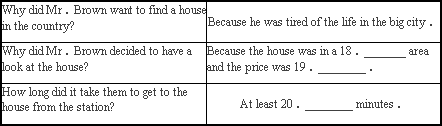
同步练习册答案 湖北省互联网违法和不良信息举报平台 | 网上有害信息举报专区 | 电信诈骗举报专区 | 涉历史虚无主义有害信息举报专区 | 涉企侵权举报专区 违法和不良信息举报电话:027-86699610 举报邮箱:58377363@163.com版权声明:本站所有文章,图片来源于网络,著作权及版权归原作者所有,转载无意侵犯版权,如有侵权,请作者速来函告知,我们将尽快处理,联系qq:3310059649。 ICP备案序号: 沪ICP备07509807号-10 鄂公网安备42018502000812号 |