
题目列表(包括答案和解析)
Part I Listening Comprehension(30 marks)
Section A(22.5 marks)
Directions:In this section, you'll hear six conversations between two speakers.For each conversation, there are several questions, and each question is followed by three choices marked A, B and C.Listen carefully and then choose the best answer for each question.You will hear each conversation TWICE.
Conversation 1
1.How long does the woman need to work every day?
A.Three hours.
B.Four hours.
C.Five hours.
2.How much can the woman earn each day?
A.5 dollars.
B.10 dollars.
C.20 dollars.
Conversation 1
M:Do you have any work experience?
W:No, I’ve never worked in a restaurant before.
M:Do you think you can get along will with customers?
W:Yes, I think so.
M:Can you make sure to be here from four to eight in the afternoon?
W:Yes, I'm always on time.
M:Then you can start tomorrow.Monday through Friday.Five dollars an hour.
W:That's fine.
Conversation 2
3.What's the possible relationship between the speakers?
A.Boss and employee.
B.Mother and son.
C.Teacher and student.
4.When will the man come back?
A.This Monday.
B.This Wednesday.
C.This Friday.
Conversation 2
M:Mrs.Sharon, I say…, I have to …
W:What's the matter, Richard?
M:Er, I'd like to take two days off.My mother's ill.I need to stay with her.
W:I'm sorry to hear that.You mean you will be back here this Wednesday?
M:Yes, I hope I can come back earlier.
W:That's all right.By the way, don't worry about your lessons.I'll certainly help you with them.
Conversation 3
5.What can we know about Nancy and Steve?
A.They will divorce soon.
B.They have two daughters.
C.They divorced last year.
6.Who will help Nancy out in the woman's opinion?
A.Her daughter.
B.Her parents.
C.Her friends.
Conversation 3
M:Kate, Nancy and Steve are breaking up.
W:It's really a shame.I’ve heard that they quarrel, but they’ve always made up afterward.
M:Things are not working out this time.They are getting a separation soon.
W:What will happen to their daughter, Bonnie?
M:Nancy is going to take her.
W:The cost of living is so high.It will be difficult for her to take te responsibility.
M:She seems to have made up her mind.She said she would rather be a single parent than cope with an unhappy marriage.
W:Well, I hope her parents will be able to help her out.
Conversation 4
7.How often does the woman pay the tax?
A.Once a month.
B.Twice a year.
C.Once a year.
8.Why does the woman have to pay more taxes?
A.The government has raised the tax rate.
B.She didn't pay taxes last year.
C.She has got extra money.
9.What can we know about the woman?
A.She is an accountant.
B.She taught in a night school.
C.She lives upon a small income.
Conversation 4
W:Henry, our income tax is due soon.Did you call our accountant?
M:He's figuring out our taxes right now.I gave him all the records on our income and expenses last week.
W:The government has taken away taxes from our paychecks all year.I hope we get some of that money back or at least that we won't have to pay more.
M:Remember the money your aunt left us when she died, and the money you made when you taught in a night school?
W:Yes.
M:Well, that's all taxable income.That money has put us in a higher tax bracket.
W:What does that mean?
M:It means we have to pay more taxes.
W:Well, it looks like we'll have to make more money this year just to pay last year's taxes.
Conversation 5
10.What can we know about the kid from Haiti?
A.He doesn't get on well at school.
B.He is often late for school.
C.He doesn't speak much English.
11.How many countries are mentioned in the conversation?
A.Six.
B.Five.
C.Four.
12.How does the woman help the immigrant kids?
A.She has spent much time with them after class.
B.She gives them more lessons than other kids.
C.She pays more attention to them at class.
Conversation 5
M:Kate, how's the new student in your class doing?
W:The kid from Haiti? He's having a rough time communicating since he doesn't speak much English.However, the other kids seem to involve him pretty well.
M:Our students are used to new kids who don't speak much English since we have had so many new immigrant families moving into our school district.
W:Don't I know it! This year I have had a Vietnamese, an Ethiopian, a Cuban and the kid from Haiti in my class.I spend a lot of time with them after class so that they can catch up.
M:It must have been hard for you since you have to give them special attention in order to help them.
W:It has been.Nevertheless, it's really rewarding to see them progress and make friends.
Conversation 6
13.When will the speakers have the exams?
A.In one week.
B.In two weeks.
C.In three weeks.
14.What will the woman do this summer?
A.Teach English.
B.Find a job.
C.Study Chinese.
15.How did the man learn Chinese?
A.By speaking.
B.By reading.
C.By listening.
Conversation 6
M:Well, Jenny.The school year is almost over.We just have two weeks before exams.What are you going to do this summer?
W:I'm going to teach English to some immigrants in the university's community service program.
M:That sounds interesting.Don't you need to speak a foreign language for the job?
W:No.You just have to present the language simply and give the students a chance to practice speaking.
M:But that's the way I was taught to speak Chinese.But speaking Chinese didn't help me learn to read and write Chinese.
W:My students don't want to read and write English.They are more interested in speaking.
M:You sound very knowledgeable about all this.How do you know so much?
W:I took teaching English as a second language course last year when you were in China.I’ve also talked with the program administrators quite a lot.I think I would like to be an ESL teacher when I graduate.
SECTION B
Directions:In this section, you'll hear a mini-talk.Listen carefully and then fill in numbered blanks with the information you’ve got.Fill each blank with NO MORE THAN 3 WORDS.
You'll hear the mini-talk TWICE.
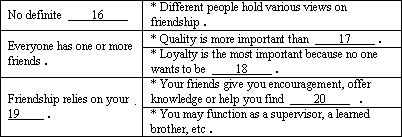
About friendship
Section B
We often say, “A friend in need is a friend indeed.” But what is the exact meaning of friendship? No one can really offer a definite concept, because different people hold various views on friendship.
Everyone has his own friendship and some have a lot of friends.But in fact, quantity is not so important as quality.Loyalty is the most important for friendship.No one wants to make friends with those who will betray them.
No matter whether you are married or not, no matter where you live and work, your friends are your friends.It is not based on bloodline.It relies on your intention.To you, some friends are fun-loving, some give encouragement, some offer knowledge, and others help you to find your own identity.Before your friends, you may act as a supervisor, a learned brother, a lovely child, a gentleman or a playmate.In a word, friendship helps you to be a full person.So friendship can benefit.
Keys:
听力(每小题1分,共15分)
Dialogue one:
1.Who became ill last night?
A.Mike.
B.Mike’s mother.
C.Mike’s father.
2.What’s the possible relationship between the two speakers?
A.Teacher and student.
B.Classmates.
C.Mother and son.
Dialogue two:
3.With whom did Tom go camping?
A.His sister.
B.The man’s sister.
C.Ted and Ann.
3.What did the man do during his vacation?
A.He visited his grandma.
B.He worked on a farm.
C.He went camping.
Dialogue three:
5.What happened to Adam?
A.He became seriously ill.
B.He fell off the horse and broke his leg.
C.He fell off the horse and hurt his back.
6.What can we know from the conversation?
A.Adam likes reading books.
B.Adam doesn’t like body-contact sports.
C.Adam likes playing football best.
Dialogue four:
7.What does the man probably like doing?
A.Helping out his friends around him.
B.Reading news online.
C.Talking with others online.
8.What does the woman suggest the man should do?
A.Make more friends online.
B.Help out those who are in trouble.
C.Make some friends in the real world.
9.What will the man do tonight?
A.Go to a party.
B.Stay in his apartment.
C.Read a book on how to make friends.
Dialogue five:
10.Where does this conversation take place?
A.At a school.
B.On the phone.
C.At home.
11.When will the interview be held?
A.From 8∶00 am to 10∶00 am this Saturday.
B.From 8∶00 am to 10∶00 am this Sunday.
C.From 8∶00 am to 2∶00 pm this Saturday.
12.Where does the woman work?
A.In a fast food restaurant.
B.In a subway station.
C.In a hotel.
Dialogue six:
13.What did the man buy a week ago?
A.A red coat for himself.
B.A brown coat for himself.
C.A black coat for his father.
13.How old is the man now?
A.29 years old.
B.30 years old.
C.31 years old.
15.Where does this conversation take place?
A.In a store.
B.At a bus stop.
C.In a bus.
听力理解
第一节 听下面5段对话,每段对话后有一个小题,从题中所给的A、B、C、三个选项中选出最佳选项.听完每段对话后,你都有10秒钟的时间来回答有关小题和阅读下一小题.每段对话仅读一遍.
1.What happened to the man?
[ ]
A.He fell off and broke his bike.
B.He fell off his bike and his leg was broken.
C.His bike was broken and he had to go on foot.
2.When did the business of buying and selling slaves begin?
[ ]
A.In the late 18th century.
B.In the late 17th century.
C.In the late 19th century.
3.What does Room 33 face?
[ ]
A.The south.
B.The east.
C.The sea.
4.What is the relationship of the two speakers?
[ ]
A.Mother and son.
B.Teacher and student.
C.Brother and sister.
5.Where should the man get off?
[ ]
A.At the next stop.
B.At the next stop but one.
C.Right here.
第二节 听下面5段对话或独白.每段对话或独白后有几个小题,从题中所给的A、B、C三个选项中选出最佳选项.听每段对话或独白前,你将有时间阅读各个小题,每小题5秒钟;听完后,各小题将给出5秒钟的作答时间.每段对话或独白读两遍.
听第6段材料,回答第6~8题.
6.What is the man doing?
[ ]
A.She is learning spoken English.
B.She is looking for a bank.
C.She is teaching spoken English.
7.Where does the conversation take place?
[ ]
A.At the university.
B.In the Street.
C.In front of a bank.
8.Which of the following is most likely to be true?
[ ]
A.The woman is on holiday in a foreign country.
B.The man is an Englishman.
C.The woman is a foreign teacher.
听第7段材料,回答第9~11题.
9.When did Mary first ring John up?
[ ]
A.At six in the morning.
B.At nine in the evening.
C.At four thirty in the afternoon.
10.What did John ask Mary to do?
[ ]
A.To help him with his lessons.
B.To go to the cinema.
C.To go to a lecture.
11.Why couldn’t Mary help John that evening?
[ ]
A.Because her mother was ill and she had to take care of her.
B.Because she had got something on that evening.
C.Because John was at a meeting.
听第8段材料,回答第12~14题.
12.What did the man do about his old car?
[ ]
A.He sold it.
B.He repaired the engine.
C.He gave it to his friend as a present.
13.What did the man feel about his old car?
[ ]
A.It's bad-looking.
B.It wouldn’t go far safely.
C.It would be all right for years.
14.What does the man feel about his new car?
[ ]
A.We are not sure.
B.It's even worse than the old one.
C.It's much better than the old one.
听第9段材料,回答第15~17题.
15.Where is the man working now?
[ ]
A.He is working as an engineer in Maryland.
B.He is teaching in Harvard University.
C.He is working in the National Motors Factory.
16.Who is Helen?
[ ]
A.The man’s friend who works in a car factory.
B.The man's wife who works in a factory.
C.The man's assistant who works for him.
17.Where did the man grow up?
[ ]
A.In Maryland.
B.In New York.
C.In Harvard University.
听第10段材料,回答第18~20题.
18.How long did the fire last?
[ ]
A.About half an hour.
B.About fifty minutes.
C.Around twenty-five minutes.
19.Which of the following is Not True according to the passage?
[ ]
A.The damage caused by the fire was great.
B.The guests were mainly rescued from the windows of their rooms.
C.All the fighters were trying to control the fire.
20.What can we infer from the passage?
[ ]
A.Many people died in the accident.
B.The fire didn’t spread to other buildings.
C.The fire started mainly because of the strong wind.
第三节 听下面一段独白,每段独白读三遍,第一遍听短文大意,第二遍边听边写下所缺的词或者短语,第三遍检查.
Marian Anderson was born in Philadelphia, Pennsylvania, in 1902.She became one of the greatest singers (1) ________ .
She began singing in (2) ________ choir when she was eight years old. She had an outstanding voice, (3) ________, it was difficult for her to get a musical (4) ________. People had heard she (5) ________ money so that she could study music. And in 1930 she won a scholar and (6) ________.
Her success in Berlin, Germany made her fame spread. She delighted her audience (7) ________ .
She returned to the U. S. in 1935 to (8) ________ her career. One of her highest acclaims came in 1939, when she gave a concert for 75, 000 people from the steps of Lincoln Memorial in Washington D. C.
In 1955, she became the first Negro to sing (9) ________ of the Metropolitan Opera Company of New York City. Three years later, Marian Anderson (10) ________ as the U. S. delegate to the United Nations.
听下面5段对话。每段对话后有一个小题,从题中所给的A、B、C三个选项中选出最佳选项,并标在试卷相应的位置。听完每段对话后,你都有10秒钟的时间来回答有关小题和阅读下一小题。每段对话仅读一遍。
1.What are they talking about?
[ ]
A.Driving in England.
B.How to drive a car.
C.Whether to have the right to drive a car in England.
2.What does the woman mean?
[ ]
A.Mary is ill.
B.Mary thinks well of the concert.
C.She has no chance to talk to Mary.
3.Does Jane know Arvid Brown?
[ ]
A.She doesn't know him.
B.She knows something about him.
C.She knows him very well.
4.What can we learn from the conversation?
[ ]
A.They are both neighbours.
B.They are both classmates.
C.They are not from the same country.
5.Where does the conversation probably take place?
[ ]
A.In a clothing store.
B.At the woman's home.
C.In the sitting room.
听下面5段对话或独白。每段对话或独白后有几个小题,从题中所给的A、B、C三个选项中选出最佳选项,并标在试卷的相应位置。听每段对话或独白前,你将有时间阅读各小题,每小题5秒钟;听完后,各小题将给出5秒钟的作答时间。每段对话或独白读两遍。
听第6段材料,回答第6至8题。
6.What is the possible relation between the two speakers?
[ ]
A.Good friends.
B.Mother and son.
C.Teacher and student.
7.What did the boy often do at school?
[ ]
A.He was often late for school.
B.He often fell asleep in class.
C.He often stayed after class.
8.Which of the following statements is true?
[ ]
A.The boy prefers to go out and work.
B.The boy has neither much interest in school nor in work.
C.The boy is discouraged because he hasn't passed the exam.
听第7段材料,回答第9至11题。
9.What do you think the man is? Why?
[ ]
A.A policeman, because he works hard.
B.A postman, because he often works late.
C.A taxi driver, because he often works through the evening rush hours.
10.When were they having this dialogue?
[ ]
A.After the man finished his work.
B.After they got up.
C.Before they went out shopping.
11.How is the weather in New York compared with the weather in Florida?
[ ]
A.Colder. B.Warmer. C.Rains more.
听第8段材料,回答第12、13题。
12.What are the people in the house doing?
[ ]
A.They're having dinner.
B.They're having a party.
C.They're watching TV.
13.Who is Karl Black?
[ ]
A.He is the man's daughter's boy-friend.
B.He is the woman's daughter's boyfriend.
C.He is Miss Zhang's boy-friend.
听第9段材料,回答第14至16题。
14.Where does the conversation probably take place?
[ ]
A.In the school office.
B.In a classroom.
C.At the student's home.
15.How long is one course?
[ ]
A.Twenty-three weeks.
B.Fourteen weeks.
C.Three weeks.
16.When is the first course?
[ ]
A.In June. B.In July. C.In August.
听第10段材料,回答第17至20题。
17.What do they do for a living now?
[ ]
A.They have a shop that sells bread and cakes.
B.They buy cakes and bread and sell them.
C.They make cakes and bread and send them to shops.
18.Which of the following facts that does NOT make it easy for the mother to take care of the business?
[ ]
A.She helped the father with the business before.
B.She looked after the children.
C.The speaker's older brother was helping with the business.
19.When did the mother probably start to take care of the business?
[ ]
A.Recently. B.Six years ago. C.Two years ago.
20.Who was George?
[ ]
A.My younger brother.
B.My elder brother.
C.My father.
第一节:(共5小题;每小题1.5分,满分7.5分)
听下面5段对话。每段对话后有一个小题,从题中所给的A、B、C三个选项中选出最佳选项。听完每段对话后,你都有10秒钟的时间来回答有关小题和阅读下一小题。每段对话仅读一遍。
例:How much is the shirt?
A.£19.15
B.£9.15
C.£9.18
答案是B
1.Where is the conversation most probably taking place?
A.In a shop
B.In a bank
C.In a hospital
2.How does the woman usually go shopping?
A.By bus
B.By car
C.On foot
3.What is the possible relationship between the two speakers?
A.Mother and son
B.Teacher and student
C.Boss and employer
4.What time does the train leave?
A.8∶30
B.8∶00
C.8∶15
5.What season is it now?
A.Autumn
B.Spring
C.Winter
第二节:(共15小题;每小题1.5分,满分22.5分)
听下面5段对话或独白。每段对话或独白后有几个小题,从题中所给的A、B、C三个选项中选出最佳选项。听每段对话或独白前,你将有时间阅读各个小题,每小题5秒钟;听完后,各小题将给出5秒钟的作答时间。每段对话或独白读两遍。
听第6段材料,回答第6-7题。
6.What is the trouble?
A.There is something wrong with the engine
B.There is no gas
C.They are lost
7.Where are they going?
A.To the airport
B.To the station
C.To the museum
听第7段材料,回答第8至9题。
8.Why does the man ring?
A.To ask for information about business
B.To inform the woman of his arrangement
C.To get permission to talk with Mr.Hall
9.Where will the man go when he arrives?
A.To the hotel
B.To the factory
C.To the office
听第8段材料,回答第10至12题。
10.What does the girl do?
A.A high school student
B.A college student
C.A lifeguard
11.What is the girl discussing with her father?
A.Life of a lifeguard
B.Interruption of her father
C.Her plan for the summer holiday
12.What can wee learn from the dialogue?
A.Children interrupt their parents anytime they like
B.Parents are always ready to help their children
C.Youngsters all like to be lifeguards during summer holidays
听第9段材料,回答第13至16题。
13.Why does Mr.David want to see Mr.Ryan?
A.To deal with his insurance for his car
B.To show his consideration for his health
C.To praise him for his hard work in the office
14.Who is the woman?
A.Mr.Ryan’s wife
B.Mr.Ryan’s workmate
C.A secretary in the office
15.What does the woman think of Mr.Ryan’s health?
A.He seldom gets ill
B.He is in poor health
C.He never takes a sick leave
16.What is the main point of the dialogue?
A.Mr.David wants the woman to read the form carefully
B.Mr.David wants the woman to give the form to Mr.Ryan
C.Mr.David wants the woman to ask Mr.Ryan some questions
听第10段材料,回答第17至20题。
17.How long does the man work at the present company?
A.13 years
B.3 years
C.30 years
18.What is the man now?
A.A clerk at the airport
B.A travel agent
C.A salesman in Spain
19.According to what the man said, what caused him to decide to take the job?
A.His father loved it
B.He had experience
C.He loved traveling
20.Why does the man make the speech?
A.To make an announcement
B.To answer the questions from an interviewer
C.To introduce something about himself
湖北省互联网违法和不良信息举报平台 | 网上有害信息举报专区 | 电信诈骗举报专区 | 涉历史虚无主义有害信息举报专区 | 涉企侵权举报专区
违法和不良信息举报电话:027-86699610 举报邮箱:58377363@163.com