
题目列表(包括答案和解析)
选择与画线部分意思相同或相近的选项。
阅读下面的短文,按要求完成各项任务。
Ludwing van Beethoven is the most famous classical composer of the Western world. People Will remember him for his powerful music and for continuing to compose after he became deaf.
Ludwing Beethoven was born in Bonn, Germany on December 16,1770. It was said that his father was very strict with him. Although he disliked his father's teaching methods, Beethoven still did as he was told by his father. Beethoven began to show his talent in music. At the age of seven he could perform well enough to appear in public. He soon became famous as a young musician.
In 1798 Beethoven noticed that he began to lose his hearing. But he never gave up composing and playing. He wrote the popular Moonlight Sonata.(月光鸣奏曲)in 1801. By 1819 he was totally deaf. He chose to fight against destiny(命运). After Beethoven turned deaf, he created some famous symphonies, including the Destiny Symphony.
Beethoven died in March 1827. Although he died more than 180 years ago, Beethoven is still influencing the music world.
1. 请将右边的两个标题与左边相应的段落连线。(1分)
Paragraph 1
Paragraph 2 a. Beethoven went on composing and playing after turning deaf
b. When Beethoven was a child, he showed his talent in music.
Paragraph 3
Paragraph 4
2.从文中找出与所给意思相同或相近的句子。(1分)
Beethoven didn't like his father's teaching way, but he did what his father told him.
.
3.把文中划线的句子译成汉语。(1分)
。
4.回答问题。(1分)
Why do you think Beethoven is still influencing us, though he has been dead for long?
.
5.根据短文中的信息,完成表格,每空词数不限。(4分)
| Experience of Ludwing Beethoven | |
| In 1770 | He was born in Born, a small city of Germany. |
| In①_________ | He could perform well enough to appear in public. He soon became famous. |
| In 1798 | He②_________and by 1819 he was totally deaf. |
| In 1801 | He wrote the popular piece of music called③____________. |
| ④__________ | Beetnoven died but his music still influencing the music world. |
People are always afraid of making mistakes. But sometimes it’s not bad to make mistakes, and here is why.
At first , mistakes are a clear sign that
you are trying new things. It’s always good to new things, because when you are
trying new things your are growing. If you never try new things , how can you
improve ? How can you create? The simple answer is, “ You can’t .” Look around  you,
everything you see is the result of someone trying new things.
Another good thing about mistakes is this : when your are making mistakes, you are learning. Consider this: Edison failed 10,000 times before he invented the light bulb. When he was asked how he felt to fail that many times, but rather had learned 10,000 things that didn’t work.
Finally , when you make a mistake, you are that much closer to success. Why? Because you have said what you should say, and you have done what you should do. Every time you make a mistake, you are closer to success. But it doesn’t mean that you can make mistakes without thinking. Instead, when you try new things you have to think them over, so that you can keep away from some unnecessary mistakes.
We shouldn’t spend all our time and money on the only one way , but use them correctly. Because our time and money are limited. (有限的)
There is an old saying, “ If you are not making mistakes, you are not trying hard enough.” So go bravely and make mistakes. And learn. And grow. And succeed.
根据短文内容,选择正确答案,并将其字母代号填人题前括号内。(共5小题,每小题2分,满分10分)
1.If you are making a mistake, that means____.
A. you’re careful B. you’re kind
C. you’re
growing
D. you know  nothing.
2.If you never try new things, you can’t ____.
A. improve B. create C. spend D. A and B
3.After Edison failed 10,000 times, he _____.
A. gave up B. invented the light bulb
C. invented the computer D. invented 10,000 new things
4.When you make a mistake, you are closer to ____.
A. time B. money C. success D. everything
5.What’s the main idea of the passage?
A. Never make mistakes.
B. You can make mistakes without thinking
C. Sometimes it’s good to make mistakes.
D. Making mistakes is terrible

Who’s the boy in the photo? Yes, he is Liu Wei, an armless pianist.
Liu lost both arms in an accident at the age of 10, but he never gave up his dream of becoming a pianist. He couldn’t find a teacher 5 (teach) him to play the piano with his feet. So he learned it by himself. He kept practicing for 7 hours every day. Three years later, he became the champion of China’s Got Talent. And he 6 (choose) as one of the “Top Ten People Who Touched China in 2011.” He often 7 (say) “For people like me, there are only two choice: one is to give up all dream, which will lead to a quick, hopeless death. The other is to struggle without arms to live an outstanding life.”
What can you learn from Liu Wei?
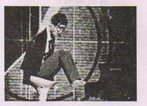
Who’s the boy in the photo? Yes, he is Liu Wei, an armless pianist.
Liu lost both arms in an accident at the age of 10, but he never gave up his dream of becoming a pianist. He couldn’t find a teacher 5 (teach) him to play the piano with his feet. So he learned it by himself. He kept practicing for 7 hours every day. Three years later, he became the champion of China’s Got Talent. And he 6 (choose) as one of the “Top Ten People Who Touched China in 2011.” He often 7 (say) “For people like me, there are only two choice: one is to give up all dream, which will lead to a quick, hopeless death. The other is to struggle without arms to live an outstanding life.”
What can you learn from Liu Wei?
湖北省互联网违法和不良信息举报平台 | 网上有害信息举报专区 | 电信诈骗举报专区 | 涉历史虚无主义有害信息举报专区 | 涉企侵权举报专区
违法和不良信息举报电话:027-86699610 举报邮箱:58377363@163.com