
12. —Isn’t the dolphin clever?
— . He can play with the ball well and “walk” on water.
A. Yes,it is B. No,it isn’t C. Yes,it does D. No,it doesn’t
12. A 解析:由答句中的后一句可知,海豚很聪明,故排除B项。注意:否定疑问句的回答Yes译作“不”,No译作“是的”。问句助动词是is ,故排除C、D项。

科目:初中英语 来源: 题型:
3. (2014 •枣庄) Tom doesn’t like thrillers because it's.
A. funny B. interesting C. exciting D. scary
查看答案和解析>>
科目:初中英语 来源: 题型:
9. —Who my parents talking ?
—They are talking to my brother.
A. are; / B. is; / C. are;to D. is; at
查看答案和解析>>
科目:初中英语 来源: 题型:
书面表达(共10分)
请你根抿下面的图画,用英语写一篇短文,大约包括6〜9个句子。短文开头已给出。
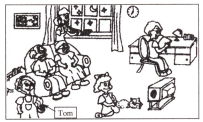
It's seven o’clock in the evening. Tom's family are all at home.
查看答案和解析>>
科目:初中英语 来源: 题型:
阅读理解(15小题,共30分)
A
When you come to Japan,you need to learn some rules for eating. They aren't difficult to learn.
If you eat something with the Japanese,you can hear them say “itadaki-masu”. This is to show thanks for the food they eat and to the person who made the food. You can also hear the Japanese say “gochiso-sama” when they finish eating. This is also to show thanks and to say the dishes are good. They start to eat only when everybody is seated at the table. They usually have a conversation at meals,but they don't speak when they are eating.
Remember the rules and they can help you. You should also remember that it's good to eat every dish.
根据短文内容,判断句子正(T) ,误(F) 。
() 1. The Japanese say “itadaki-masu” to show the dishes are delicious.
() 2. The Japanese usually say “gochiso-sama” before the meal.
() 3. The Japanese usually start to eat after everybody sits at the table.
() 4. The Japanese usually don't talk to another person during the meal.
() 5. Eating every dish is bad when you eat in a Japanese's home.
查看答案和解析>>
科目:初中英语 来源: 题型:
6. 一 the weather Jinan?
一It's sunny.
A. How;in B. How's; in
C. What's; in D. How's; at
查看答案和解析>>
湖北省互联网违法和不良信息举报平台 | 网上有害信息举报专区 | 电信诈骗举报专区 | 涉历史虚无主义有害信息举报专区 | 涉企侵权举报专区
违法和不良信息举报电话:027-86699610 举报邮箱:58377363@163.com