
Your apartment is quite comfortable, ______ ______?
 手拉手全优练考卷系列答案
科目:初中英语 来源: 题型:阅读理解
| A.train pets | B.fall asleep | C.fix things | D.cook food |
| A.she had forgotten one piece | B.the tap was still leaking |
| C.the cat had taken one piece away | D.she hadn’t understood the book |
| A.nine o’clock | B.late that night | C.the next morning | D.the next afternoon |
| A.Cassie’s mother is good-looking | B.Cassie likes her mother very much |
| C.Cassie’s mother is good at fixing things | D.Cassie looks quite like her mother |
查看答案和解析>>
科目:初中英语 来源: 题型:阅读理解
| A.work out | B.come across | C.look into | D.pass by |
| A.we should look up new words before reading |
| B.it is sometimes difficult to read a science passage |
| C.the six steps are helpful in learning spoken English |
| D.interesting stories help readers to improve their English |
| A.steps of studying science | B.difficulties in reading science |
| C.ways of reading science passages | D.researches on science and English |
查看答案和解析>>
科目:初中英语 来源:2012届浙江杭州党湾镇初级中学初二5月质量检测英语试卷(解析版) 题型:阅读理解
运动前的热身活动有助于肌肉放松,也能避免受伤。请阅读题有关热身活动的文字,然后从A、B、C、D和E中选择符合文字内容的图示,并将答案写在对应题号的横线上。
1.Activity 1:
◇Hold arms straight out to the sides
◇Move your arms in circles
◇Come back to the starting position and move your arms in the other direction
2.Activity 2:
◇Raise one foot backward, and hold it with one hand
◇Breathe and slowly pull your foot to your hip(屁股)
◇Try to keep both knees together
3.Activity 3:
◇Stand with some space in front of and behind you. Move the top of your body downward
◇ Keep your back straight and reach for your feet with both hands
◇Hold this for about half a minute
4.Activity 4:
◇Take one step forward with your right foot
◇Put your hands on the right knee and press(压)
◇Do the action in the same way with your left foot
5.Activity 5
◇Stand with feet shoulder-width apart(两脚与两肩同宽)
◇Raise both arms overhead
◇Hold for about half a minute and relax

查看答案和解析>>
科目:初中英语 来源:2011年湖南省郴州市中考英语试卷(解析版) 题型:阅读理解
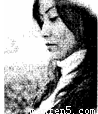
A young girl called Ida in Sweden decided to travel to a place she hadn't seen for 22 years. She had a happy life until some kids asked, "Why don't you look like your mom?" Ida was sent to her adopted(收养) family in Sweden right after she was born. She really didn't know anything about her birthplace, Korea, except for some information she recently heard about her birthparents.
During her schooldays, she was often questioned about her looks. Ida considered herself a normal Swedish person. She tried to be part of the group in her school, but she found it hard. She was still seen as an outsider.
As she grew older, she accepted(接受)who she was. Still, she
wanted to find the missing piece of the puzzle (困惑). After finding out the place of her birthparents, Ida went to Korea in 2008. When she first arrived, she was surprised to see so many people who looked like her. However, apart from her looks, not much could be shared (分享) with others. She knew little about the culture, food, especially the language. Being in Korea wasn't always easy for her.
Perhaps Ida can never truly fit in either culture, but it's worth visiting her birthplace because she finally realized how special and different she is. She has two loving families, and most of all a better understanding of who she is. This helps her to have a positive view of her life.
1. Where was Ida born?
A. In Japan. B. In Sweden. C. In England. D. In Korea.
2.Why was she seen as an outsider in Sweden?
A. Because of the culture. B. Because of her looks.
C. Because of the food. D. Because of the language.
3.What does the phrase "apart from" in Paragraph 3 mean?
A. except B. as for C. as well as D. besides
4.What can we learn from the passage?
A. Ida hadn't seen her birthparents for at least 22 years.
B. Ida found it easy for her to get used to living in Korea.
C. Ida still couldn't accept who she was after she went back to Sweden.
D. Ida realized she can't live a happy life either in Sweden or in Korea.
查看答案和解析>>
科目:初中英语 来源:2012届湖北省武汉市京山外校初二12月月考英语试题 题型:阅读理解
Many textbooks are not written in the kind of English that we speak every day. In fact, sometimes the reading is so difficult that it almost seems like a foreign language. In a way, it is—the language of science. You should not expect to be able to read a difficult science passage the same way you read an interesting story; you should not expect to read it easily and all at once. Instead, you may have to read it several times through, catching on the meaning of difficult words, going back over difficult sentences, and finally putting the whole thing together. Do not be discourages if the whole passage don’t make sense to you at first. You need to pick it apart patiently until you can understand it.
These are the steps to follow when you are reading something difficult:
² 1. Start to read normally until you run into a sentence that doesn’t make sense to you.
² 2. When a sentence doesn’t make sense, go back and read it again more slowly.
² 3. Look for any word you don’t know in the sentence. Try to understand their meanings using word parts and context clues(上下文线索). If necessary, look them up in the dictionary.
² 4. Look at the next few sentences to see if they explain more about the sentence you are working on. Do not read very much farther ahead until you understand what is being said.
² 5. Finally, read the sentence again. Try to put it into simpler words.
² 6. Read through the passage once. Try to understand all the hard parts well. Then read the whole passage once more at a usual speed. This helps you to put all ides together.
The stops sound a lot harder than they are. It is really just the normal way good readers understand anything that is difficult to read. After you have done the best you can this way, you should always feel free to ask for help from your teacher, if you have one.
1. The underlined phrase “run into” means ___________.
A. work out B. come across C. look into D. pass by
2. From the passage, we can know _________.
A. we should look up new words before reading
B. it is sometimes difficult to read a science passage
C. the six steps are helpful in learning spoken English
D. interesting stories help readers to improve their English
3. The massage is mainly about _________.
A. steps of studying science B. difficulties in reading science
C. ways of reading science passages D. researches on science and English
查看答案和解析>>
湖北省互联网违法和不良信息举报平台 | 网上有害信息举报专区 | 电信诈骗举报专区 | 涉历史虚无主义有害信息举报专区 | 涉企侵权举报专区
违法和不良信息举报电话:027-86699610 举报邮箱:58377363@163.com
