
Mice ________ a disease which is deadly and ________ quickly.
spreads; spreads
is spreaded ; spreaded
spread; spreads
are spread; spreads
科目:高中英语 来源: 题型:阅读理解
PEOPLE who have had a painful experience may wish they could wipe the memory from their minds. Researchers at Johns Hopkins University, US, say that this may someday be possible.
A drug remains far off, but researchers have laid a foundation with their discovery that proteins can be removed from the brain’s fear center to cut memories forever.
Previous research had already shown that a special behavior therapy (治疗) could cut painful memories. But relapse (复发) was possible because the memory hadn’t necessarily disappeared.
By looking at that process, Richard Huganir and Roger Clem, two researchers from Johns Hopkins University, discovered a “window of vulnerability (脆弱的窗口)” when proteins are created. The proteins help signals travel within the brain as painful memories are made. Because the proteins are unstable, they can be easily removed with drugs or behavior therapy to cut memories.
Researchers used mice to find the window, but think the process would be the same in humans. They used electric shocks to make the mice fear a certain sound. The sound triggered (触发) the creation of the proteins, called calcium-permeable (钙通透性) AMPARS, which formed for a day or two in the fear centers of the mice’s brains.
The researchers are working on ways to reopen the window by recalling (唤醒) the painful memory and using drugs to remove the protein. They published their report online last month in Science Express.
Their research has drawn interest and concern from experts in mental healthcare.
Kate Farinholt, a mental health expert with the National Alliance on Mental Illness, Maryland, US, said many people suffering from a painful event might benefit from erasing a memory. “Erasing a memory and then everything bad built on that is an amazing idea, and I can see all sorts of potential ,” she said.
But there are a lot of unanswered questions, too.
“Completely deleting a memory is a little scary. How do you remove a memory without removing a part of someone’s life,” Farinholt said. “And is it best to do that, considering that people grow and learn from their experiences?”
What have researchers at Johns Hopkins University found recently?
A. A new drug to erase painful memories from human brains.
B. A special behavior therapy to erase painful memories.
C. Removing certain proteins from the brain can wipe painful memories.
D. Erasing memory damages a patient’s brain functions.
What makes it possible to erase painful memories according to Paragraph 4?
A. The way the brain cells are created.
B. The unstable character of the proteins in the brain.
C. The strength of the signals the proteins send.
D. The drugs that can stop the formation of memories.
Which of the following shows the stages of the process done on mice?
a. removal of fear proteins b. making mice fear a certain sound
c. fear proteins created in mice brains d. making mice recall painful memories
A. a-b-c-d B. d-a-c-b C. b-c-d-a D. c-b-d-a
What is Kate Farinholt’s opinion of the research?
A. People may lose the chance to learn from their bad experiences.
B. The research will be a great breakthrough in treating painful memories.
C. People could suffer long-term memory loss.
D. People could forget happy memories as well.
查看答案和解析>>
科目:高中英语 来源:云南会泽一中09-10学年高一下学期期末考试(英语) 题型:阅读理解
At one time or another most farmers have problems with mice. This is especially true for grain farmers. Mice eat a lot of grain. They also carry diseases(疾病), which people can get from eating or touching grain the mice have made dirty. Farmers can use special grain storage building or they can kill the mice. However, both methods can be costly. Farmers must buy materials to build the special grain storage buildings or chemical poisons to kill the mice.
Here is a way to kill mice without spending a lot of money. It is a simple but effective king of mouse trap. The method is first used by some farmers in the west African country of Mali. An agricultural expert in Mali reported about the Mali mouse trap in a magazine. The expert reported that his gardener caught 150 mice in just one night. The gardener used four traps. The trap is easy to make. First, remove the top from a 20 liter metal or plastic container(容器). Put it n a hole in the ground. The top edge of the container should be the level with the surface of the ground. Fill the container with water to within eight centimeters of the top. Add tiny pieces of grain wastes. They should float on the water. Also put some wastes on the ground near the trap. During the night, mice will come out to eat the grain wastes. They will fall into the container and drown. Replace the food in the trap every night.
56. According to the passage, used the mouse trap first.
A. an agricultural expert in the west Africa B. farmers in the United States
C. an American gardener D. farmers in Mali
57. What does the passage mainly tell us?
A. A simple and effective method used by farmers to kill mice.
B. Methods used by farmers to kill mice.
C. Farmers have problems with mice.
D. How to kill mice.
58. is not needed in making the mouse trap.
A. Water B. A container
C. chemical poison D. Food
59. Which of the following can’t protect grain from being eaten by mice?
A. A special grain storage building. B. Chemical poisons.
C. A mouse trap. D. A hole in the ground.
查看答案和解析>>
科目:高中英语 来源:2011届四川省成都七中高三上学期一诊模拟英语试题 题型:阅读理解
PEOPLE who have had a painful experience may wish they could wipe the memory from their minds. Researchers at Johns Hopkins University, US, say that this may someday be possible.
A drug remains far off, but researchers have laid a foundation with their discovery that proteins can be removed from the brain’s fear center to cut memories forever.
Previous research had already shown that a special behavior therapy (治疗) could cut painful memories. But relapse (复发) was possible because the memory hadn’t necessarily disappeared.
By looking at that process, Richard Huganir and Roger Clem, two researchers from Johns Hopkins University, discovered a “window of vulnerability (脆弱的窗口)” when proteins are created. The proteins help signals travel within the brain as painful memories are made. Because the proteins are unstable, they can be easily removed with drugs or behavior therapy to cut memories.
Researchers used mice to find the window, but think the process would be the same in humans. They used electric shocks to make the mice fear a certain sound. The sound triggered (触发) the creation of the proteins, called calcium-permeable (钙通透性) AMPARS, which formed for a day or two in the fear centers of the mice’s brains.
The researchers are working on ways to reopen the window by recalling (唤醒) the painful memory and using drugs to remove the protein. They published their report online last month in Science Express.
Their research has drawn interest and concern from experts in mental healthcare.
Kate Farinholt, a mental health expert with the National Alliance on Mental Illness, Maryland, US, said many people suffering from a painful event might benefit from erasing a memory. “Erasing a memory and then everything bad built on that is an amazing idea, and I can see all sorts of potential ,” she said.
But there are a lot of unanswered questions, too.
“Completely deleting a memory is a little scary. How do you remove a memory without removing a part of someone’s life,” Farinholt said. “And is it best to do that, considering that people grow and learn from their experiences?”
【小题1】What have researchers at Johns Hopkins University found recently?
| A.A new drug to erase painful memories from human brains. |
| B.A special behavior therapy to erase painful memories. |
| C.Removing certain proteins from the brain can wipe painful memories. |
| D.Erasing memory damages a patient’s brain functions. |
| A.The way the brain cells are created. |
| B.The unstable character of the proteins in the brain. |
| C.The strength of the signals the proteins send. |
| D.The drugs that can stop the formation of memories. |
| A.a-b-c-d | B.d-a-c-b | C.b-c-d-a | D.c-b-d-a |
| A.People may lose the chance to learn from their bad experiences. |
| B.The research will be a great breakthrough in treating painful memories. |
| C.People could suffer long-term memory loss. |
| D.People could forget happy memories as well. |
查看答案和解析>>
科目:高中英语 来源:2014届甘肃兰州第一中学高三9月月考英语卷(解析版) 题型:阅读理解
At one time or another most farmers have problems with mice. This is especially true for grain farmers. Mice eat a lot of grain. They also carry diseases(疾病), which people can get from eating or touching grain the mice have made dirty. Farmers can use special grain storage buildings or they can kill the mice. However, both methods can be costly. Farmers must buy materials to build the special grain storage buildings or chemical poisons to kill the mice.
Here is a way to kill mice without spending a lot of money. It is a simple but effective kind of mouse trap. The method is first used by some farmers in the west African country of Mali. An agricultural expert in Mali reported about the Mali mouse trap in a magazine. The expert reported that his gardener caught 150 mice in just one night. The gardener used four traps. The trap is easy to make. First, remove the top from a 20 liter metal or plastic container(容器). Put it in a hole in the ground. The top edge of the container should be the level with the surface of the ground. Fill the container with water to within eight centimeters of the top. Add tiny pieces of grain wastes. They should float on the water. Also put some wastes on the ground near the trap. During the night, mice will come out to eat the grain wastes. They will fall into the container and drown. Replace the food in the trap every night.
1.According to the passage,_____ used the mouse trap first.
A. an agricultural expert in the west Africa
B. farmers in the United States
C. all American gardener
D. farmers in Mali
2.What does the passage mainly tell us?
A. A simple and effective method used by farmers to kill mice
B.How to kill mice
C. Methods used by farmers to kill mice
D. Farmers have problems with mice
3. Which of the following can’t protect grain from being eaten by mice?
A.A special grain storage building
B.Chemical poisons
C.A mouse trap
D.A hole in the ground
4. Which is probably the trap mentioned in the passage?
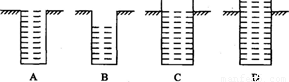
查看答案和解析>>
科目:高中英语 来源:2010-2011学年四川省上学期一诊模拟英语试题 题型:阅读理解
PEOPLE who have had a painful experience may wish they could wipe the memory from their minds. Researchers at Johns Hopkins University, US, say that this may someday be possible.
A drug remains far off, but researchers have laid a foundation with their discovery that proteins can be removed from the brain’s fear center to cut memories forever.
Previous research had already shown that a special behavior therapy (治疗) could cut painful memories. But relapse (复发) was possible because the memory hadn’t necessarily disappeared.
By looking at that process, Richard Huganir and Roger Clem, two researchers from Johns Hopkins University, discovered a “window of vulnerability (脆弱的窗口)” when proteins are created. The proteins help signals travel within the brain as painful memories are made. Because the proteins are unstable, they can be easily removed with drugs or behavior therapy to cut memories.
Researchers used mice to find the window, but think the process would be the same in humans. They used electric shocks to make the mice fear a certain sound. The sound triggered (触发) the creation of the proteins, called calcium-permeable (钙通透性) AMPARS, which formed for a day or two in the fear centers of the mice’s brains.
The researchers are working on ways to reopen the window by recalling (唤醒) the painful memory and using drugs to remove the protein. They published their report online last month in Science Express.
Their research has drawn interest and concern from experts in mental healthcare.
Kate Farinholt, a mental health expert with the National Alliance on Mental Illness, Maryland, US, said many people suffering from a painful event might benefit from erasing a memory. “Erasing a memory and then everything bad built on that is an amazing idea, and I can see all sorts of potential ,” she said.
But there are a lot of unanswered questions, too.
“Completely deleting a memory is a little scary. How do you remove a memory without removing a part of someone’s life,” Farinholt said. “And is it best to do that, considering that people grow and learn from their experiences?”
1.What have researchers at Johns Hopkins University found recently?
A. A new drug to erase painful memories from human brains.
B. A special behavior therapy to erase painful memories.
C. Removing certain proteins from the brain can wipe painful memories.
D. Erasing memory damages a patient’s brain functions.
2.What makes it possible to erase painful memories according to Paragraph 4?
A. The way the brain cells are created.
B. The unstable character of the proteins in the brain.
C. The strength of the signals the proteins send.
D. The drugs that can stop the formation of memories.
3.Which of the following shows the stages of the process done on mice?
a. removal of fear proteins b. making mice fear a certain sound
c. fear proteins created in mice brains d. making mice recall painful memories
A. a-b-c-d B. d-a-c-b C. b-c-d-a D. c-b-d-a
4.What is Kate Farinholt’s opinion of the research?
A. People may lose the chance to learn from their bad experiences.
B. The research will be a great breakthrough in treating painful memories.
C. People could suffer long-term memory loss.
D. People could forget happy memories as well.
查看答案和解析>>
湖北省互联网违法和不良信息举报平台 | 网上有害信息举报专区 | 电信诈骗举报专区 | 涉历史虚无主义有害信息举报专区 | 涉企侵权举报专区
违法和不良信息举报电话:027-86699610 举报邮箱:58377363@163.com
