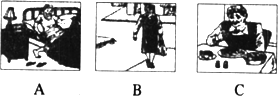
(注:bark叫 tail尾巴 dress穿衣服) 13.( ) Where did Mrs. White want to go? A. Cinema. B. TV station. C. Shop. 14.( ) What was her problem? A. Her dog wanted to go to the movies. B. Her dog did not like the movie. C. Her dog would bark if she left it home. 15.( )What was her good idea? A. She took her dog in baby clothes to the movies. B. She gave her dog a new name. C. She never let her dog make a sound. 16.( ) Why were the people laughing when she left? A. They liked her dog. B. They saw a tail out of the clothes of the "baby". C. They saw a tail out of her clothes. 查看更多


题目列表(包括答案和解析)

I lost my sight when I was four years old by falling off a box and landing on my head. Now I am thirty-two. I can vaguely(模糊地)  1  the brightness of sunshine and what color red is. It would be wonderful to see things again,  2  a disaster can do strange things to people. It happened to me the other day that I might not have come to love  3  as I do if I hadn’t been blind. I believe in life now. I am not sure that I would believe in it so  4 . I don’t mean that I would prefer to go without my eyes. I  5  mean that the loss of  6  made me enjoy more of  7  I have now.

Life asks us to keep making  8  to reality. If a person is able to get ready for anything changeable his world will  9  more meaningful. I became blind, but I was  10 . My parents and my teachers saw  11  in me-a potential(潜力) to live, you might call it-which I didn’t see, and they make me fight it out with blindness.

The hardest  12  I had to learn was to believe in myself. That was what I had to do at least. If I hadn’t been able to do that, I would become a chair rocker for the  13  of my life. When I say I believe in myself I am not talking about simply the kind of self-confidence that helps me down an unfamiliar staircase  14 . That is part of it. But I mean something bigger than that: A belief that I could deal with anything alone; that somewhere in the  15  there is a special place where I can make myself fit.

1. A. imagine       B. find             C. remember     D. guess

2. A. but           B. though               C. so           D. because

3. A. myself        B. life             C. eyes         D. blindness

4. A. that          B. therefore            C. happily      D. deeply

5. A. seldom        B. just             C. hardly           D. always

6. A. them      B. it                   C. blindness        D. light

7. A. that          B. what             C. which            D. where

8. A. moments       B. encouragements       C. improvements D. changes

9. A. become        B. change               C. look         D. end

10. A. brave        B. lucky                C. sad          D. wise

11. A. something    B. everything           C. nothing      D. anything

12. A. problem      B. experience           C. difficulty       D. lesson

13. A. rest     B. whole                C. need         D. last

14. A. lonely       B. alone                C. self         D. person

15. A. company  B. group                C. society  (社会)   D. family


查看答案和解析>>

完形填空 (共15小题;每小题1分,满分15分)

阅读下面短文,从每题所给的A、B、C、D四个选项中,选出最佳选项

What will you do to make sure you reach your goals? There are 1 main steps .

First, sit down and  2 your dreams out. By writing them you will get a better idea of where you really want to go. Imagine yourself at the end of the year or maybe 3  five years. What do you see? 4 do people see you? What are you doing? Are you  5 ?

Well, a dream is just that. It’s a vision (远见) of how you  6  yourself in the future. As long as you know the direction in which you want to go, you can begin  7  some goals.

8 come the goals. Goals are ‘wants’. So are dreams, but goals are more specific (具体的). If you want to be rich, tell how much 9 you need to be rich. If you want  10 grades, tell what you mean by ‘good’. In fact, the more specific the goal is, the  11  it will be to get it. Give numbers and times. Don’t use words like ‘lots’ or ‘more’.  12, I want a ‘B’ in each of my subjects.

Third are the objectives (目标). They tell  13  what you will do and when you will do it. When you think about what you will do, don’t use words like ‘ 14 ’ or ‘maybe’. Be sure your objectives can be measured (估量). Every day or every week you can ask, ‘Did I  15  this?’ and you can answer with either a yes or a no. Don’t leave room for ‘maybes’.

1.

A.two

B.three

C.four

D.five


2.

A.work

B.help

C.write

D.sell


3.

A.in

B.for

C.during

D.before


4.

A.What

B.Who

C.Which

D.How


5.

A.energetic

B.successful

C.helpful

D.unfair


6.

A.see

B.forget

C.enjoy

D.introduce


7.

A.breaking off

B.looking up

C.giving up

D.working on


8.

A.First

B.Second

C.Third

D.Fourth


9.

A.water

B.attention

C.money

D.knowledge


10.

A.poor

B.low

C.bad

D.good


11.

A.smaller

B.bigger

C.easier

D.harder


12.

A.For example

B.By the way

C.Of course

D.In fact


13.

A.normally

B.probably

C.exactly

D.shortly


14.

A.wait

B.try

C.decide

D.waste


15.

A.prefer

B.need

C.forget

D.do


查看答案和解析>>

听力测试(20分)

I.听句子, 选择最佳答语(5分)

1.

A.Yes, it's very near.

B.It's on the left of the post office.

C.You don't need to go there by taxi.

2.

A.Yes, it is.

B.It's very new.

C.No, there isn't.

3.

A.Oh, it's too far away.

B.Yes, that's right.

C.I see.

4.

A.It's quiet and clean.

B.No, I'm not.

C.No, I don't.

5.

A.He lives in Tokyo.

B.He is at school.

C.He comes from Paris.

Ⅱ.听下面五段对话, 根据对话内容选择正确的图片(5分)

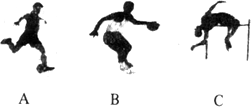
6.What is the boy doing?

A.

B.

C.

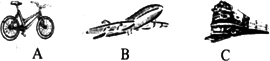
7.How will the woman travel?

A.

B.

C.

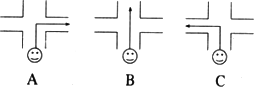
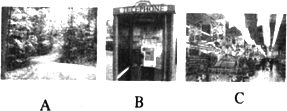
8.Which picture shows the right way to the Great Wall Hotel?

A.

B.

C.

9.Where does the woman want to go?

A.

B.

C.

10.What is the old lady going to do?

A.

B.

C.

Ⅲ.听下面一段对话, 判断正(T)误(F)(5分)

(  )11.The speakers don't know each other.

(  )12.The woman wants to go to the supermarket.

(  )13.The man tells the woman to go down the street and turn left.

(  )14.There is a bank near the post office.

(  )15.The hotel is just across from the supermarket.

Ⅳ.听下面一段短文, 选择最佳答案(5分)

16.Where is the teachers' office?

A.It's near the shop.

B.It's near our classroom.

C.It's near the garden.

17.Where is the shop?

A.Across from the library.

B.On the right of the library.

C.On the left of the shop.

18.What's next to the teachers' office?

A.The school shop.

B.The garden.

C.The library.

19.Is the garden small or big?

A.It's small.

B.It's big.

C.Sorry, I don't know.

20.Where is the garden?

A.On the left of the library.

B.On the left of our classroom.

C.On the left of the shop.

查看答案和解析>>

听力测试

Ⅰ.听句子,选择最佳答语(5分)

1.A.Yes,it's very near.

B.It's on the left of the post office.

C.You don't need to go there by taxi.

2.A.Yes,it is.

B.It's very new.

C.No,there isn't.

3.A.Oh,it's too far away.

B.Yes,that's right.

C.I see.

4.A.It's quiet and clean.

B.No,I'm not.

C.Great.

5.A.He lives in Tokyo.

B.He is at school.

C.He comes from Paris.

Ⅱ.听下面五段对话,根据问题选择正确的图片(5分)

6.What is the boy doing?

7.How will the woman travel?

8.Which picture shows the right way to the Great Wall Hotel?

9.Where does the woman want to go?

10.What is the old lady going to do?

Ⅲ.听下面一段对话,判断正(T)、误(F)(5分)

(  )11.The speakers don't know each other.

(  )12.The woman wants to go to the supermarket.

(  )13.The man tells the woman to go down the street and turn left.

(  )14.There is a bank near the post office.

(  )15.The hotel is just across from the supermarket.

Ⅳ.听下面一段短文,选择最佳答案(5分)

16.Where is the teacher's office?

A.It's near a shop.

B.It's near our classroom.

C.It's near the garden.

17.Where is the shop?

A.Across from the library.

B.On the right of the library.

C.On the left of the library.

18.What's next to the teacher's office?

A.The school shop.

B.The garden.

C.The library.

19.Is the garden small or big?

A.It's small.

B.It's big.

C.Sorry,I don't know.

20.Where is the garden?

A.On the left of the library.

B.On the left of our classroom.

C.On the left of the shop.

查看答案和解析>>

I lost my sight when I was four years old by falling off a box and landing on my head. Now I am thirty-two. I can vaguely(模糊地)  1  the brightness of sunshine and what color red is. It would be wonderful to see things again,  2  a disaster can do strange things to people. It happened to me the other day that I might not have come to love  3  as I do if I hadn’t been blind. I believe in life now. I am not sure that I would believe in it so  4 . I don’t mean that I would prefer to go without my eyes. I  5  mean that the loss of  6  made me enjoy more of  7  I have now.
Life asks us to keep making  8  to reality. If a person is able to get ready for anything changeable his world will  9  more meaningful. I became blind, but I was  10 . My parents and my teachers saw  11  in me-a potential(潜力) to live, you might call it-which I didn’t see, and they make me fight it out with blindness.
The hardest  12  I had to learn was to believe in myself. That was what I had to do at least. If I hadn’t been able to do that, I would become a chair rocker for the  13  of my life. When I say I believe in myself I am not talking about simply the kind of self-confidence that helps me down an unfamiliar staircase  14 . That is part of it. But I mean something bigger than that: A belief that I could deal with anything alone; that somewhere in the  15  there is a special place where I can make myself fit.
1. A. imagine       B. find             C. remember     D. guess
2. A. but           B. though               C. so           D. because
3. A. myself        B. life             C. eyes         D. blindness
4. A. that         B. therefore            C. happily      D. deeply
5. A. seldom        B. just             C. hardly           D. always
6. A. them      B. it                   C. blindness        D. light
7. A. that         B. what             C. which            D. where
8. A. moments      B. encouragements       C. improvements D. changes
9. A. become        B. change               C. look         D. end
10. A. brave        B. lucky                C. sad          D. wise
11. A. something    B. everything           C. nothing      D. anything
12. A. problem      B. experience           C. difficulty       D. lesson
13. A. rest     B. whole                C. need         D. last
14. A. lonely       B. alone                C. self         D. person
15. A. company  B. group                C. society  (社会)   D. family

查看答案和解析>>


同步练习册答案