
题目列表(包括答案和解析)
A boy came in our classroom. He's new and few of us know him. But after class Peter went to say hello to him. I asked,
“Do you know him, Peter?”“Yes. He lived next to us last year.”
“What do you think of him, then?”
Peter didn't answer it but told us a story about the boy:
It was half past eight in the morning. The telephone rang and Mary went to answer it.
“Hello, who's that?” she asked.
“It's me--Peter.”
Peter was a friend of Mary's eight-year-old brother,Johnny.
“Oh, hello, Peter. What do you want?” said Mary.
“Can I speak to Johnny?”
“No, “ said Mary, “You can't speak to him now. He is busy. He is getting ready (有准备的) for school. He is eating his breakfast. Grandmother is combing (梳) his hair. Sister is under the table, putting his shoes on. Mother is getting his books and putting them in his backpack. Goodbye, I've got to go now. I have to open the door for him. The school bus is coming.”
(1) Few people know Johnny because ____.
[ ]
|
A .he's a shy boy |
B .he's a serious boy |
|
C .he's new in his class |
D .he doesn't have any friend |
(2) What are the family doing now?
[ ]
A
.They're helping Johnny to get ready for school.B
.They're getting ready for breakfast.C
.They hope to take the school bus.D
.They're going to take Johnny to school.(3) How does Johnny go to school ?
[ ]
A
.He gets there in a car.B
.He goes there in the school bus.C
.He often takes a taxi to school.D
.His mother takes him there on a bike.(4) There're ____ people in the room.
[ ]
|
A .four |
B .five |
C .six |
D .seven |
(5) The girl has to go because ____.
[ ]
|
A .she has to go to school, too |
B .she's late for class |
|
C .she doesn't have breakfast |
D .she has to help her brother, too |
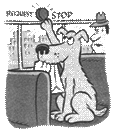 It was Sunday morning. A butcher(屠夫) heard the doorbell(门铃) and thought it must be a customer. But he was surprised to see that a dog was
coming into his shop. The dog had $10 and a note in its mouth. The butcher
took the note and read it. It said,“10 pork chops(排骨), please.”So the butcher took the money and put a bag of chops in the dog’ s mouth.
Then he quickly closed the shop because he decided to follow the dog. He found the dog on the street. The dog was waiting for a green light. Then the dog walked across the road. The dog went to a bus stop. When a bus arrived, the dog checked the number and then got on the bus.
After a while, the dog stood up on his back paws(爪子) to push the “stop” button(按钮). The bus stopped and the dog got off. Then the butcher followed it to get off the bus.
The dog ran to a house and dropped the bag in front of the front door. It then began to beat its head against the front door. After a while, a big man opened the door and began shouting at the dog. The butcher ran up and shouted at the man, “What are you doing? Your dog is a genius(天才).”
The owner of the dog said, “Genius? No way! I always tell him to take the keys when he goes to the stores. But he never listens to me!”
1 Who was the customer that Sunday morning?
A. A big man. B. A butcher. C. A dog. D. A little boy.
2 How much did the dog pay for the pork chops?
A. $20. B. $10. C. $5. D. $62.
3 How did the dog take the note?
A. In the bag. B. On its back.
C. In its mouth. D. Around its neck.
4 Which is NOT right according to the story?
A. The dog stood up on its back paws to push the “stop”
B. The butcher quickly closed the shop to follow the dog.
C. The big man was pleased with his do
D. The butcher thought the dog was a genius.
5 What is the story mainly about?
A. A customer. B. A smart dog. C. A butcher. D. A big man.
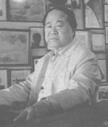 Mo Yan, a well-known Chinese writer, won the Nobel Prize for literature(文学) in 2012. He was also the first Chinese writer who got this prize in history. When he was interviewed, he said he was only a normal person who could tell stories. He especially thanked his mother. He thought his mother had a strong influence on him.
Mo Yan was born in a poor family in China’s rural area. When he was young, he was a little bit shy because he thought he wasn’t good-looking. His classmates often played jokes on his look. That made him very upset. His mother encouraged him to face the fact bravely. She told him not to look down on(看不起) himself. She said it didn’t matter if a person didn’t have a good look and it was important to work hard and never give up. She hoped that his son would be a useful person in society.
Mo Yan didn’t let her mother down. He worked hard at writing. He wrote many famous novels, such as Hong Gao Liang(《红高粱》)and Wa(《娃》). His success tells us a truth,“Nobody can beat you unless you beat yourself.”Hold on to your dream and y our dream will come true in the end.
6What does Mo Yan do?
A. He is a famou s singer. B. He is a famous actor.
C. He is a famous writer. D. He is a famous doctor.
7 When did Mo Yan win the Nobel Prize?
A. In 2010. B. Last year. C. In 2013. D. Last month.
8Why did Mo Yan feel upset when he was a little boy?
A. Because he was poor.
B. Because he couldn’t tell stories.
C. Because his classmates often laughed at his look.
D. Because he didn’t work hard.
9 What is the most important for a person according to the article?
A. Working hard. B. Money. C. A good job. D. A good look.
10 What can we learn from the story?
A. Mo Yan’s classmates were friendly to him.
B. Mo Yan was born in a rich family.
C. Mo Yan won the Nobel Prize for peace.
D. Mo Yan’s mother helped him a lot.
To err is human. To blame(责备) the other guy is even more human.
Common sense is not all that common.
Why tell the truth when you can come up with a good excuse?
These three popular misquotes(戏谑的引语)are meant to be jokes, and yet they tell us a lot about human nature. To err, or to make mistakes, is indeed a part of being human, but it seems that most people don’t want to accept the responsibility for the problem. Perhaps it is the natural thing to do. The original quote about human nature went like this: “To err is human, to forgive, divine(神圣的).” This saying mirrors an ideal: People should be forgiving of others’ mistakes. Instead, we tend to do the opposite – find someone else to pass the blame on to. However, taking responsibility for something that went wrong is a mark of great maturity(成熟).
Common sense is what we call clear thought. Having common sense means having a good general plan that will make things work well, and it also means staying with the plan. Common sense tells you that you take an umbrella out into a rainstorm, but you leave the umbrella home when you hear a weather forecast for sunshine. Common sense does not seem to be common for large companies, because there are so many things going on that one person cannot be in charge of everything. People say that in a large company, “the right hand does not know what the left hand is doing.”
And what is wrong with a society that thinks that making up a good excuse is like creating a work of art? One of the common problems with making excuses is that people, especially young people, get the idea that it’s okay not to be totally honest all the time. There is a corollary(直接推论)to that: if a good excuse is “good” even if it isn’t honest, then where is the place of the truth?
1.Which of the following is NOT based on common sense?
|
A.A secretary works to a timetable. |
|
B.A company’s next move follows a good plan. |
|
C.A girl goes out with an umbrella in stormy weather. |
|
D.A man tries to manage everything in a large company. |
2.What can we infer from the last paragraph according to the writer?
|
A.A good excuse is the same as honesty. |
|
B.Inventing a good excuse needs creative ideas. |
|
C.Unpleasant truth is better than a good excuse. |
|
D.Making a good excuse is sometimes a better idea. |
3.What would be the best title for this passage?
|
A.A Mirror of Human Nature |
|
B.To Blame or to Forgive |
|
C.A Mark of Maturity |
|
D.Truth or Excuse |
| A.A secretary works to a timetable. |
| B.A company’s next move follows a good plan. |
| C.A girl goes out with an umbrella in stormy weather. |
| D.A man tries to manage everything in a large company. |
| A.A good excuse is the same as honesty. |
| B.Inventing a good excuse needs creative ideas. |
| C.Unpleasant truth is better than a good excuse. |
| D.Making a good excuse is sometimes a better idea. |
| A.A Mirror of Human Nature |
| B.To Blame or to Forgive |
| C.A Mark of Maturity |
| D.Truth or Excuse |
湖北省互联网违法和不良信息举报平台 | 网上有害信息举报专区 | 电信诈骗举报专区 | 涉历史虚无主义有害信息举报专区 | 涉企侵权举报专区
违法和不良信息举报电话:027-86699610 举报邮箱:58377363@163.com