
(1)由主动语态改为被动语态的步骤:
①主动语态中的宾语变为被动语态句中的主语;
②主动语态句中的动词改为相应的被动语态;
③主动语态句中的主语变为被动语态句中by的宾语。
(2)主动语态句中的谓语动词带有双宾语,即直接宾语和间接宾语时,转换方法有两种:
①把间接宾语转化为主语,保留直接宾语
②把直接宾语转化为主语,保留间接宾语。此时,一般需在间接宾语前加适当的介词。
(3)在短语see sb. do sth. 中,动词see后跟不带to的不定式作宾补。改为被动语态时要加上to。用于这一结构的谓语动词一般是表示知觉的动词如see, hear等,以及使役动词make, let等。
实战演练
初中英语教材中出现了五种时态的被动语态及带有情态动词的被动语态。
(1) 一般现在时
构成:助动词be + 动词的过去分词
例如:This kind of car is made in shanghai.
English is spoken in many countries.
(2) 一般过去时
构成:助动词was/were + 动词的过去分词
例如:The bridge was built in 1992.
Was this novel written by his father?
(3) 一般将来时
构成:will/be going to do + be + 动词的过去分词
例如:These books are going to be posted tomorrow.
The baby will be taken good care of in the hospital.
(4) 现在完成时
构成:助动词have/has + been + 动词的过去分词
例如:Has his work been finished?
We haven’t been invited to the party.
(5) 现在进行时
构成:be + being + 动词的过去分词
例如:A new bridge is being built in my hometown.
The problem is being discussed by the students.
(6) 带有情态动词的被动语态
构成:情态动词 + be + 动词的过去分词
例如:Can this walkman be repaired here?
Your composition must be handed in tomorrow.
(1)动作的执行者不知道是谁或难以说明时常用被动语态。例如:
Street lights are often turned on at six in winter.
The new test book will be used next term.
(2)当动作的承受者比起动作的执行者来说更能引起人们的关心而需要加以强调时,要用被动语态。例如:
This kind of bicycle is not sold in our shop.
The thief was caught by a policeman yesterday.
(3)含有双宾语的句子,主动句中的间接宾语或者直接宾语都可变为被动语态中的一个主语,另一个保留不变。变为主语的若是主动句中的直接宾语在变为间接宾语前则需加介词to 或for。
例如:The pianist gave the pupils some advice.
间接宾语 直接宾语
→The pupils were given some advice by the pianist.
→Some advice was given to the pupils by the pianist.
(4)在主动语态句中动词make、have、let、see、watch、hear、feel等后接动词不定式作宾语补足语,动词不定式不加to。但变成被动语态时后面的不定式都须加上to。
例如:The boss made them work ten hours a day.
→They were made to work ten hours a day.
A boy saw him enter the house.
→He was seen to enter the house.
8、过去进行时
谓语: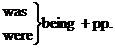
例句:She said her house was being painted.
注:及物的短语动词相当于一个及物动词,可以有被动语态,这类短语动词有:turn on, turn off, find out ,laugh at ,look after, talk about, think of /about over, bring about, (引起;导至) put away, make out (认出),make up (编;补尝),look down upon,
pay attention to ,face up to (面对)
7、现在进行时
谓语: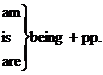
例句:The patients in ward 12 are being taken care of by Miss Hoover.
6、过去完成时
谓语:had been + pp.
例句:When I got to the ticket office, all the tickets had been sold out.
5、现在完成时
谓语: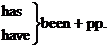
例句:As has been pointed out , the housing problem in our district has basically been solved.
4、过去将来时
谓语: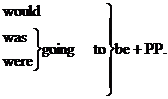
例句:The physics teacher said that two experiments would be done the next week.
3、一般将来时
谓语: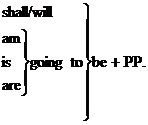
例句:This question will be answered by the headmaster tomorrow.
2、一般过去时
谓语:

例句:This hospital was set up just two years ago.
湖北省互联网违法和不良信息举报平台 | 网上有害信息举报专区 | 电信诈骗举报专区 | 涉历史虚无主义有害信息举报专区 | 涉企侵权举报专区
违法和不良信息举报电话:027-86699610 举报邮箱:58377363@163.com