
3. Here are your pants. _________!
A. Put them on B. Put on them
C. Put it on D. Put on it
2. He _________ up at 7:00 and _________ the early morning news on TV.
A. gets, sees B. gets, watchs
C. gets, watches D. gets, to watches
1. He is always the last one _________ to school.
A. goes B. to go C. go D. to goes
11. School starts at nine o’clock.
九点钟学校开始上课。
start动词,表示“开始”的意思,相当于begin。
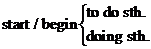 开始做某事
开始做某事
如:What time does the party start? 聚会几点开始?
It starts to rain (raining). 开始下雨了。
He usually starts studying at eight at home.
他在家通常8点开始学习。
10. I usually get up at around six fifteen.
我通常在大约六点一刻时起床。
around 表示“大约”的意思。
around 还可表示“在周围,在附近”,“朝……四处”。
如:There are around 100 people in the hall.
大厅里大约有一百人。
She looks around the room. 她环顾一下室内。
9. Thanks for your letter. 谢谢你的来信。
Thanks for… 谢谢……,其后接名词,或相当于名词的词。如:
Thanks for your help. 多谢你的帮忙。
Thanks for coming to see me. 谢谢来看我。
8. To get to work, he takes the number 17 bus to the Saite Hotel.
为了赶去上班,他要乘坐去赛特宾馆的17路公共汽车。
(1)to get to work 是动词不定式作目的状语。

(2)take a bus 表示“乘坐公共汽车”。如:
I get to school at 8:15. 我八点一刻到达学校。

7. listen to, hear和sound
△listen to意为“注意听”,表示有意识地去听,但不一定听得见什么,强调听的动作。(listen不及物,listen to及物)如:
They are listening to the teacher. 他们在听老师说。
△hear意为“听见”,表示耳朵里听到了,但不一定有意识地听,强调听的结果。如:
I’m sorry to hear that.
听到那个消息我很难过。
△sound意为“听起来,听上去”,可作连系动词,后接形容词作表语,还可以和like连用。例如:
The music sounds sweet. 这音乐听起来悦耳。
例. 用hear, listen to, sound填空。
(1)Be quiet! (安静)_________ _________ the actor. I can’t _________ him.
(2)Let’s play basketball.
That _________ good.
解析:(1)句意:安静!听演员说。我听不见他的话。第一个“听”强调听的过程。第二个听强调听的结果(听不见)。
(2)句意:我们打篮球吧!听上去不错。
答案:(1)Listen, to, hear
(2)sounds
6. What a funny time to make breakfast! 多么可笑的做早饭的时间啊!
这是一个以what开头的感叹句,不是特殊疑问句。
△感叹句用来表示感情的喜、怒、哀、乐等,其结构为感叹词(what, how)+强调成分+主语+动词等。what用来强调句中的名词,how用来强调句中的形容词、副词或动词。例如:
What a fine day it is today! 今天天气多好啊!
What interesting books they are! 多有趣的书啊!
How beautiful the garden is! 这个花园多美呀!
例. It is an interesting movie. (将句子变为以what和how开头的感叹句,句意相近)
(1)_________ _________ _________ movie it is!
(2)_________ interesting the movie is!
解析:本题考查感叹句的结构。
答案:(1)What an interesting
(2)How
湖北省互联网违法和不良信息举报平台 | 网上有害信息举报专区 | 电信诈骗举报专区 | 涉历史虚无主义有害信息举报专区 | 涉企侵权举报专区
违法和不良信息举报电话:027-86699610 举报邮箱:58377363@163.com