
题目列表(包括答案和解析)
64. From this passage we can infer _______.
A. trendy shoes may ruin teenagers’ health
B. fashionable shoes all have orthotics in them
C. experts are strongly against wearing popular shoes
D. podiatrists are expert at producing branded shoes
63. The underlined word “halt” in the last paragraph probably means _______.
A. increase B. worsen C. stop D. cure
62. Which pair of shoes may not be found on the
podiatrists’ wish list?
Which pair of shoes may not be found on the
podiatrists’ wish list?
A. B. C. D.
61. Of all the shoes mentioned in the passage, which can cause the worst problems?
A. Marks & Spencer. B. Wedges & Stilettos.
C. Keds and Vans. D. Ballet Pumps.
60. Which of the following information isn’t mentioned in the passage?
A. The global partnership of collecting wild plant species.
B. The temperature condition of the conservative wild plant species.
C. The government’s financial support for the seed bank project.
D. Scientists’ concern on the extinct wild plant species.
B
Vans, Keds, Dollies-they sound like the names of rock bands, but if you have teenagers, you'll know they're actually the latest in teenage footwear.
But experts are now warning that the current shoe fashions will be causing teenagers discomfort in the short term and storing up years of foot, knee and back pain in the future.
Here, the experts identify the problems caused by teenagers' shoe choice.
KEDS/VANS
 Slip-on shoes with elastic (弹性的)sides are particularly
popular among teenage boys - with Keds and Vans the
most sought-after brands.
Slip-on shoes with elastic (弹性的)sides are particularly
popular among teenage boys - with Keds and Vans the
most sought-after brands.
The main problem is that they are just too flat-so flat that the heel, which strikes the ground first, also becomes damaged and painful.
BALLET PUMPS
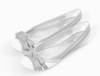 The worst shoes of all are such light and thin dolly
shoes. The problem is partly their flatness, as with Keds
and Vans. However ballet pumps, which have no string or heel, have other
specific problems.
The worst shoes of all are such light and thin dolly
shoes. The problem is partly their flatness, as with Keds
and Vans. However ballet pumps, which have no string or heel, have other
specific problems.
“As the shoe has no fastening device, it relies on the toes to keep the shoe on, causing an awkward gait(步法), this leads to short- and long-term problems such as calluses(茧子), heel and knee pain.”
WEDGES AND STILETTOS
 These shoes can also cause problems with gait. They may
look good, but the heels on these are so high they can force the wearer's body
weight forward, making them very unstable.
These shoes can also cause problems with gait. They may
look good, but the heels on these are so high they can force the wearer's body
weight forward, making them very unstable.
Teens who wear these shoes regularly are also in danger of joining those millions of women with constant back pain.
SCHOOL SHOES
So what do podiatrists(足科医生)have on their wish list, especially for everyday wear?
Something in a natural, breathable fabric, with a string to hold it on, with a small heel and a deep toe-box that does not press the toes, such as Clark's, Marks & Spencer or Rhino.
If your teen insists on wearing 'bad' shoes, get them some simple foot orthotics(矫形器) in the shoes. These support and correct the movement of the foot and, properly fitted by a podiatrist, can often transform their walk and halt the damage.
59. What does the underlined word “it” in paragraph 7 refer to?
A. The extinction of plant species. B. The Millennium Seed Bank Project.
C. Britain’s seed bank. D. Kew Gardens’ next goal.
58. We can learn from the passage that _______.
A. the seeds in the bank can be used now and then all over the world
B. India and Brazil haven’t joined in the Seed Bank Project at present
C. there is only one seed bank in the world at present
D. the wild plants in places like India and China will never die out
57. The wild banana seed in China is in danger because of _______.
A. the expanding of farming work B. the climate change in this area
C. the large number of Asian elephants D. human’s large consumption
56. What’s the final purpose of the Britain’s seed bank?
A. To collect enough money for the project. B. To safeguard food crops.
C. To protect wild plants from extinction. D. To help scientists study wild plants.
75.We can infer from the last paragraph that .
A.Americans working in China adjust very well
B.ways of doing business in different countries differ
C.doing business in China takes money and patience
D.international companies need to understand each other
[2010烟台一模]
答案:56-60 CABBC 61-65 DBCAC 66-70 DDDAB 71-75 ABDBB
A
Britain’s seed bank, the only one in the world aiming to collect all of the planet’s wild plant species, has reached its goal of banking 10 percent by 2010.
The Millennium Seed Bank Project, run by Kew Gardens-one of the oldest botanical gardens-will officially deposit the 24,200th species on Thursday, a pink, wild banana from China.
More than 50 countries are now on board with Kew's giant task but vast places of the globe, including India and Brazil, still need to join in and donate seeds, director Paul Smith said.
The seed bank is one of the largest and most diverse in the world with more than 1.5 billion seeds. Its goal is to help protect the planet’s bio-diversity during a time of climate change.
The wild banana seed is under threat of extinction(灭绝) in southwest China from agricultural development. It is a vital food source for Asian elephants and important for growing bananas for human consumption.
Stored at minus-20 degrees centigrade, so they can last for thousands of years, the seeds await the day that scientists hope never comes-when the species no longer exist in the wild.
It is a race against time, Smith said, because in the last decade alone, 20 plants held in the bank have already been wiped out in the wild. He estimates that between a third and a quarter will become extinct this century.
"It is urgent and it is happening now. An area, the size of England, is cleared of primary vegetation(植被)every year." Smith said.
Because most of the world's food and medicines come from nature, protecting wild plant species is quite important, scientists say. There are already many other seed banks safeguarding food crops, which only account for 0.6 percent of plant diversity.
For Kew's next goal-to collect a quarter of wild varieties by 2020-the botanists need 10 million pounds a year, or a further 100 million pounds on top of the 40 million they have already been granted.
湖北省互联网违法和不良信息举报平台 | 网上有害信息举报专区 | 电信诈骗举报专区 | 涉历史虚无主义有害信息举报专区 | 涉企侵权举报专区
违法和不良信息举报电话:027-86699610 举报邮箱:58377363@163.com