
1. these Americans teachers can speak Chinese
2. Key structures 重点句式
What’s your father’s / mother’ job?
My father / mother is a (an)…
These are my parents.
They are…
Ability goals 能力目标
Enable students to talk about their parents’ jobs and the working places.
Teaching methods 教学方法
Pairwork and speaking.
Teaching aids 教具准备
Pictures and a projector.
Teaching procedures and ways 教学过程与方式
Step I Homework checking
T: How is it going!
S: Fine!
T: Good! So, shall I check your homework?
S: OK.
Ask some students to tell their answers. If necessary, play the tape recorder for several times, help the students complete and check the difficult points.
Step II Vocabulary and matching
Get students to learn some new words about job and working places.
T: Boys and girls, here is a question, and I don’t know how to answer it. Can you help me?
S: Yes! Of course!
T: Well, here we go: She doesn’t work in a garden, but people call her gardener(园丁) / 鼠的共同名/帅字多一横.So, who is she?
S: She is a teacher!
T: Great!
Meanwhile show students the picture of a teacher.
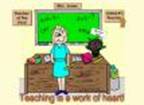

teacher school
T: And she works in the …
S: School!
T: Well done!
Show students the picture of a school:
T: So, her job is teacher and she is a teacher at school. Right?
S: Yes!
T: Now, let’s look at the pictures.
Show students the following pictures
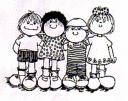
: 
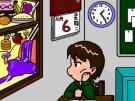

(1) (2) (3) (4)
T: Pictures 1 means in the primary school; so Picture 2 means in …; Picture 3 means in …
Give students chance to think about that, if they cannot say that in English, help they know how to express “junior school” and “senior school”.
T: Great! So, three years later you will be in the senior school. (As saying this, point to Picture 3)
Now, guess, what is Picture 4?
Some students may find out the rule and answer it in Chinese, that is “大学”。 Then praise them and show the word university to them, and ask them repeat after the teacher.
T: Well done! That is university! Do you know Harvard?
S: Yes. / No.
T: Well, it is one of the greatest universities in the world. Here are some pictures for you.
Show students the pictures of Harvard.
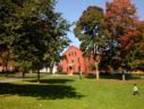


If time permits, ask students some questions about their feelings of going to the top universities, and arouse their interest in learning.
T: So, we say, teacher in a university is …
S: University teacher!
T: That’s it!
Show students the pictures of a university teacher.

T: So, the man is a teacher at university.
Then show students the following chart:
|
Job |
Teacher |
|
|
|
|
|
Working place |
University
|
|
|
|
|
All these above aim at arousing students’ interest about job and working places. After that, leave the other jobs and working places to them to discuss with their partners and match.
T: OK. It’s your turn now! Complete Activities 1&2 on Page 10 with your partners, and then fill in the chart. Clear?
S: Yes!
Give students enough time to do the two parts. While they are discussing, go around and help them. Several minutes later, ask some students to fill in the chart and check the answers together.
Sample answer:
|
Job |
teacher |
doctor |
factory manager |
factory worker |
Hotel manager |
secretary |
|
Working place |
university |
hospital |
factory |
factory |
hotel |
university / school |
Step III Speaking
Get the students to work in pairs to talk about What are your parents’ jobs?
T: You see, so many jobs.
Show students the following pictures.




T: What are your parents’ jobs? Now, look at Activity 3 and discuss with your partners.
Give students enough time to make their dialogues and then ask some of them to perform in front of the class.
Sample dialogue
A: What are your parents’ jobs?
B: My mother is a teacher. My father is a doctor. What about your parents?
A: My mother is a secretary. My father is a factory manager
Step IV Conclusion and homework
Get students to review what they have learned in this period.
T: Everybody, tell me, what jobs do you know in this class?
S: Doctor, factory manager, factory worker, hotel manager, secretary, and teacher.
T: Great! So, how to ask about your parents’ jobs?
S: What are your parents’ jobs?
T: We can say…
S: My mother is a (an)… My father is a (an)…
T: Great! After class finish Activity4 on Page 13 and Activities 8&9 in your workbook. Will you?
S: Yes!
T: OK. Class is over, you’re dismissed!
Also, if time permits, ask some students to act as a doctor,…, and let other students to guess and say.
Period 4 Reading and writing
Language goals 语言目标
Key vocabulary 重点词汇和短语
at, photo, at the hospital
Ability goals 能力目标
Enable students to introduce their parents’ jobs and also use capital letter and full stop correctly.
Teaching methods 教学方法
Reading, pair-working, speaking and writing.
Teaching aids 教具准备
A tape recorder, a projector,
Teaching procedures and ways 教学过程与方式
Step I Revision and homework checking
Check the answers to Activities 8&9 in their workbook and also have a revision of how to ask about their parents’ jobs.
T: How are you going?
S: Fine!
T: Good! And how about your homework? Finished?
S: Yes!
T: Ok. Now, let’s check the answers together.
Show students the answers and check together. Or have a dictation of the words they have learned during last period.
T: Well done! Now, guess, what am I going to ask?
S: Parents’ jobs!
T: You are clever!
Then ask several students to stand up and ask about their parents’ jobs or ask some pairs to have a dialogue about their parents’ jobs. Meanwhile show the sentence structure: What’re your parents’ jobs? My father is a (an)… / My mother is a (an)…to students. Help them talk.
Step II Reading and practicing
Scanning
Get students to read the passage and finish exercises in Activities 4 and 5.
T: What jobs do you know?
S: Doctor, factory manager, factory worker, hotel manager, secretary, and teacher.
T: Good! Do you remember Betty, Tony, Daming and Lingling?
S: Yes! They are in the same class. And they are good friends!
T: Good! Now, turn to Page 11, let’s see what their parents do. Read the passage and complete the table below. Clear?
S: Yes!
Give students enough time to read and complete label the pictures and the table. And then, check the answers together.
T: Well done!
Listening
Play the tape recorder for several times, for the first time, ask them to repeat to imitate the pronunciation and intonation; for the second or other time, ask them to repeat without looking at the book, help them get familiar with the passage, and the way of introducing themselves and their parents’ jobs.
T: Now, listen to the tape and read after it. Clear?
S: Yes!
Play the tape recorder.
T: Now, close your book and read after the tape. Are you ready?
Play the tape recorder for a third time, pause where necessary.
Performing
Ask some students to stand in front of the class and role play the passage.
T: Well, next let’s role-play. Who wants to be Betty?... Tony?... Daming?... Lingling?...
T: Great! Let’s welcome them! (Applause)
Encourage these students to introduce themselves as Betty, Tony, Daming, Lingling.
Step III Talking and practicing
Get the students to write using correct capital letter and full stop.
Talking
T: If we are sick,
Show students the picture of sick

Sick doctor
T: What shall we do?
S: To see a doctor.
T: Good!
Show students the picture of doctor.
T: But today, some strange patients come to the hospital.
Show students the group of words on Page 11.
1. Key vocabulary 重点词汇
Factory, hotel, university, hospital, office, doctor, worker, manager, secretary, at, photo, family, her
6. English leg
T: Listen carefully! I only say that once! Work in groups, read and find out the same pronunciation in each group. Let’s say which group finishes that quickly and correctly. Clear?
S: Yes!
Then divide the class into 6 groups. Give them enough time and do that.
Several minutes later.
T: Finished?
S: Yes!
T: OK. G1, what about the first group of words?
While asking students to read the pronunciations they have found, try to correct the improper pronunciations and encourage the right ones.
G1: It’s /p/.
T: G2
G2: It’s /b/.
T: G3
G3: It’s /t/.
T: G4
G4: It’s /d/.
T: G5
G5: It’s /k/.
T: G6
G6: It’s /g/.
T: Well down! Now, listen to the tape, and read after it.
Play the tape recorder; pause where necessary to help students pronounce properly. If time permits, ask students to take out a piece of paper, hand the paper in front of their mouth, and then pronounce /p/./b/./t/./d/./k/./g/.respectively, they will find that when they pronounce /p/. /t/. /k/-清辅音-the paper will move, while pronounce. /b/ /d/ /g/-浊辅音, the paper will not. And this will help arouse students’ interests in learning pronunciation. Also, the teacher can ask some students to stand in front of the class and pronounce these consonants silently; let others guess which one it is according to the shape of the mouth.
Step V Listening and speaking
Get students to practice how to state, ask and answer about ability.
Showing examples:
First ask some students to stand up, and ask them questions like the following one, ask the other students to listen carefully:
T:Hello! (What’s up? / How is it going …) A.
A:Hello! (What’s up? / Good…) Mr. / Miss …

T:Can you speak Japanese (Explain it in English if students don’t understand that.)?
A:No, I can’t.
Ask the other students:
T:Can A speak Japanese?
S:No, she / he can’t.
T:Great! Thank you, sit down, please.
Then ask another student-B:
T:Excuse me! Can you swim?
B:Yes, I can.
Ask the other students:
T:Can B swim?
S:Yes, she / he can.
T:Very good!
Speaking
T:Now, look at Activity 7. And make dialogues with your partner. Clear?
S:Yes!
Give students enough time to look at the information and make their own dialogues. Several minutes later, ask some pair to stand in front of the class and show themselves.
Sample dialogue:
A: Can Betty play basketball?
B: Yes, she can. Can Betty play basketball?
A: No, she can’t.
T: You have done a really good job! Ask your partners friends and find out what they can do. OK?
S: OK.
Give students enough time to do this. Then ask some pairs to perform in front of the class.
Step VI Homework
Finish Activity 10&11 in the workbook.
Period 3 Reading and speaking
Language goals 语言目标
5. can can’t
4. old friend ride students
3. table Tony tennis
2. bike Betty basketball
1. play piano
2. Key structures 重点句式
Please welcome…to …
This is…
They are from…
I can…, but I can’t …
Can you…?
No, I can’t.
Ability goals 能力目标
Enable students to learn how to introduce themselves and others, and also how to talk about ability.
Teaching methods 教学方法
Reading, talking, group working, listening, and role-play
Teaching aids 教具准备
A tape recorder, a projector and some slides.
Teaching procedures and ways 教学过程与方式
Step I Revision and homework checking
Show pictures and ask them to describe the words learned in last period. Then check the answers to exercises 6&7 in the workbook.
Step II Reading
Get students to read the dialogue. Help them learn how to introduce themselves and others, and also how to talk about ability.
T: Do you still remember Lingling?
S: Yes!
T: And today, two new students are coming to her school. Do you want to know them?
S: Yes!
T: Good! Tell me what do you want to know about them?
S: Their names.
S: How old are they?
S: Where are they from?
S: What can they do?
…
T: Good! Now, quickly look at the dialogue in 3, and tell me what their names are?
Ask the students glance at part 3 and find out the names they will deal with in next steps.
After a while.
S: They are Betty and Tony!
T: Great! Now read after the tape. Are you ready?
S: Yes!
Play the tape recorder for the students, pause if the sentence is too long, some words are difficult for students to pronounce, and also intonations are special. After this, ask students to read again to gain useful information of introduction.
T: OK. Next, read the dialogue again. Then work in groups of four, and act it out.
Give students several minutes to read and prepare for their performance. Several minutes later.
T: Are you ready? Who wants to have a try? Hands up!
Ask several groups to act the dialogue out. Encourage them perform that without books.
T: Well done! Now, look at this chart:
Show students the following chart:
|
Name |
|
|
介绍他人 |
介绍自己 |
|
|
|
|||
|
Nationality (国籍) |
|
|
|
|
|
Age (年龄) |
|
|
|
|
|
Can |
|
|
|
|
|
Can not |
|
|
|
|
T: Next, read the dialogue again. Complete the chart with your partners. Clear?
S: Yes!
Give students enough time to do this, which helps them find the way to introduce oneself, the others
T: Are you ready?
S: Yes!
T: Who wants to have a try?
Ask some students to complete the chart separately. Then check the answers together.
|
Name |
Betty |
Tony |
介绍/询问他人 |
介绍自己 |
|
This is … |
I’m … |
|||
|
Nationality (国籍) |
America |
England |
They are from… |
I’m from… |
|
Age (年龄) |
13 |
11 |
|
I’m…(years old). |
|
Can |
Play football, basketball, speak English, |
Speak English, play football, table tennis, and ride a bike. |
-Can you…? -No, I can’t. / Yes, I can. |
I can… |
|
Can not |
Speak Chinese |
Swim and speak Chinese. |
|
I can’t … |
T: Great!
Step III Listening
Get students to listen to the tape and finish Part 4
First ask the students to glance at Part 4, and then play the tape recorder and ask them to choose Yes or No. After that, check the answers together.
Step IV Pronunciation
Get students to correctly pronounce three pairs of consonants.
When do this part, show the words listed in Part 5 to students and then divided them into 6 groups and find out the same pronunciations after talking.
T: Well, everybody, would you like to play a game?
S: Yes!
T: OK! Now, look at this:
Show students the following words:
湖北省互联网违法和不良信息举报平台 | 网上有害信息举报专区 | 电信诈骗举报专区 | 涉历史虚无主义有害信息举报专区 | 涉企侵权举报专区
违法和不良信息举报电话:027-86699610 举报邮箱:58377363@163.com