
第二节 (10分)
6. Who probably is the man?
A. A doctor. B. A reporter C. A policeman.
7. What does the man suggest the woman do?
A. Call the hospital. B. Stay where she is. C. Report the accident.
8. What will the woman do next?
A. Fill out the form. B. Make a radio call. C. Apply for a passport.
9. What are the speakers mainly talking about?
A. A party. B. weekend plans. C. An art gallery.
10. What does Tina want to do after the dinner?
A. Dance B. Go cycling. C. See a movie.
11. When does the woman want to see new paintings?
A. On Saturday night.
B. On Sunday afternoon.
C. On Sunday evening.
12. What can we learn from the talk?
A. Some people think left-handers are strange, sick or dangerous.
B. There are 25 million left-handers in the world.
C. Most of the left-handers live in the US.
13. At what age do people begin to develop hand preference?
A. 2 B. 3 C. 6
14. What jobs are the left-handers particularly good at?
A. Nursing jobs. B. Technical jobs. C. Jobs requiring a good sense of space.
15. What is the probable purpose of forming Left-handers International?
A. To start the study of hand preference.
B. To tell the society that they are normal.
C. To study job preference.
第一节 (5分)
1. What are the speakers mainly talking about?
A. Jobs B. Plans C. Resumes.
2. What is the man’s attitude towards Field?
A. He doesn’t like her way of life.
B. He can’t understand her.
C. He admires her.
3. Which does the woman think is nicer?
A. The bus B. The train C. The car
4. At what time does the woman suggest they leave?
A. 12:00 in the day. B. 12:30 p.m. C. 1:00 p.m.
5. What will the man probably do next?
A. Go to send some letters.
B. Go on with the questions.
C. Prepare a speech.
10.(5分)
(1)B;胰岛素 (2)肝糖元 (3)神经;激素(体液)
9.(5分)
(1)效应B 抗原 (2)蛋白酶 胞吞 (3)过敏原
8.(5分)
(1) S型(2)食物、空间等 环境容纳量(3)K/2 最大
7.(5分)
(1)效应器 d
(2)递质 递质只能由突触前膜释放,然后作用于突触后膜
(3)外正内负→外负内正
6.(5分)
(1)基因库 60% 40% (2)60% 40%
5.(5分)
(1)隐 (2)XBXb;XBY (3)3/4 (4)0
1.(5分)
(1)被动转运(2)核糖体 (3)②高尔基体 胞吐 流动性
10.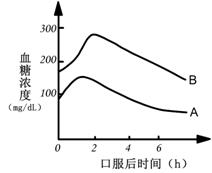 (5分)正常人血糖浓度的范围是80~120mg/dL,糖尿病人的血糖浓度高于正常值。图中的两条曲线分别表示A、B两人在口服葡萄糖后血糖浓度的变化情况。请分析回答下列问题:
(1)A、B两人中可能患糖尿病的是 。
糖尿病人由于胰岛细胞受损,导致 分
泌不足,血糖浓度超过正常值,从而出现糖尿。
(2)人在饥饿时,血糖浓度降低,胰岛细胞分泌
的胰高血糖素增加,促进 分解,使血糖浓度升高。
(3)研究表明,下丘脑可以控制胰岛细胞的分泌活动,说明血糖平衡是由 和
共同调节的。
生物试卷答案及评分参考
湖北省互联网违法和不良信息举报平台 | 网上有害信息举报专区 | 电信诈骗举报专区 | 涉历史虚无主义有害信息举报专区 | 涉企侵权举报专区
违法和不良信息举报电话:027-86699610 举报邮箱:58377363@163.com