
14. 敢问“路”在何方
(1)英语中常见的问路方法有:
Is there a ... near here?
这儿附近有……吗?
Where’s the ..., please?
请问……在哪儿?
Do you know the way to ..., please?
请问您知道去……的路吗?
Which is the way to..., please?
请问哪条是到……的路?
How can I get to ...?
我如何才能到达……?
Can you tell me the way to ...?
你能告诉我去……的路吗?
Can you find the way to ... ?
你能找到去……的路吗?
I want to go to ... Do you know the way?
我要去……,你知道那条路吗?
(2)英语中常见的指路方法有:
①回答Where’s the ...?可用以下简单的答语:
It’s over there.在那边。
It’s behind the ...在……的后面。
It’s next to the ...它挨着……。
It’s across from ... 它在……的对面。
It’s between ... and ...
它在……和……之间。
②回答Which is the way to ..., please?和How can I get to ...?等时,可根据具体情况,将下列有关句子组织起来用。
Walk / Go along this street.
沿着这条街走。
It’s about ... metres from here.
离这儿大约……米远。
Take the first turning on the left/ right.
在第一个转弯处向左/右拐。
It’s about ... metres along on the right / left.
在前方右边/左边大约……米远。
Walk on and turn left / right.
继续走,然后向左/右转弯。
[特别提醒]
问路时要打扰别人,因此要先说Excuse me,以表示歉意。
问路时,若对方不知道,问路人仍要向他(她)表示谢意。如:
--Excuse me. Is there a bank near here?
请问,这儿附近有银行吗?
--Sorry, I don’t know.
对不起,我不知道。
--Thank you all the same.
谢谢。
13. across, through
两者都是介词,表示“从(一定范围的)一边到另一边。”它们的区别是:across表示“通过某一平面”,强调“横过”;而through则表示“通过某一个三维空间”,强调从“里面穿过”。如:
Go across the bridge and turn left.
走过那座桥,然后向左拐弯。
They walk through the forest carefully.
他们小心地穿过森林。
12. arrive与get
arrive是不及物动词,后需跟介词in(到达较大地方)或at(到达较小的地方),之后再接表示地点的名词,表达较为正式。而get表示到达,也是不及物动词,后可直接加here, there, home等副词,分别表示“到这儿;到那儿;到家”;get之后接地点名词时,只能加介词to。如:
The plane arrives at the airport at five o’clock.
飞机五点钟到达机场。
I usually get home at 6:00 pm.
我通常晚上六点到家。
11. street、avenue和way
street意为“街道”,它常指市区内供车辆、行人走的道路。on the street是美式英语,而英式英语常用in the street,如:on wall street在华尔街,street可略为ST。avenue意为“林荫大道”,在美国是指城市中的大街,如the center Avenue中心大街,可略为Ave。way为“道路”,具有广泛的意义,表示各种各样的路,way还可以表示抽象意义的“路、途径,方法”等。
10. take a taxi与by taxi及take a walk
前两个词组都表示“乘出租车”的意义,但前者take是动词,而by则是介词。如:
Sometimes I take a taxi to school. = Sometimes I go to school by taxi.
我有时候乘出租车上学。
take a walk相当于have a walk散步
9. 定语和后置定语
△名词的修饰词称为定语,一般由形容词充当,用来描述人和物品。如:

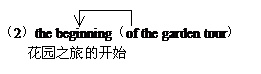
△除了形容词作定语外,还有其他词与词组也可作定语。如:
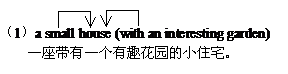
名词house有两个修饰语(定语),一个是形容词small,一个是介词短语with an interesting garden,它置于house的后面称为后置定语。
8. Excuse me
Excuse me为习惯用语,意为“对不起,抱歉”,常用于与陌生人谈话,打断别人说话,问路或表示异议等情景。如:
Excuse me, is there a hotel in the neighborhood?
打扰一下,请问这附近有邮局吗?
Excuse me, but that’s not right.
对不起,但那不对呀。
7. off
介词,副词,有“离开,关闭”的含义。如:
Keep off the grass.勿踏草坪。
see sb. off看着某人离去
take off脱掉 turn off关上
6. go straight / down与go through
△straight
形容词,副词,意思是“直的,笔直的”,在使用时要注意它的双重词性。如:
Draw a straight line.
画一条直线(形容词)。
Go straight and turn right.
一直向前走,然后向右转(副词)。
△down
down在此为介词,意思是“沿着,顺着”相当于along和up,但up表示“向高处”,如:go up a hill登上一座山,down表示“向低处,沿着……往下”,如:Go down Center Street.沿着中心大街走。
△through是介词“穿过,通过”通常指空间,从内部穿过。如:
They go through the forest.
他们穿过了森林。
5. There be句型
这也是本单元用于问路的重点句型之一,它表示某地或某时有某人或某物。there be句型中的be与临近它的第一个名词的单复数形式相一致。临近be的第一个名词是一个单数名词或不可数名词时,用is;若临近be的是一个复数名词时则用are。在构成否定句时,直接将not接在be动词之后表示否定;在构成疑问句时,将be动词提前,置于主语前面即可。在一般疑问句的语境下,肯定或否定的回答都要使用there be句型。如:
There are two pencils and a pen in the pencil case.
文具盒里有两枝铅笔和一枝钢笔。
Is there a hospital near here?
这附近有医院吗?
Yes, there is. / No, there isn’t.
有/没有。
How many classes are there in your school?
你们学校有几个班?
湖北省互联网违法和不良信息举报平台 | 网上有害信息举报专区 | 电信诈骗举报专区 | 涉历史虚无主义有害信息举报专区 | 涉企侵权举报专区
违法和不良信息举报电话:027-86699610 举报邮箱:58377363@163.com