
3.C prefer是及物动词,它后可跟名词、代词、不定式或动名词作宾语,根据提供的答案,只能选being。
2.B 本题主要是考查宾语从句的引导词,根据句意引导词在从句中作状语,那么只能选where了。
5.( )This character seems someone real .
A. like
B. to like
C. liking
D. likes
解析 答案:1.A 本题是表示在某层楼上,通常用介词on。
4.( )When she goes into stores she always spends money.
A. much too
B. little too
C. many too
D. too much
3.( )I prefer outside.
A. be
B. to being
C. being
D. been
2.( )Do you know I can buy this kind of sweets?
A. which
B. where
C. what
D. who
1.( )There’s a bookstore the third floor.
A. on
B. at
C. in
D. about
11.People also became interested in foreign cartoons.
人们也对外国的卡通片感兴趣。
be (become) interested in 是个固定的搭配,表示“对……感兴趣”。
[例](1)She is not interested in sports.
她对体育运动不感兴趣。
(2)The boy becomes interested in playing football.
那男孩对踢足球感兴趣。
(3)Some of you students aren’t interested in English.
一些学生对英语不感兴趣。
发散思维应用
典型例题1
Excuse me! Would you please tell me ?
A. where is the No.1 Middle School
B. the No.1 Middle School is where
C. the No.1 Middle School where is
D. where the No.1 Middle School is
解析 答案:D 本题是日常生活中问路的一种表达方式,重点是宾语从句,宾语从句应注意时态、语序和引导词三个问题,即主、从句时态的呼应,引导词在从句中的作用以及从句的陈述语序,本题中还应注意专用名词的大小写等,依据上述要求只有D符号,故D是正确答案。
典型例题2
将下列句子改为被动语态
He gave me a new watch.
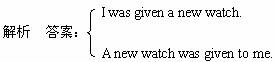
凡含双宾语的句子改为被动语态时,多数是将主动句中的间接宾语改为被动句的主语,直接宾语作保留宾语,但也可将直接宾语变为主语,间接宾语作保留宾语,但这时保留宾语前需加介词to或for。
[题型发散]
发散1 选择填空题
10.Cartoons are no longer just for kids.
卡通片不再仅仅是为了孩子。
no longer不再,我们前面已述说过,不再重述它的作用,只注意它与not…any longer在位置的不同,与no more(not…any more)的区别请看前面。
[例](1)Hefei today is no longer the Hefei of the past.
今日之合肥不再是旧日之合肥了。
(2)I can’t wait any longer.
我不能再等了。
(3)She refused to remain silent any longer.
她不愿再保持缄默了。
9.What kind of food are you looking for?
你在找哪种食品?
look for是个短语,强调“寻找”这一动作,而find则强调找的结果,表示“找到”;类似的词语还有hear和listen to。
[例](1)The young lady is looking for her pet dog.
那位年轻的女士在找她的宠物狗。
(2)He has found his lost bike.
他已找到丢失的自行车了。
(3)They are listening to a piece of beautiful music.
他们正听一曲优美的曲子。
(4)He heard their whisper.
他听见他们在低声说话。
湖北省互联网违法和不良信息举报平台 | 网上有害信息举报专区 | 电信诈骗举报专区 | 涉历史虚无主义有害信息举报专区 | 涉企侵权举报专区
违法和不良信息举报电话:027-86699610 举报邮箱:58377363@163.com