
3. Alice wanted to make daisy chain.
2. The book had a lot of pictures in it.
1. Alice was reading a book.
2. Key structures重点句式
Were/was doing
Ability goals能力目标
Enable students to read and write about fairy tales.
Teaching methods教学方法
Communicative approach.
Teaching aids 教具准备
A tape recorder, some pictures and handouts.
Teaching procedures and ways教学过程与方式
Step I Revision and lead-in
Review past on-goings through asking and answering questions; encourage them to recall the characters in the story Alice’s adventures in wonderland and lead in new lesson.
T: Hello, boys and girls. What were you doing this time yesterday?
S: We were having an English lesson.
T: What did we learn yesterday?
S: We learned to use past on-goings.
T: Which story were we talking about?
S: Alice’s adventure in Wonderland.
T: Good. Do you remember the characters in the story?
S: Yes. The mad hatter and the march hare, the white rabbit, the red king, the red queen and Alice
T: Great. Now let’s look at the picture on page 44 please. Who’s in the picture?
S: It’s a rabbit
T: Do you think it is strange?
S: Yes. It’s wearing clothes.
T: Yes, that’s the point. Usually rabbits don’t wear clothes. Is there anything else strange?
S: It is carrying a stick. It is standing on its back legs. It’s looking at a watch.
T: Good. Why is it so strange? Today let’s learn more about Alice’s adventures in wonderland.
Step II Reading
In this procedure, students will read the start of Alice’s adventure in Wonderland and answer the questions to learn more about the details of the story: what, who, when, where and why.
Learn the following new words.
tired, nothing, twice, conversation, suddenly, across, pocket
And then ask students to read individually and discuss the questions with a partner.
Check the answers. Ask them to read again and decide whether the following sentences are true or false.
1. Key vocabulary重点词汇
tired, nothing, twice, conversation, suddenly, pink, by, pocket, across, field
3. Try to find some information about the writer of the story.
Period 2 Reading and writing
Language goals 语言目标
2. do activities 1-4 in the workbook.
1. read the conversation in activity 2 repeatedly.
2. Key structures重点句式
Were/was doing
Ability goals能力目标
Enable students to talk about past on-goings.
Teaching methods教学方法
Communicative approach.
Teaching aids教具准备
A tape recorder, some pictures or handout.
Teaching procedures and ways教学过程与方式
Step I Lead-in
Show some pictures of fairy tales, introduce the story briefly, and explain some new words.
T: Do you like to read fairy stories? (Explain “fairy story”, in Chinese if necessary.) A fairy tale is a story written for, or told to, children. The story often includes elements of magic. Now look at the following pictures? Can you tell me the name of the stories?
Show the following.
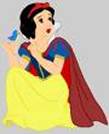
S: Snow White.
T: What is the story about?
S: A little princess was saved from the evil deeds of her step-mother, the queen, by a group of seven dwarfs.
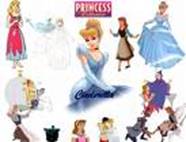
T: Good. How about picture 2?
S: Cinderrela.
T: Do you know the story?
S: It’s about a beautiful girl. At first, Cinderella is living happily with her mother and father until her mother dies. Cinderella's father remarries a cold, cruel woman. The woman has two daughters. When the father dies, Cinderella's stepmother turns her into a servant in her own house.
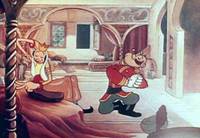
T: Well done. Do you know anything about picture 3?
S: Aladdin and the wonderful lamp.
…
Time permits, talk about more fairy tales.
T: Do you know the name of the story?
Show the following picture.
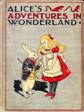
S: Alice’s Adventure in Wonderland
T: Good. It’s a famous English story. Today we’ll start with this fairy tale.
Step II Listening
Read through the list of characters with the students. Explain ‘hatter”, then play the tape and ask the students to listen and focus.
T: We are going to listen to a short introduction of the story, Alice’s Adventures in Wonderland. Before listening, let’s read through the list of the characters first. … Pay attention to “hatter” please. We know the word “hat”. A hatter is someone who makes hats.
…
Play the tape and ask students to number the characters in the story in the order. Call back the answers from the whole class.
Step III Vocabulary
Do activity 4. Ask students to group the words first in order to make them remember all the words easily and then go on with activity 5.
T: There are some words in the box of activity 4. Please read these words first and then try to find out the words for “animals”.
S: Cat, mouse, rabbit.
T: Find out two words mean “important people”.
S: King and queen
T: The places outside home.
S: Garden, grass.
Ask them to read through the words chorally.
…
For activity 5, tell them to guess the words and complete the sentences. Check the answers by asking some students to read the sentences.
Step IV Reading and grammar
Ask students to read the conversation individually and find out the sentences with the form of “v-ing”.
Write the sentences on the board:
I’m reading.
She was sitting by the river.
She was not reading.
The queen was playing in the garden
What were they doing?
Point out the structure:
T: “Was/were doing” is used to describe past on-goings. Now read aloud the following sentences.
Show the following.
I didn’t hear the phone. My father was watching TV then.
I was reading a book at that time.
Explain the difference between the past simple tense and past continuous.
Show the following.
I wrote a letter yesterday morning. (The letter is finished)
I was writing a letter yesterday morning. (We don’t know if the letter is finished or not.)
I saw a very good film last night. (It happened in the past)
I was reading a book this time yesterday. (It was going on during the past time)
Listening
Ask students to listen to the recording of the conversation and do activity 3.
Check their answer. Call their names from the whole class in order.
Step V Pronunciation and speaking
First ask students to read through the sentences in activity 6. Play the tape and have them follow. Then play the tape again, pausing to let the students repeat chorally and individually.
After this, ask them to do activity 7, write notes on a piece of paper and then have conversations with their partners, ask and say what they were doing at these times.
Sample answers:
S: What were you doing at 7 am yesterday?
S: I was going to school.
S: What were you doing at 1 pm?
S: I was helping my mother to do some washing.
…
Step VI Homework
Ask students to:
Period 1 Listening and speaking
Language goals语言目标
1. Key vocabulary重点词汇
suddenly, rabbit, party, fall, hole, strange, carry
湖北省互联网违法和不良信息举报平台 | 网上有害信息举报专区 | 电信诈骗举报专区 | 涉历史虚无主义有害信息举报专区 | 涉企侵权举报专区
违法和不良信息举报电话:027-86699610 举报邮箱:58377363@163.com